


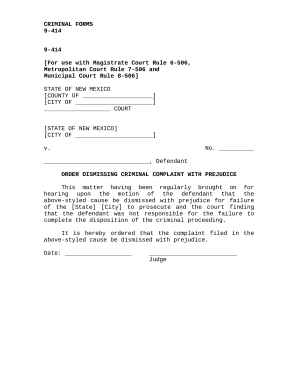
Boost your productiveness with Legal Dismissals
Form management occupies to half of your office hours. With DocHub, it is possible to reclaim your office time and increase your team's efficiency. Access Legal Dismissals category and investigate all form templates related to your daily workflows.
Easily use Legal Dismissals:
- Open Legal Dismissals and use Preview to get the relevant form.
- Click Get Form to begin working on it.
- Wait for your form to upload in the online editor and start modifying it.
- Add new fillable fields, icons, and images, change pages, etc.
- Complete your file or set it for other contributors.
- Download or deliver the form by link, email attachment, or invite.
Boost your daily document management using our Legal Dismissals. Get your free DocHub account today to explore all forms.
Video Guide on Legal Dismissals management

Commonly Asked Questions about Legal Dismissals
What is the legal definition of dismissal of charges?
When the evidence presented by prosecutors is not compelling enough to warrant a conviction, the charge or case may be dismissed, which means your criminal record will indicate that although you were charged with a crime, you were not convicted or found guilty of the offense alleged against you.
What is a synonym for legal dismissal?
dismissing (noun as in acquittal) Strong matches. absolution amnesty clearance deliverance discharge dismissal exculpation exemption exoneration freeing liberation pardon release reprieve vindication.
Is a dismissal a judgment?
All dismissals ordered by the court shall be in the form of a written order signed by the court and filed in the action and those orders when so filed shall constitute judgments and be effective for all purposes, and the clerk shall note those judgments in the register of actions in the case.
Why are lawsuits dismissed?
There are many reasons for a court to dismiss a case, both procedural and substantive. FRCP 12 provides the list of grounds for dismissal in federal court, which includes a lack of jurisdiction, improper service of process, failure to join a party, and a plaintiffs failure to state a claim for relief.
What is a dismissal in legal terms?
dismissal. n. 1) the act of voluntarily terminating a criminal prosecution or a lawsuit or one of its causes of action by one of the parties. 2) a judges ruling that a lawsuit or criminal charge is terminated. 3) an appeals courts act of dismissing an appeal, letting the lower court decision stand.
What does an expression of dismissal mean?
uncountable noun. Dismissal of something means deciding or saying that it is not important.
What is the difference between dismissed and terminated case?
Termination of proceedings provides a temporary reprieve, dismissal concludes the case permanently, and administrative closure suspends proceedings until certain conditions are resolved.
What does it mean to be thrown out in court?
phrasal verb. If a judge throws out a case, he or she rejects it and the accused person does not have to stand trial.


