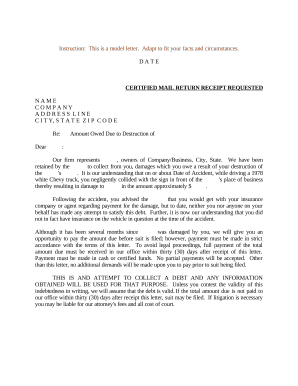
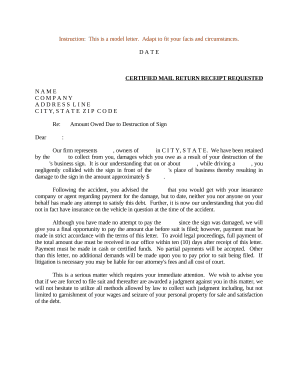
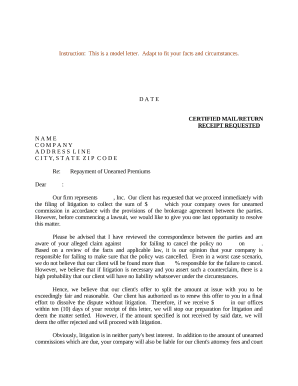
Enhance your productiveness with Legal Debt Collection Forms

Form administration occupies to half of your business hours. With DocHub, it is easy to reclaim your office time and improve your team's efficiency. Access Legal Debt Collection Forms online library and discover all document templates relevant to your daily workflows.

Effortlessly use Legal Debt Collection Forms:

  1. Open Legal Debt Collection Forms and utilize Preview to get the relevant form.
  2. Click on Get Form to start working on it.
  3. Wait for your form to upload in the online editor and start editing it.
  4. Add new fillable fields, symbols, and images, adjust pages, etc.
  5. Complete your file or prepare it for other contributors.
  6. Download or deliver the form by link, email attachment, or invite.

Speed up your daily document administration with our Legal Debt Collection Forms. Get your free DocHub account today to explore all forms.


Video Guide on Legal Debt Collection Forms management

video background

Commonly Asked Questions about Legal Debt Collection Forms

Once the collection company gets the letter, it must stop trying to collect the debt until it sends you written verification of the debt, like a copy of the original bill for the amount you owe.
A debt collection letter, or a demand letter, is a formal notice you send to a client who has failed to pay their bill in due time. If you tried to remind your client via phone or email that they had a pending bill with your firm, and they still didnt pay after that, you should consider sending a formal reminder.
Your FDCPA dispute rights are a powerful tool. Once you dispute the debt, the debt collector must stop all debt collection activities until it provides you with proof that you actually owe the debt. If the debt collector cant provide you with that proof, it will never bother you again.
Here are crucial steps to follow in the debt collection process. Step 1: Contact the Debtor. Step 2: Send a Demand Letter. Step 3: Consider Negotiation. Step 4: Hire a Collection Agency. Step 5: Provide Documentation. Step 6: Monitor Progress. Step 7: Consider Legal Action.
Under the debt collection rule, debt collectors have to provide you with certain information about your debt, known as validation information.
How to pay collections strategically Confirm the debt is yours. Know your debt collection rights. Check your states statute of limitations. Understand the debt details. Determine collectability. Negotiate a settlement with the collector. Set up a repayment plan. Make your payment(s) as agreed. How To Pay Off A Debt In Collections And Protect Your Finances | Bankrate bankrate.com personal-finance how-to-p bankrate.com personal-finance how-to-p
Who has the burden of proof in a debt collection case? The plaintiff the creditor or debt buyer ALWAYS has the burden of proof in a debt collection case.