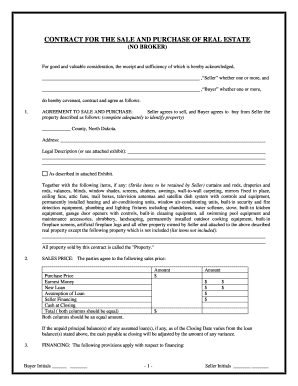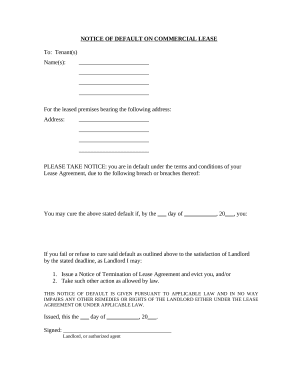
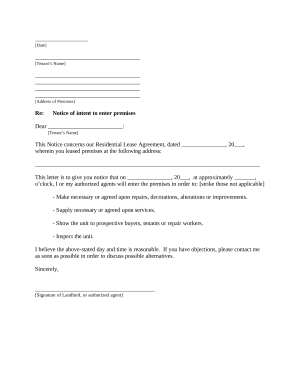
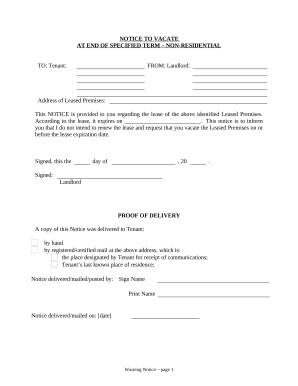
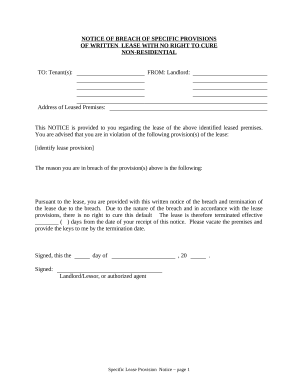
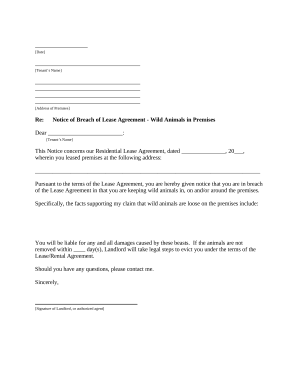
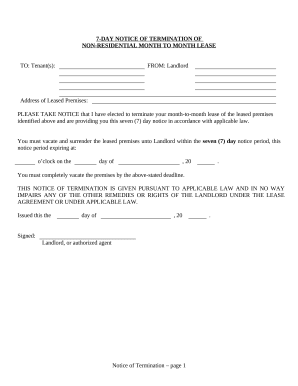
Get and handle Landlord to Tenant Legal Documents online

Improve your document operations with our Landlord to Tenant Legal Documents library with ready-made document templates that meet your requirements. Access your form template, edit it, fill it, and share it with your contributors without breaking a sweat. Begin working more effectively with your documents.

The best way to use our Landlord to Tenant Legal Documents:

  1. Open our Landlord to Tenant Legal Documents and search for the form you require.
  2. Preview your document to ensure it’s what you want, and click Get Form to begin working on it.
  3. Edit, add new text, or point out important information with DocHub features.
  4. Prepare your form and preserve the modifications.
  5. Download or share your document with other recipients.

Explore all the opportunities for your online file management with our Landlord to Tenant Legal Documents. Get a totally free DocHub profile right now!


Video Guide on Landlord to Tenant Legal Documents management

video background

Commonly Asked Questions about Landlord to Tenant Legal Documents

Californias Tenant Protection Act The only lawful way to evict a tenant is to file lawsuit and wait for the court to order the Sheriff or Marshal to carry out the eviction. Landlords cannot change the locks, shut off power, or remove personal property in order to force a tenant out of their home.
Under the Rent Stabilization Ordinance (RSO), a landlord is only required to pay monetary relocation assistance payments to tenants being evicted through no fault of their own. Without a RSO cause, a tenancy may not be terminated.
Starting July 1, 2020, all landlords must offer the Statement of Tenant Rights and Responsibilities to any prospective tenant. Both the landlord and tenant must sign a form at the end of the statement acknowledging that the tenant has received from the landlord the statement of tenant rights and responsibilities.
In Virginia, only the courts can enforce the rights and responsibilities of landlords and tenants.
A landlord shall not charge a tenant for late payment of rent unless such charge is provided for in the written rental agreement. No such late charge shall exceed the lesser of 10 percent of the periodic rent or 10 percent of the remaining balance due and owed by the tenant.
Rent cannot be raised over any 12-month period more than the rate of inflation (Consumer Price Index or CPI.tenantprotections.org/calculator) + 5%. In no case can it be more than 10%. Rent can only be raised twice within any given 12-month period. California law limits the reasons why a renter can be evicted.
But, your landlord can still require you to move out for one of the no-fault reasons listed in the law. If your landlord evicts you for one of these reasons, they must first give you one months rent or waive one months rent to help you move out.