Handle Landlord Tenant Agreement Notices quickly online

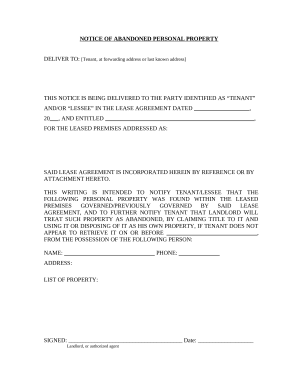
Document management can overpower you when you can’t locate all the documents you require. Fortunately, with DocHub's considerable form library, you can discover everything you need and swiftly manage it without changing among applications. Get our Landlord Tenant Agreement Notices and begin utilizing them.

Using our Landlord Tenant Agreement Notices using these easy steps:

  1. Examine Landlord Tenant Agreement Notices and choose the form you require.
  2. Preview the template and click on Get Form.
  3. Wait for it to open in our online editor.
  4. Edit your form: add new information and pictures, and fillable fields or blackout certain parts if necessary.
  5. Complete your form, preserve alterations, and prepare it for sending.
  6. When all set, download your form or share it with other contributors.

Try out DocHub and browse our Landlord Tenant Agreement Notices category without trouble. Get your free profile today!


Video Guide on Landlord Tenant Agreement Notices management

video background

Commonly Asked Questions about Landlord Tenant Agreement Notices

A 60-day notice is required for tenants who have lived in an apartment for more than one year, but less than two years, or have a lease of at least one year, but less than two years. Tenants who have lived in a unit for more than two years, or have a lease of at least two years, must get a 90-day notice.
For example, if the landlord wants the tenant to move out by November 1 and the rent is due on the first of each month, the landlord must give notice by September 30. In New York 5 Page 9 City, 30 days notice is required, rather than one month.
If you have lived in your apartment for less than one year, or have a lease for less than one year, your landlord must provide you with 30 days advanced notice before raising your rent or not renewing your lease.
In New York 5 Page 9 City, 30 days notice is required, rather than one month. Landlords do not need to explain why the tenancy is being terminated, they only need to provide notice that it is, and that refusal to vacate will lead to eviction proceedings.
Can you evict a tenant after the lease expires? Yes, if the new lease is provided to you as the landlord and you do not agree to it or return it within 60 days, the landlord can evict you.
the landlord of an intention not to renew the lease. (General Obligations Law 5-905). If you have lived in your apartment for less than one year, or have a lease for less than one year, your landlord must provide you with 30 days advanced notice before raising your rent or not renewing your lease.
New York landlords must follow a strict legal process for evictions, which includes serving proper notices, filing a court action, and obtaining a court order before an eviction can take place. Self-help measures such as changing locks or physically removing a tenant are illegal.
Before they can raise your rent (by 5% or more), the landlord must give you: 90 days notice if you have lived in your apartment two years or more. 60 days notice if you have lived in your apartment for more than one year. 30 days notice if you have lived in your apartment for less than one year.