
Intellectual Property Licenses
Improve your production with Intellectual Property Licenses
Document management takes up to half of your business hours. With DocHub, it is possible to reclaim your time and boost your team's efficiency. Access Intellectual Property Licenses collection and explore all document templates relevant to your daily workflows.
Effortlessly use Intellectual Property Licenses:
- Open Intellectual Property Licenses and utilize Preview to find the relevant form.
- Click on Get Form to begin working on it.
- Wait for your form to upload in our online editor and start editing it.
- Add new fillable fields, symbols, and pictures, adjust pages, etc.
- Fill your document or set it for other contributors.
- Download or share the form by link, email attachment, or invite.
Speed up your daily document management with the Intellectual Property Licenses. Get your free DocHub profile today to discover all templates.
Video Guide on Intellectual Property Licenses management

Commonly Asked Questions about Intellectual Property Licenses
How do I get permission for intellectual property?
In general, the permissions process involves a simple five-step procedure: Determine if permission is needed. Identify the owner. Identify the rights needed. Contact the owner and negotiate whether payment is required. Get your permission agreement in writing.
Certificate Can you license intellectual property?
All major types of IP can be licensed, including patents, trademarks, copyrights, design rights and even trade secrets. That said, registered forms of IP such as patents and trademarks are generally much easier and more profitable to license compared to non-registered forms of IP like trade secrets. The ins and outs of IP licensing | Dennemeyer.com dennemeyer.com ip-blog news the-ins- dennemeyer.com ip-blog news the-ins-
What are 7 types of intellectual property rights?
What are the 7 types of IPR? The seven types of Intellectual Property Rights (IPR) include patents, trademarks, copyrights, trade secrets, industrial designs, geographical indications, and plant variety rights. Each type of IPR provides legal protection for different forms of intellectual creations and innovations.
What does license of IPR mean?
What does IP Licence mean? An IP licence is the transfer of rights in an IP right from the owner to another, short of an assignment of all rights. The licensor retains ownership of the IP right and allows the licensee to engage in acts which would constitute infringement if not for the licence.
What is the intellectual property license?
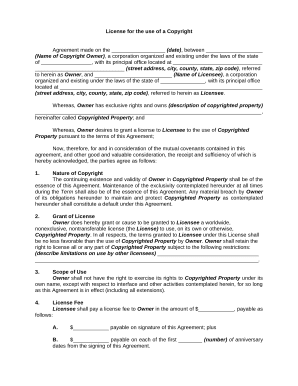
It is an agreement between the licensor (the person or company owning the intellectual property) and the licensee (the person or company wanting to use the intellectual property).
How is intellectual property registered?
To register a work, you must submit a completed application form, the applicable filing fee, and a nonreturnable copy or copies of the work to be registered. In general, the term of copyright is the life of the author plus 70 years after the authors death (or last surviving authors death if a joint work).
Can I copyright intellectual property?
Only original works of authorship may be copyrighted. This means that the original creator of the work or his or her agent is the only one who may obtain a copyright. You cannot take someone elses work and copyright it.
Licensing How to license intellectual property?
Intellectual property licensing involves a legal agreement between two parties: the IP rights owner (licensor) and another party (licensee) who is authorized to use those rights for contractually agreed purposes. How To License Your Intellectual Property allendyer.com how-to-license-your-intellectual- allendyer.com how-to-license-your-intellectual-
What are the options for IP licensing?
Expert tip: Licensing can generally be sole, exclusive or non-exclusive, depending on whether the IP owner retains some rights, or on whether the IP rights can be licensed to one or multiple parties.
What are the 4 types of intellectual property?
The creation of intellectual property is an exciting time, and before going to market, you need to protect your idea in the best way possible. This brings us to the four types of intellectual property protection copyrights, trademarks, patents, and trade secrets.


