

Estate Planning Wills

Create a new Estate Planning Will
Build form
Legal Last Will and Testament Form for Married Person with Adult and Minor Children from Prior Marriage - Wisconsin
Get form
California persons
California persons
Get form
Legal Last Will and Testament Form for Widow or Widower with Minor Children - Vermont
Get form
Legal Last Will and Testament Form for a Widow or Widower with Adult and Minor Children - Vermont
Get form
Mutual Wills containing Last Will and Testaments for Unmarried Persons living together with No Children - Georgia
Get form
Legal Last Will and Testament Form with All Property to Trust called a Pour Over Will - Arkansas
Get form
Mutual Wills package with Last Wills and Testaments for Married Couple with No Children - Illinois
Get form
Indiana last will
Indiana last will
Get form
Mutual Wills or Last Will and Testaments for Unmarried Persons living together with Minor Children - Kansas
Get form
Complex Will with Credit Shelter Marital Trust for Large Estates - Alabama
Get form
Complex Will with Credit Shelter Marital Trust for Large Estates - Colorado
Get form
Legal Last Will and Testament Form for a Widow or Widower with Adult and Minor Children - South Carolina
Get form
Legal Last Will and Testament Form for Married person with Adult Children from Prior Marriage - Michigan
Get form
Legal Last Will and Testament Form for a Widow or Widower with Adult and Minor Children - Michigan
Get form
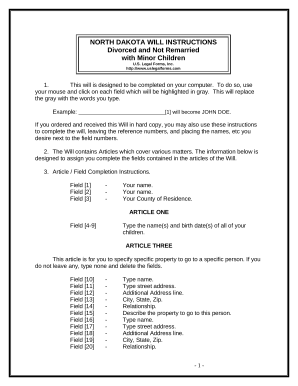
Legal Last Will and Testament Form for Divorced person not Remarried with Minor Children - North Dakota
Get form
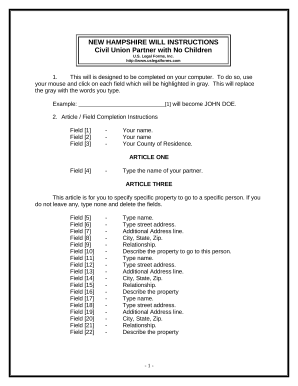
Nh civil
Nh civil
Get form
Mutual Wills Package with Last Wills and Testaments for Married Couple with Adult and Minor Children - New Mexico
Get form
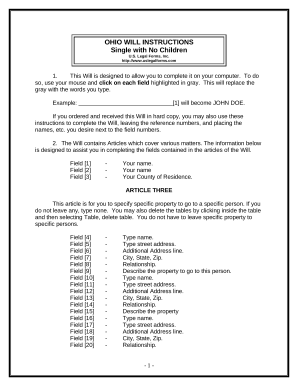
Legal Last Will and Testament Form for Single Person with No Children - Ohio
Get form
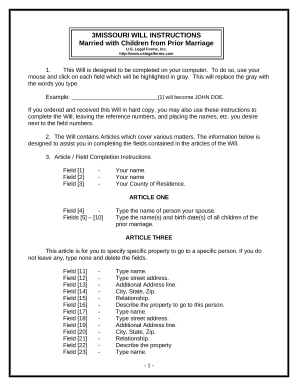
Legal Last Will and Testament for Married person with Minor Children from Prior Marriage - Missouri
Get form
Legal Last Will and Testament Form for Divorced and Remarried Person with Mine, Yours and Ours Children - Maryland
Get form

Enhance your productivity with Estate Planning Wills

Form management consumes to half of your business hours. With DocHub, it is easy to reclaim your office time and boost your team's productivity. Access Estate Planning Wills category and check out all form templates related to your everyday workflows.

Effortlessly use Estate Planning Wills:

  1. Open Estate Planning Wills and use Preview to find the suitable form.
  2. Click on Get Form to start working on it.
  3. Wait for your form to open in our online editor and start modifying it.
  4. Add new fillable fields, symbols, and pictures, adjust pages order, etc.
  5. Fill your form or set it for other contributors.
  6. Download or share the form by link, email attachment, or invite.

Accelerate your everyday document management with the Estate Planning Wills. Get your free DocHub account right now to explore all forms.


Video Guide on Estate Planning Wills management

video background

Commonly Asked Questions about Estate Planning Wills

Get a head-start on planning and follow these 7 easy steps: Take Inventory of Your Estate. First, narrow down what belongs to you. Set a Will in Place. Form a Trust. Consider Your Healthcare Options. Opt for Life Insurance. Store All Important Documents in One Place. Hire an Attorney from Angermeier Rogers.
Trusts offer amazing benefits, but they also come with potential downsides like loss of control, limited access to assets, costs, and recordkeeping difficulties.
Estate planning involves determining how an individuals assets will be preserved, managed, and distributed after death. It also takes into account the management of an individuals properties and financial obligations in the event that they become incapacitated. What Is Estate Planning? Definition, Meaning, and Key Components investopedia.com terms estateplanning investopedia.com terms estateplanning
A will covers what will happen to your family and property after you die. An estate plan has a will but also includes other documents protecting your family and property while you are alive but incapacitated. An estate plan guides your loved ones in handling your financial affairs and medical care.
Probate avoidance is the only goal. While this is an admirable goal, a trust may not be the only way to avoid probate. You have straightforward wishes. Youre motivated by tax savings or Medicaid eligibility. Youre not great at follow-through.
A living trust, unlike a will, can keep your assets out of probate proceedings. A trustor names a trustee to manage the assets of the trust indefinitely. Wills name an executor to manage the assets of the probate estate only until probate closes.
Wills stipulate how you want your assets distributed after you die. A will can also include other information, like who youd want to care for your children if theyre still minors. Having a will typically makes the process of administering your estate, known as probate, much simpler.
Trusts can be used to only allow the beneficiary to receive the bulk of the inheritance when he or she is old enough to spend it wisely. The list is not all-inclusive. The bottom line is that a trust provides far more potential asset protection than an outright inheritance.
