Improve your template operations with Credit Disputes

Your workflows always benefit when you can easily find all the forms and files you may need at your fingertips. DocHub delivers a vast array of form templates to alleviate your daily pains. Get a hold of Credit Disputes category and easily discover your document.

Begin working with Credit Disputes in several clicks:

  1. Browse Credit Disputes and get the form you need.
  2. Click Get Form to open it in the editor.
  3. Start modifying your document: add more fillable fields, highlight sentences, or blackout sensitive information.
  4. The app saves your modifications automatically, and after you are ready, you can download or distribute your file with other contributors.

Enjoy smooth record managing with DocHub. Discover our Credit Disputes online library and look for your form right now!

Video Guide on Credit Disputes management

video background

Commonly Asked Questions about Credit Disputes

A chargeback occurs when you successfully dispute a charge on your credit card. The charge is taken off your credit card account and the money paid to the merchant is reversed (or charged back to the merchant). Many people dispute credit card charges for services not rendered.
You should also check all your credit reports for accuracy, and ile disputes with each bureau separately to ensure the information is updated everywhere. Additionally, credit disputes are completely free through each bureau, so it is more than worth it to ile one if you ind inaccuracies on your credit report.
They can protect you from erroneous charges and credit card fraud, but also from poor quality products and services. Chargebacks are easy to initiate and are often successful, but they dont cover all scenarios. Before attempting a chargeback, you should try to resolve the issue with the merchant directly.
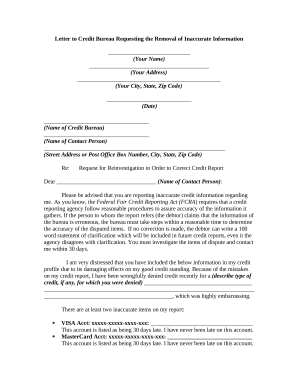
Follow these steps to dispute mistakes and optimize your chances of success: Obtain Your Credit Reports. Highlight Any Suspicious or Inaccurate Information. Compose Effective Dispute Letters. Send Dispute Letters Via Certified Mail. Follow Up If Your Dispute is Rejected.
Dispute mistakes with the credit bureaus. You should dispute with each credit bureau that has the mistake. Explain in writing what you think is wrong, include the credit bureaus dispute form (if they have one), copies of documents that support your dispute, and keep records of everything you send.
Disputing a charge on your credit does not directly impact your credit score. However, if your credit report changes due to the dispute, your score may change ingly. For example, resolving an inaccurate credit utilization error might increase your score.
Filing a Dispute Will Not Affect Your Score If you are correcting identification or contact information, the change will not affect your score. However, if you successfully get harmful information removed, your score may go up. Really, you have nothing to lose by disputing an error on your report.
In the vast majority of cases, hiring an outside company will do no more than waste your money. The most common way credit repair businesses work is to dispute all negative items that appear on your report, whether they are accurate or not.