Manage Claim Forms quickly online

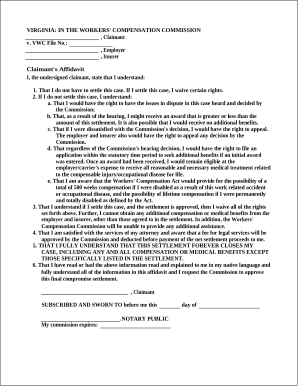
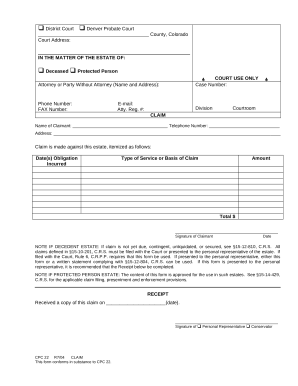
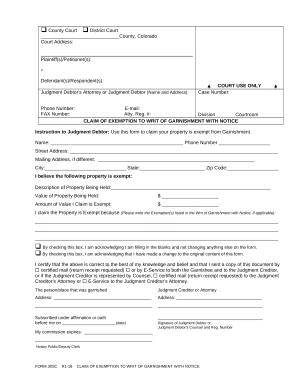
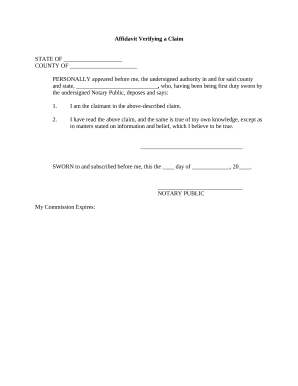
Document management can overpower you when you can’t locate all of the documents you need. Fortunately, with DocHub's substantial form library, you can discover all you need and easily handle it without the need of changing among applications. Get our Claim Forms and start utilizing them.

How to use our Claim Forms using these simple steps:

  1. Examine Claim Forms and select the form you need.
  2. Preview the template and click on Get Form.
  3. Wait for it to open in our online editor.
  4. Adjust your template: add new information and images, and fillable fields or blackout certain parts if necessary.
  5. Fill out your template, conserve modifications, and prepare it for sending.
  6. When all set, download your form or share it with other contributors.

Try out DocHub and browse our Claim Forms category with ease. Get a free account today!

Video Guide on Claim Forms management

video background

Commonly Asked Questions about Claim Forms

Claims-made coverage is portable. You can take the coverage from one insurance company to another. The advantage to an occurrence policy is its permanence. The period of time you are insured under an occurrence policy is protected forever by the policy you had that year.
Key Takeaways: A claims-made policy only covers those that occur and are reported within the policys timeframe, unless tail coverage is also purchased. An occurrence policy provides lifetime coverage for incidents that take place during a policy period, regardless of when the claim is reported.
Insurance companies commonly write policies on a claims-made form. This means your insurer helps cover claims filed during your policy period. There are two features of a claims-made policy that can affect coverage: Retroactive date: Your policy provides coverage if an incident occurs on or after a specified date.
As a medical billing company for various doctors and facilities, we understand that knowing which form to use is the first step to filing a successful claim. UB-40 and CMS-1500 are the two most common claim forms for submitting to insurance companies.
A medical claim is a bill that healthcare providers submit to a patients insurance provider. This bill contains unique medical codes detailing the care administered during a patient visit. The medical codes describe any service that a provider used to render care, including: A diagnosis. A procedure. Medical Claims 101: What you need to know | Definitive Healthcare definitivehc.com blog medical-claims-10 definitivehc.com blog medical-claims-10
noun. : a document with information about why a person should be given money. filled out an insurance claim form.
In general, the UB-04 form is used by institutional healthcare providers, such as hospitals, nursing homes, and rehabilitation centers, while the CMS 1500 form is used by individual healthcare providers, such as physicians, therapists, and dietitians.
The CMS-1500 form is the official standard Medicare and Medicaid health insurance claim form required by the Centers for Medicare Medicaid Services (CMS) of the U.S. Department of Health Human Services. Health Insurance Claim Forms | U.S. Government Bookstore gpo.gov catalog health-insurance-cl gpo.gov catalog health-insurance-cl
A claims-made policy only requires you to report the claim promptly, or as soon as practicable. This does not necessarily require the notification to occur during the policy term whereas the claims made and reported policy requires both to occur within the same policy period.
A claims made policy covers claims made during the policy period. The event that gave rise to the claim could have happened at any time, as long as the claim (or the written demand) was made during the policy period, and reported to the insurance company as required by the policy.