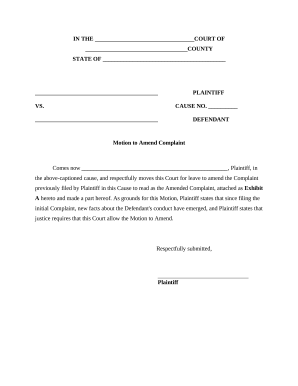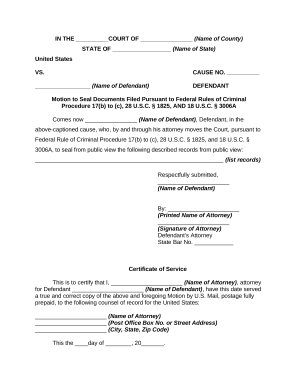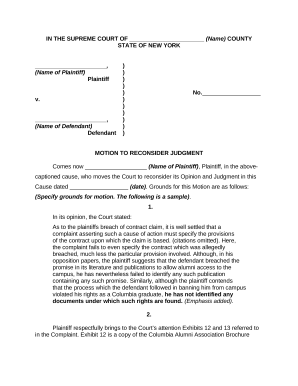
Improve your file managing with Civil Court Motions

Your workflows always benefit when you can discover all of the forms and files you may need on hand. DocHub gives a huge selection of form templates to ease your everyday pains. Get a hold of Civil Court Motions category and easily discover your document.

Begin working with Civil Court Motions in several clicks:

  1. Open Civil Court Motions and get the form you need.
  2. Click on Get Form to open it in the editor.
  3. Start modifying your form: add fillable fields, highlight paragraphs, or blackout sensitive data.
  4. The application saves your changes automatically, and once you are all set, you can download or distribute your form with other contributors.

Enjoy smooth form management with DocHub. Explore our Civil Court Motions online library and locate your form right now!


Commonly Asked Questions about Civil Court Motions

The CPC is supported administratively by the Civil Practice Unit. Staff in the Civil Practice Court serve as the first contact for any long motion, long application and any summary judgment motion. They are supported by an enhanced computerized scheduling program.
For civil motions heard by Associate Judges, Registrar in Bankruptcy matters, and Construction Act matters: Documents are filed at 330 University Avenue, Toronto; Hearings are heard at 393 University Avenue, Toronto.
To bring a motion, you need to: ask the court for a motion date. identify and fill out your motion forms. serve and file your motion forms. confirm that you will attend the motion. go to your motion hearing. receive the judges decision.
Short Applications Short Motions before Judge or Associate Judge: Applications and motions before a Judge or Associate Judge that require two hours or less for all parties to argue are considered short applications and short motions.
A motion is a process for requesting that a judge make an order. Generally, a party will make a motion to have a matter addressed before judgment, or in some circumstances after judgment or to support an enforcement process. Usually, a motion is a hearing in court before a judge.
The Superior Court of Justice hears all civil proceedings in Ontario, including commercial matters, personal injury, bankruptcy and insolvency cases, and litigation involving wills and estates.
If you are the Responding Party, you must serve the Moving Party with your responding documents and file them at least four (4) days before the motion. You can respond by filling out, serving and filing a Form 14A. Both parties must file the Affidavit of Service Form 6B with the court.