Get and manage Sale Business Forms online

Speed up your document management using our Sale Business Forms library with ready-made templates that suit your needs. Get the form, alter it, fill it, and share it with your contributors without breaking a sweat. Begin working more effectively with the documents.

The best way to use our Sale Business Forms:

  1. Open our Sale Business Forms and search for the form you need.
  2. Preview your form to ensure it’s what you want, and click on Get Form to begin working on it.
  3. Edit, add new text, or point out important information with DocHub features.
  4. Complete your form and preserve the modifications.
  5. Download or share your form template with other recipients.

Examine all of the opportunities for your online document management using our Sale Business Forms. Get your free free DocHub account right now!


Video Guide on Sale Business Forms management

video background

Commonly Asked Questions about Sale Business Forms

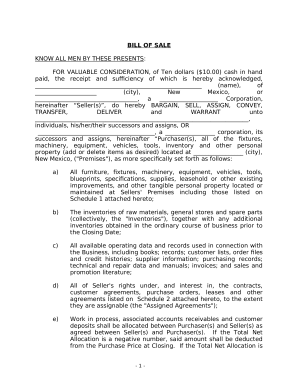
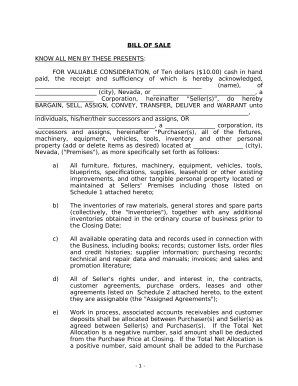
Use a Business Bill of Sale to set out the terms for the sale of a business and transfer the ownership and all assets to the buyer. A business bill of sale is an important and necessary component to complete when selling or buying a business. The bill of sale is often legally necessary for a business sale.
Both the seller and purchaser of a group of assets that makes up a trade or business must use Form 8594 to report such a sale if: goodwill or going concern value attaches, or could attach, to such assets and. the purchasers basis in the assets is determined only by the amount paid for the assets.
Table of Contents Step 1: Give it an accurate name. Step 2: Mention all parties involved. Step 3: Describe your services or product with all rights, guarantees, and restrictions. Step 4: State the contract duration and make deadlines clear. Step 5: Include the price, services, payment conditions, and penalties.
Both are reporting gains or losses on the sale of property. However, a very distinct difference is that Schedule D is for gains/losses on personal property, while Form 4797 is for property used for business purposes.
financial records and tax returns including profit and loss statements and balance sheets. material contracts with vendors, suppliers, clients, customers, distributors, or any other ongoing business relationship thats a critical part of your business.
How to Avoid Capital Gains Tax on Sale of Business? Holding Periods. Qualified Small Business Stock. 1031 Exchange. Invest in a Qualified Opportunity Zone. Sell to Your Employees. Use a Charitable Remainder Trust. Utilize Installment Sale. Offset Gains with Losses.
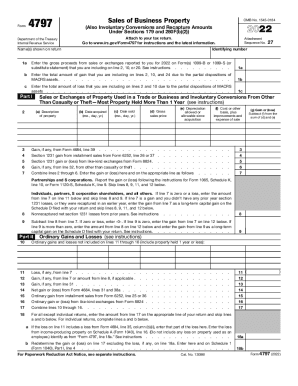
More In Forms and Instructions Use Form 4797 to report: The sale or exchange of property. The involuntary conversion of property and capital assets.
Form 4797 (Sales of Business Property), issued by the IRS, is used to report financial gains made from the sale or exchange of business property. The form requires a variety of information to be provided, such as the description of the property, the purchase date, depreciation, and the cost of the purchase.