




01. Edit your personal firearms record pdf online
Type text, add images, blackout confidential details, add comments, highlights and more.

Type text, add images, blackout confidential details, add comments, highlights and more.

Draw your signature, type it, upload its image, or use your mobile device as a signature pad.

Send firearm log book template via email, link, or fax. You can also download it, export it or print it out.
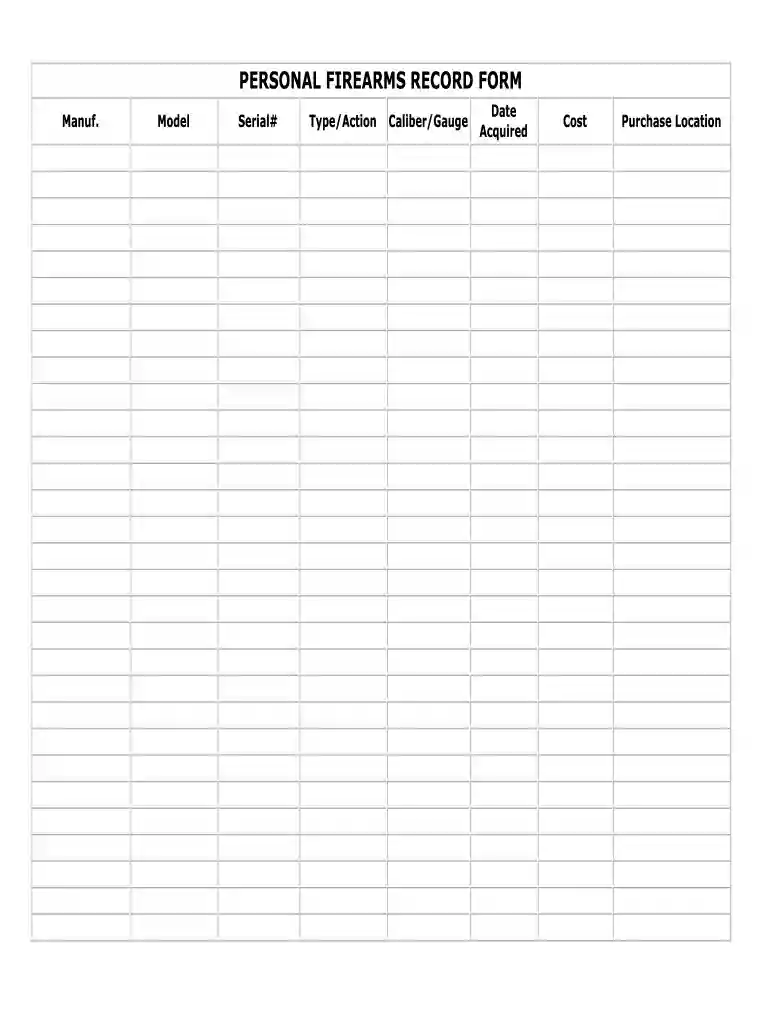
A personal firearms record serves as a comprehensive log for individuals to document essential details about their firearms, aiding accountability and responsible ownership. This record typically includes critical information such as the firearm's manufacturer, model, serial number, type or action, caliber or gauge, date acquired, cost, and the location of purchase. By maintaining an accurate and updated personal firearms record, owners can track their firearms for legal compliance, insurance purposes, and personal awareness.
Properly documenting this information can also assist in cases of theft, loss, or accidental discharge. Law enforcement officials often require a detailed account of firearms in legal investigations, making the personal firearms record a valuable asset in such situations. This proactive approach not only enhances personal responsibility but also contributes to community safety by ensuring that firearms are accounted for and handled appropriately.
Utilizing the personal firearms record effectively requires a systematic approach to documentation and updates. To begin, owners should obtain a personal firearms record template, which can often be found in printable formats or as a personal firearms record PDF online. Each firearm should be recorded promptly upon acquisition, with the following steps:
By following these guidelines, firearm owners can maintain an organized and informative personal firearms record that reflects their ownership history accurately.
A comprehensive personal firearms record comprises several key elements that ensure thorough documentation. These elements include but are not limited to:
Documenting these elements enables users to have a detailed account of their firearms, facilitating easy access to important information for legal, safety, and personal accountability purposes.
Filling out a personal firearms record requires careful attention to detail, ensuring every required field is completed accurately. Below are the steps to create and maintain a personal firearms record:
By following these steps meticulously, individuals can maintain a complete and accurate personal firearms record to assist with legal compliance and personal safety.
The personal firearms record is not only a practical tool for firearm owners but also plays an important role in legal compliance. In many states, maintaining such documentation can help ensure adherence to local and federal firearm regulations. Key legal considerations include:
Understanding the legal implications and uses of the personal firearms record empowers owners to navigate their responsibilities effectively and stay informed about relevant laws and regulations.
Familiarity with the terminology surrounding personal firearms records is important for all firearm owners. Key terms include:
Understanding these terms helps owners navigate discussions about firearms and fosters responsible ownership in compliance with various regulations.
Different states may impose varying regulations regarding the maintenance and use of personal firearms records, which can affect owners significantly. Awareness of these state-specific rules is critical, including:
Being informed about these state rules not only contributes to responsible ownership but also protects individuals against potential legal consequences. Always consult local laws for the most accurate and applicable information regarding personal firearms records.
At DocHub, your data security is our priority. We follow HIPAA, SOC2, GDPR, and other standards, so you can work on your documents with confidence.


