
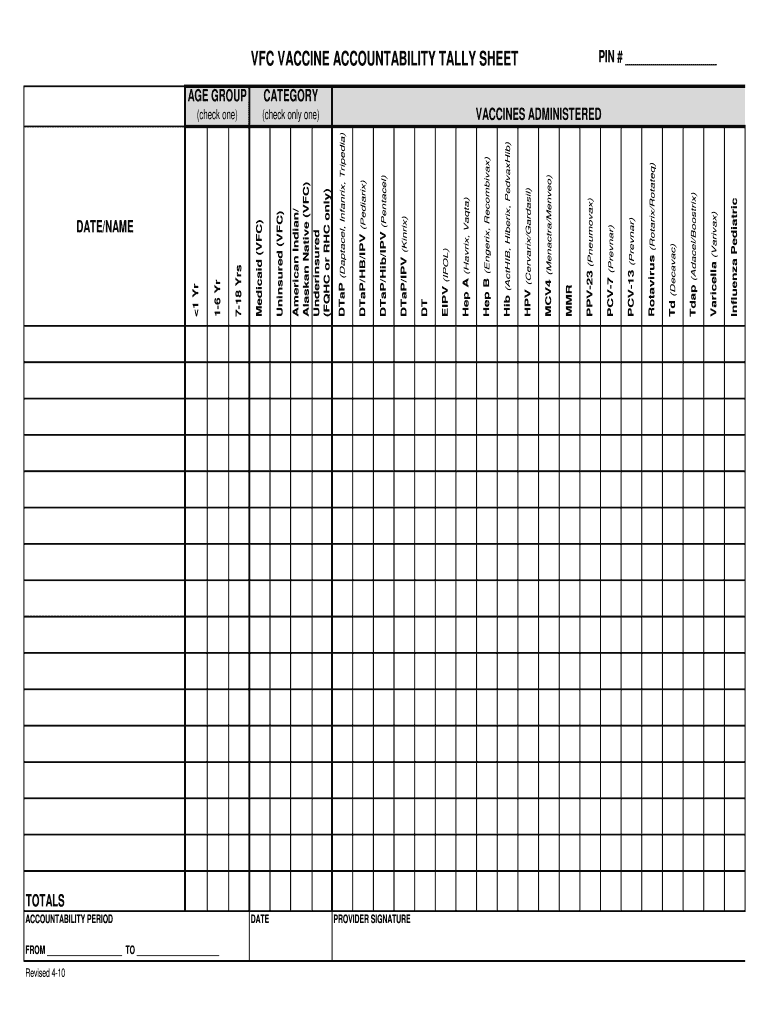







Definition and Meaning of the Routine Immunization Tally Sheet
A routine immunization tally sheet is a structured document that healthcare providers use to record the administration of vaccinations. This form is crucial in tracking the immunization status of individuals, particularly children, to ensure compliance with health guidelines. The tally sheet typically includes:
- Vaccine Types: Names and categories of vaccines administered (e.g., DTaP, polio, MMR).
- Date of Administration: The specific date each vaccine was given.
- Provider Information: Identification of the healthcare provider who administered the vaccines.
- Patient Data: Details regarding the individual receiving the vaccination, such as name, date of birth, and demographics.
- Total Counts: A summary of the number of each vaccine type administered.
The significance of this document lies in its role in monitoring immunization coverage and identifying gaps in vaccination rates among populations.
How to Use the Routine Immunization Tally Sheet
Utilizing a routine immunization tally sheet effectively requires understanding its structure and workflow. The following steps outline how to use the sheet efficiently:
-
Filling Patient Information:
- Enter the patient’s name, date of birth, and any other relevant identification details at the top of the sheet.
-
Recording Vaccine Information:
- For each vaccination administered, document the date, type of vaccine, and dosage. This record should include vaccines such as MMR or varicella.
-
Tracking Totals:
- At the end of the recording period, total the number of vaccinations given for each type. This ensures that healthcare providers can see which vaccines have been administered adequately.
-
Reviewing Compliance:
- Use the tallies to verify if the patient is up-to-date with recommended vaccinations based on age and health guidelines.
-
Reporting:
- Compile the data from the tally sheets to generate reports necessary for public health tracking.
Understanding these steps helps providers maintain organized records, promote vaccination awareness, and support immunization initiatives.
Key Elements of the Routine Immunization Tally Sheet
The routine immunization tally sheet comprises essential elements that facilitate the monitoring and administration of vaccinations effectively. Key components include:
-
Vaccine Information Section:
- Lists different vaccines alongside associated codes to streamline administration.
-
Patient Record Section:
- Captures patient demographics for accurate tracking and follow-up.
-
Date and Provider Signature Fields:
- Requires the healthcare provider to date and sign the form, adding layers of accountability.
-
Immunization History Summary:
- A section to summarize the number of doses given, aiding in compliance checks.
-
Graphical Representation:
- Some tally sheets may include places for visual tracking, enabling effective presentations during health audits or reviews.
These elements collectively facilitate proper documentation, ensuring a reliable account of immunizations administered over time.
State-Specific Rules for the Routine Immunization Tally Sheet
When utilizing a routine immunization tally sheet, it's crucial to be aware of state-specific regulations regarding immunizations. Variations may include:
- Required Vaccinations: Certain states mandate specific vaccines for school entry which may affect how tally sheets are filled.
- Reporting Standards: Some states may have unique requirements for reporting vaccine administration to public health organizations.
- Legislation on Documentation: States may impose particular rules concerning record retention and access to immunization records.
For effective compliance, healthcare providers should familiarize themselves with their state’s health department guidelines to ensure adherence.
Examples of Using the Routine Immunization Tally Sheet
Utilizing the routine immunization tally sheet can manifest in numerous practical scenarios, including:
-
Public Health Campaigns:
- During immunization drives, organizations use tally sheets to monitor vaccine coverage in real-time and adjust strategies accordingly.
-
Healthcare Facilities:
- Clinics employ tally sheets to track vaccines administered during well-child visits, ensuring children meet immunization schedules.
-
Research and Data Collection:
- Researchers may analyze data compiled through tally sheets to study vaccination trends and their impact on public health.
These examples illustrate the document's versatility in diverse healthcare contexts, emphasizing its importance in enhancing vaccination outcomes.
Legal Use of the Routine Immunization Tally Sheet
The routine immunization tally sheet must comply with various legal standards that govern health records management. Key legal considerations include:
- Patient Privacy: Adhering to HIPAA regulations is essential, as it protects personal health information from unauthorized access.
- Record Retention Policies: States and healthcare organizations often dictate how long immunization records must be kept, commonly ranging from five to ten years.
- Verification for School Requirement: Documents may serve as proof of immunization for school enrollment, necessitating adherence to state and federal documentation standards.
Understanding these legal aspects ensures that healthcare practitioners handle immunization records appropriately and in alignment with regulatory expectations.




