




01. Edit your firefighter evaluation form online
Type text, add images, blackout confidential details, add comments, highlights and more.

Type text, add images, blackout confidential details, add comments, highlights and more.

Draw your signature, type it, upload its image, or use your mobile device as a signature pad.

Send probationary firefighter evaluation form via email, link, or fax. You can also download it, export it or print it out.
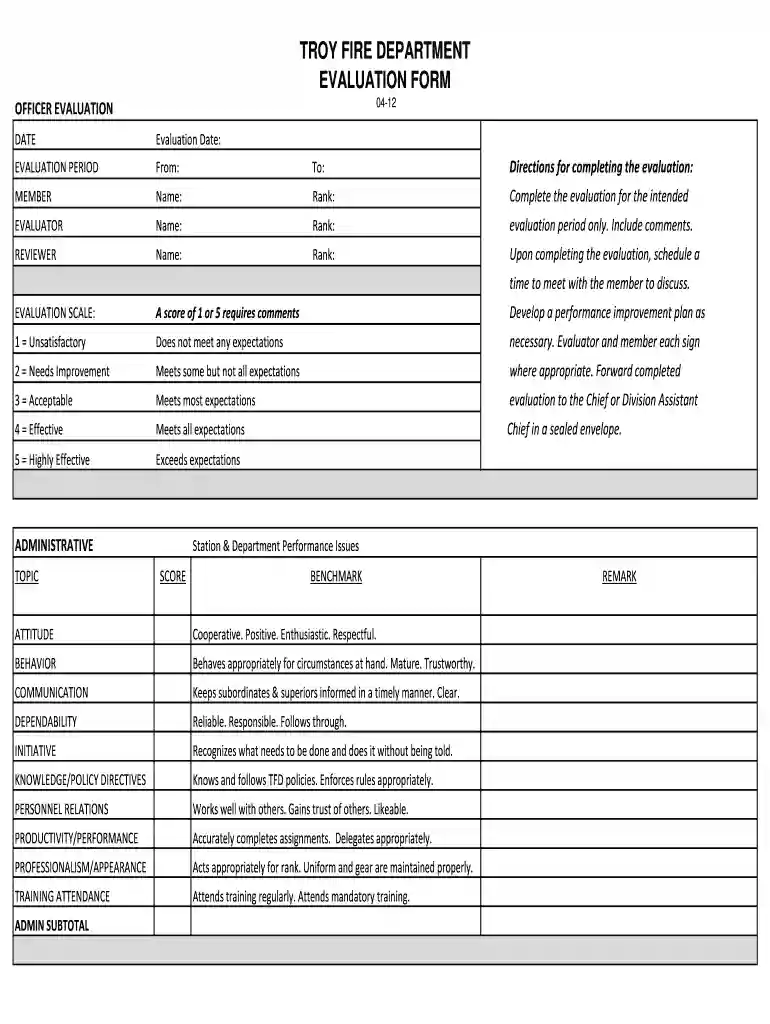
The firefighter evaluation form is a critical tool utilized within fire departments across the United States for assessing the performance of active firefighters. This structured form plays a vital role in ensuring the quality and effectiveness of fire services, facilitating both individual and organizational growth.
The evaluation typically encompasses various performance metrics that assess both operational and administrative capabilities of firefighters. Key elements include:
Scoring for each metric usually ranges from "Unsatisfactory" to "Highly Effective," with corresponding comments necessary for scores of one or five to provide clarity and insight into a firefighter's performance.
Feedback is an essential component of the evaluation process. Evaluators are required to provide comments on specific performance metrics, especially when firefighters receive low or high scores. For instance:
If a firefighter requires improvement, a performance improvement plan (PIP) is often mandated. This plan outlines the necessary steps for achieving better performance, including targeted training, mentorship, or additional support.
Once the evaluation is complete, it is crucial for evaluators to meet with the firefighter being evaluated. This discussion serves several purposes:
This meeting fosters an environment of trust and growth, facilitating a positive rehabilitative approach to performance evaluations.
The completed firefighter evaluation form typically requires submission to higher authorities within the fire department. Proper documentation and adherence to submission protocols ensure a formal record of the performance review process. Essential aspects include:
There are several specific types of firefighter evaluation forms, each designed to address distinct evaluation needs:
The firefighter evaluation process must align with local, state, and federal regulations, ensuring compliance regarding employee assessments. This includes:
Evaluators often refer to standardized templates to ensure comprehensive coverage of all necessary criteria. Typical examples may include:
These standardized criteria help ensure that evaluations are objective and comprehensive, supporting both transparency and accountability within the department.
The firefighter evaluation form is not merely a bureaucratic necessity; it significantly contributes to professional development, performance improvement, and organizational effectiveness. Properly executed evaluations guide fire departments in shaping capable, responsive, and effective firefighting teams, directly impacting community safety and service quality.
We've got more versions of the firefighter evaluation form form. Select the right firefighter evaluation form version from the list and start editing it straight away!
| Versions | Form popularity | Fillable & printable |
|---|---|---|
| 2012 | 4.8 Satisfied (61 Votes) |
Sign in to your DocHub account and add your firefighter performance evaluation form to our editor using one of its upload options - from your device, cloud storage, secure URL, or your DocHub folders if you have already processed your document before. Open our editor, click the Sign key in the top toolbar, and choose your signing method. You can use an image of your handwritten signature, draw it, type in your name, or utilize a QR code instead.
You can find the latest and most relevant version of the firefighter performance evaluation in our DocHub forms library. Search it by categories or utilize the search field to find the exact template that suits your case. You may open this form for editing after you find it.
At DocHub, your data security is our priority. We follow HIPAA, SOC2, GDPR, and other standards, so you can work on your documents with confidence.
JOB PERFORMANCE EVALUATION FORM. NON-EXEMPT POSITIONS. Name: Evaluation Period: Supervisor: Job Description Review. Title: Date of Review: Does the current jobRead more
An example of a completed Stage 1 self- assessment form can be found in Appendix C. Complete. Stage 1 self-assessment form. Justify the answers. Identify.Read more
Evaluation. Enter X under appropriate rating number and under proper heading for each category listed. Definition for each rating number follows: 0Read more


