






Definition and Meaning of the Generic Lab Order Form
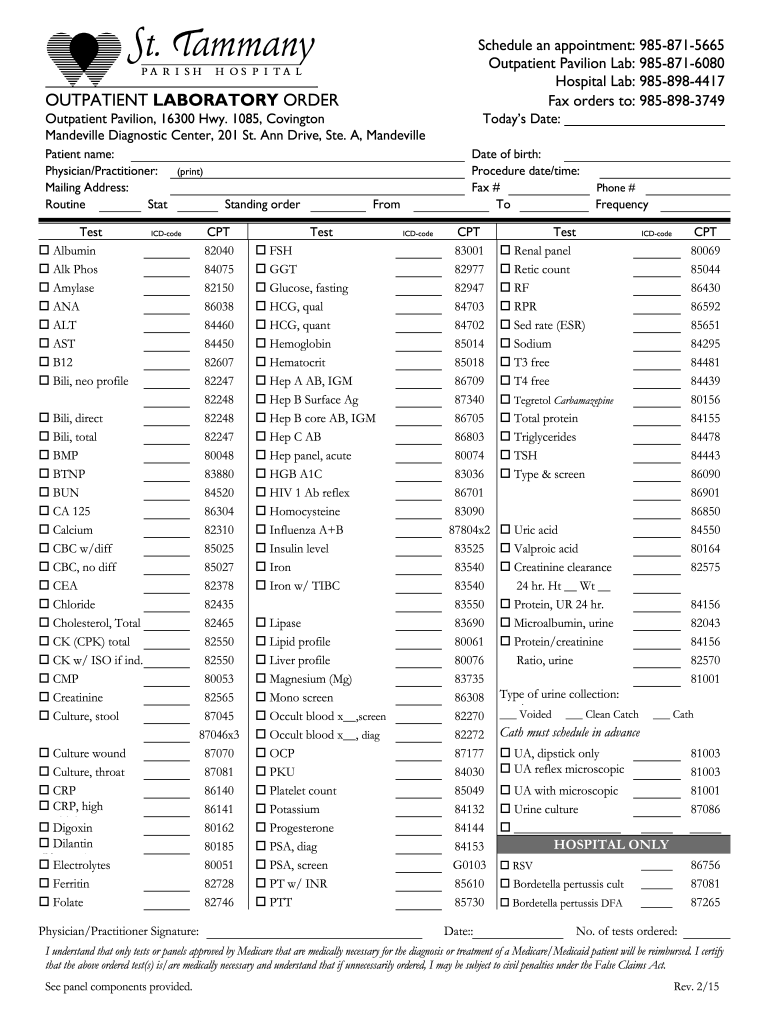
The generic lab order form is a standardized document used by healthcare providers to order laboratory tests for patients. It serves as a critical communication tool between clinicians and laboratory personnel, ensuring that the necessary tests are identified clearly and accurately. This form typically includes essential patient information, a list of requested tests, and the healthcare provider's signature.
Components of the Generic Lab Order Form
- Patient Information: Name, date of birth, gender, and contact details that help identify the patient.
- Test Selection: Specific tests requested by the healthcare provider, often including blood work, imaging, and other diagnostic tests.
- Physician Details: The name and contact information of the referring physician, which aids the laboratory in case further clarification is needed.
- Insurance and Billing Information: Relevant details that facilitate billing processes and insurance claims.
Having a well-structured generic lab order form facilitates not only better patient care through accurate testing but also smooth operational processes within healthcare facilities.
How to Use the Generic Lab Order Form
Utilizing the generic lab order form involves several steps that ensure effective collaboration between healthcare providers and laboratories. Here's a breakdown of how to use the form efficiently:
- Obtain the Form: The first step involves acquiring the generic lab order form from a reliable source, such as a healthcare provider's office or online platforms like DocHub.
- Complete Patient Information: Fill in the required patient details accurately. This information is critical for identifying the patient and ensuring test results are correctly attributed.
- Select Tests: Choose the necessary lab tests based on the clinical needs. Ensure to refer to the latest guidelines on the tests being ordered to avoid unnecessary ones.
- Include Insurance Details: If applicable, provide information related to the patient’s insurance to facilitate billing and coverage confirmation.
- Physician's Signature: Finally, the form must be signed by the referring physician, which confirms the authenticity of the order and is necessary for processing the tests.
Using the form correctly contributes to streamlining the testing process and enhancing the accuracy of patient diagnoses.
Steps to Complete the Generic Lab Order Form
Completing the generic lab order form requires careful attention to detail to ensure all necessary information is provided. Follow these steps for accuracy:
- Download or Obtain the Form: You can get a PDF version of the lab order form from healthcare facilities or trusted online sites that offer medical documentation.
- Fill in Patient Information:
- Name
- Date of Birth
- Gender
- Insurance details, if any
- Select Laboratory Tests: Review the list of laboratory tests and choose the ones that are medically justified for the patient's condition. Examples include:
- Complete blood count (CBC)
- Comprehensive metabolic panel (CMP)
- Lipid panel
- Physician’s Information: Provide the name and contact number of the physician responsible for the order to ensure that any queries can be directed appropriately.
- Check for Completeness: Review the entire form for completeness and accuracy before submission.
- Sign and Dispatch: The physician must sign the document, after which it can be sent to the laboratory for processing.
Accurate completion of the generic lab order form minimizes delays in testing and enhances the efficiency of patient care.
Key Elements of the Generic Lab Order Form
Understanding the essential features of the generic lab order form is crucial for its effective use. These key elements ensure proper documentation and communication in the laboratory testing process:
- Patient Identification: Vital for linking test results to the correct individual, minimizing the risk of errors.
- Ordered Tests: A detailed list of tests required, often followed by associated codes (like CPT codes) to identify them uniquely.
- Signature and Stamp: The healthcare provider's signature, which authenticates the order, along with any practice stamps, guarantees that the request is legitimate.
- Test Code Reference: Corresponding codes for laboratory tests facilitate easier communication with laboratory staff and help streamline billing processes.
- Comments and Instructions Section: A space for healthcare providers to add any special instructions or notes that would aid the laboratory in processing the tests correctly.
Familiarity with these components allows healthcare professionals to streamline processes and maintain clear communication regarding patient care.
Legal Use of the Generic Lab Order Form
The legal implications associated with the use of the generic lab order form are significant and must be adhered to by healthcare providers. Key aspects to consider include:
- Compliance with Regulations: In the United States, the form must comply with various healthcare regulations, including HIPAA, which governs patient privacy and data security.
- Legitimacy of the Order: The physician’s signature confirms that the tests ordered are medically necessary, which is essential for both patient safety and legal accountability.
- Maintaining Records: Healthcare facilities must keep thorough records of lab orders for potential audits, ensuring they can provide documentation when required.
- Liability Issues: Failure to adhere to legal standards when ordering laboratory tests can subject healthcare providers to malpractice lawsuits.
Awareness of the legal aspects surrounding the use of the generic lab order form enhances accountability and promotes best practices in patient care.
Important Terms Related to the Generic Lab Order Form
Familiarity with specific terminology associated with the generic lab order form enhances understanding and effective communication among healthcare providers, laboratories, and patients. Here are some critical terms:
- CPT Codes: Current Procedural Terminology codes used to describe medical tests and procedures, which are necessary for billing and insurance claims.
- Lab Requisition: Another term used interchangeably with the lab order form, signifying the request for laboratory testing.
- Test Panel: A group of tests grouped together and ordered collectively, such as a lipid panel or metabolic panel.
- Provider Signature: The signed approval from a healthcare provider, validating the necessity of the tests ordered.
- Patient Demographics: Basic patient information such as name, age, and insurance details, crucial for identifying patients at the laboratory.
Understanding these terms is vital for ensuring comprehensive and effective communication throughout the laboratory testing and diagnostic process.