







Definition and Meaning of Recycling Receipts
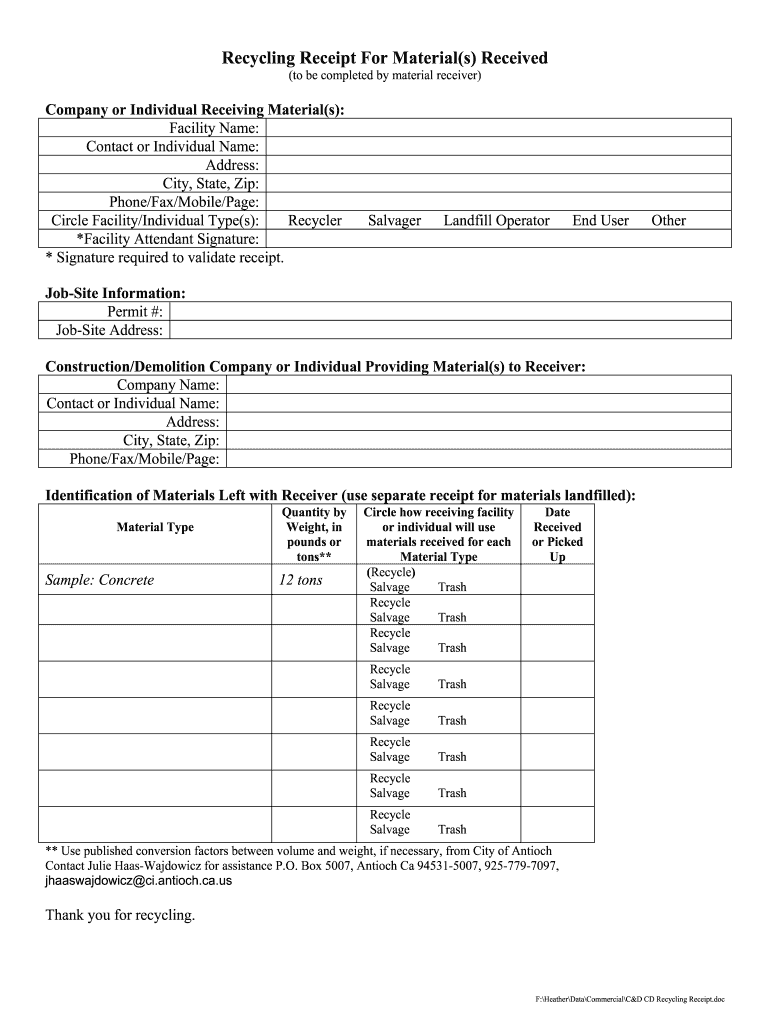
Recycling receipts are official documents that acknowledge the transfer of materials intended for recycling. They serve multiple purposes, including verifying the type and quantity of materials received and ensuring compliance with local waste management regulations. The receipts typically include information about the materials received, their intended use—whether for recycling, salvage, or disposal—and details about the receiving facility.
Important components of a recycling receipt often consist of:
- Receiving Company Information: Details about the company or organization accepting the recyclable materials, including their name and address.
- Job Site Details: Information regarding the location from which the materials were collected, enabling tracking of the waste source.
- Material Identification: Descriptions and quantities of the materials being processed, which are vital for accurate recycling and reporting.
- Signatures: Required signatures from facility attendants or authorized personnel to validate the receipt.
The purpose of these receipts extends beyond simple documentation. They can be integral for compliance audits, environmental reporting, and for businesses aiming to demonstrate sustainable practices.
How to Use Recycling Receipts
Utilizing recycling receipts effectively requires understanding their structure and the information they convey. Here are the key steps and considerations for their usage:
-
Preparation: Before utilizing the recycling receipt, gather all pertinent information, such as material types, quantities, and receiving facility details.
-
Completion: Fill out the recycling receipt with accurate information, ensuring all fields are completed:
- Specify the materials received and their corresponding quantities.
- Include all necessary identifying information, such as job-site and recipient details.
-
Verification: After completion, ensure that both the sender and receiver review the information for accuracy. This step is crucial as it may affect compliance and financial record-keeping.
-
Storage: Maintain a copy of the recycling receipt for your records. This documentation may be needed for environmental audits or to substantiate business practices related to waste management.
-
Distribution: Share the completed receipt with relevant parties, including local waste management agencies or regulatory bodies when required.
By following these steps, users can ensure that recycling receipts serve their intended purpose while promoting responsible waste management practices.
Steps to Complete Recycling Receipts
Completing a recycling receipt involves a systematic process to ensure accuracy and compliance. Here’s a step-by-step guide:
-
Gather Required Information:
- Job-Site Identification: Collect details about the location from which materials were collected.
- Receivers’ Information: Ensure the name and address of the receiving company is correct.
-
Identify Material Types:
- List out types of materials being recycled, such as paper, plastics, metals, or electronics, along with their specific quantities.
-
Fill Out the Receipt:
- Enter all gathered information into the corresponding fields of the recycling receipt. Ensure clarity and precision to prevent misunderstandings.
-
Review and Validate:
- Have both the sending party and the receiving facility review the completed receipt. This may involve signing the document to confirm agreement on the contents.
-
Keep Copies for Records:
- Retain a duplicate of the completed receipt for your records. This is crucial for legal compliance and environmental reporting.
-
Submit or Store:
- If needed, submit the receipt to relevant authorities or simply store it electronically or physically in an organized manner.
By adhering to these steps, individuals and organizations can ensure that recycling receipts are accurately completed and serve their intended purpose within the waste management framework.
Key Elements of Recycling Receipts
Understanding the essential components of recycling receipts is critical for proper documentation and regulatory compliance. Each receipt typically contains the following key elements:
-
Header Information: This includes the title "Recycling Receipt" and may also contain logos or branding from the recycling organization.
-
Sender Details: Information about who is offering the material, including contact information, is crucial for tracing its origin.
-
Recipient Information: The name, location, and contact of the facility receiving the materials help in tracking and accountability.
-
Date of Transaction: The date when the materials were delivered is important for record-keeping and reporting purposes.
-
Material Description: Detailed descriptions of the recycled materials, including types, weights, and volume, ensure clarity in what is being processed.
-
Use Case: The intended use for the materials—whether they are to be recycled, salvaged, or disposed of—should be clearly stated.
-
Signatures for Validation: Signature lines for both the sender and receiver authenticate the transaction and assure its legitimacy.
Collectively, these elements ensure that recycling receipts serve as reliable documentation for regulatory purposes, financial records, and environmental compliance.
Examples of Using Recycling Receipts
Recycling receipts play an essential role in various sectors, facilitating compliance and accountability in the recycling process. Here are several scenarios to illustrate their application:
-
Construction Projects: A demolition contractor collecting materials for recycling may issue a recycling receipt upon delivering materials, such as metals or wood, to a local recycling facility. The receipt provides documentation for both the contractor's waste management efforts and for compliance with local recycling regulations.
-
Retail Sector: A retail store that generates a large volume of cardboard waste can utilize recycling receipts when sending their waste to a paper recycling facility. By completing and retaining these receipts, the store demonstrates its commitment to sustainable practices while maintaining compliance with environmental laws.
-
Manufacturing: A manufacturer producing plastic products may engage a waste management service to recycle scrap plastic. Upon collection, the service coordinator would provide a recycling receipt, documenting the specific types and quantities of plastic received, helping the manufacturer track their recycling efforts.
-
Event Management: An event organizer may use recycling receipts during festivals or large gatherings where significant amounts of trash and recyclables are collected. Each collection point can provide receipts to ensure responsible disposal and comply with local waste management policies.
These examples highlight how recycling receipts serve various industries while aiding in environmental stewardship and compliance with regulations.




