
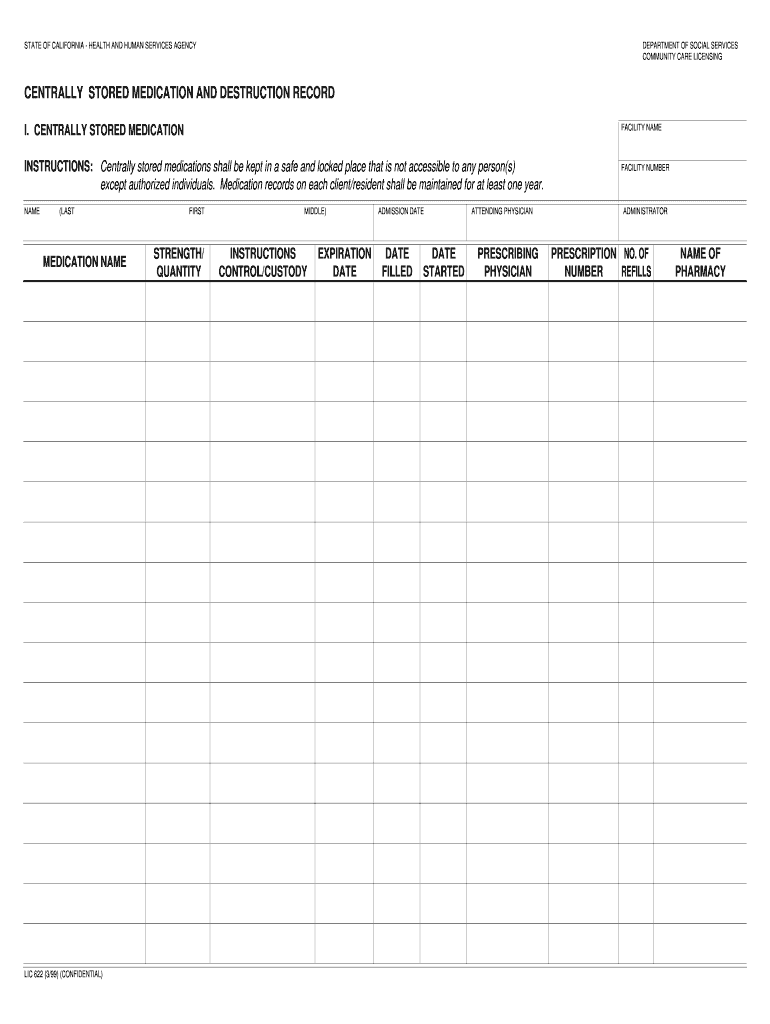







Definition and Purpose of LIC 622
The LIC 622 is a critical form used in California's community care facilities to manage centrally stored medications and their destruction. This form outlines the protocols for securely storing medications, tracking their use, and ensuring proper disposal in compliance with state regulations. The LIC 622 aims to maintain safety and accountability within facilities that care for vulnerable populations, ensuring that medications are handled appropriately to prevent misuse and harm.
Key Components of the LIC 622
-
Medication Storage: The LIC 622 mandates secure storage of medications, which includes utilizing locked cabinets or safes to prevent unauthorized access. Facilities must establish clear policies on who can access these medications and under what circumstances.
-
Record Keeping: Facilities are required to maintain accurate records of all medications stored and administered. This entails documenting the type and quantity of medications, the date of receipt, and the identity of staff members responsible for handling them. Records should be kept for at least one year.
-
Destruction Procedures: The form provides specific guidelines for the destruction of unused or expired medications. Disposal must be done in accordance with local regulations, often requiring a witness to ensure transparency and compliance.
Steps to Complete and Utilize the LIC 622 Form
Completing the LIC 622 involves a systematic approach to ensure compliance with California's regulations regarding medication management. Here are the essential steps:
-
Gather Necessary Information: Collect all relevant details about the medications, including names, dosages, and quantities.
-
Complete the Form: Fill out the LIC 622 with accurate information. Ensure that all sections are completed, including storage locations and staff oversight.
-
Implement Storage Solutions: Set up secure storage for medications as prescribed in the LIC 622. This often includes installing locks or safes in designated medication rooms.
-
Establish Record-Keeping Practices: Develop a method for tracking medication usage and storage. This can include logs or electronic health record systems that meet HIPAA requirements.
-
Execute Destruction Protocols: For medications that are no longer needed, follow the LIC 622 guidelines for destruction. This typically involves using licensed disposal services and maintaining records of all destroyed medications.
Legal Compliance Related to LIC 622
Compliance with the LIC 622 and related regulations is crucial for facilities that handle medications. Failure to adhere can result in severe consequences, including:
-
Fines and Penalties: Non-compliance can lead to financial penalties imposed by regulatory bodies.
-
License Issues: Facilities may face actions against their operating licenses, leading to potential closures.
-
Legal Liability: Improper handling of medications can result in legal actions from patients or family members affected by medication mismanagement.
Important Terms Associated with LIC 622
Understanding specific terminology is essential for proper application and compliance with the LIC 622. Key terms include:
-
Centrally Stored Medications: Medications kept in a centralized location rather than being distributed to various units within the facility.
-
Destruction Log: A record that documents the disposal of medications, including dates, quantities, and methods of destruction.
-
Witness Requirement: The necessity for a qualified individual to witness the destruction of medications to verify that all procedures have been followed.
Examples of Utilizing the LIC 622 in Practice
To illustrate the application of the LIC 622, consider the following scenarios:
-
Initial Setup of a New Facility: When opening a new community care facility, staff must complete the LIC 622 form as part of the licensing process. This involves securing approvals from relevant state authorities and setting up medication storage areas according to regulatory standards.
-
Regular Audits: Facilities can use the LIC 622 during internal audits to ensure compliance. This may involve checking inventory against records, verifying proper destruction practices, and assessing the security of medication storage.
-
Training Staff: Educational programs can be developed around the LIC 622, simplifying the training of new employees regarding medication management protocols and legal responsibilities.
By understanding the LIC 622 in its various aspects, community care facilities can ensure compliance with California's medication management regulations, ultimately promoting safety and accountability in their operations.




