




Definition and Purpose of the Interview Information Form
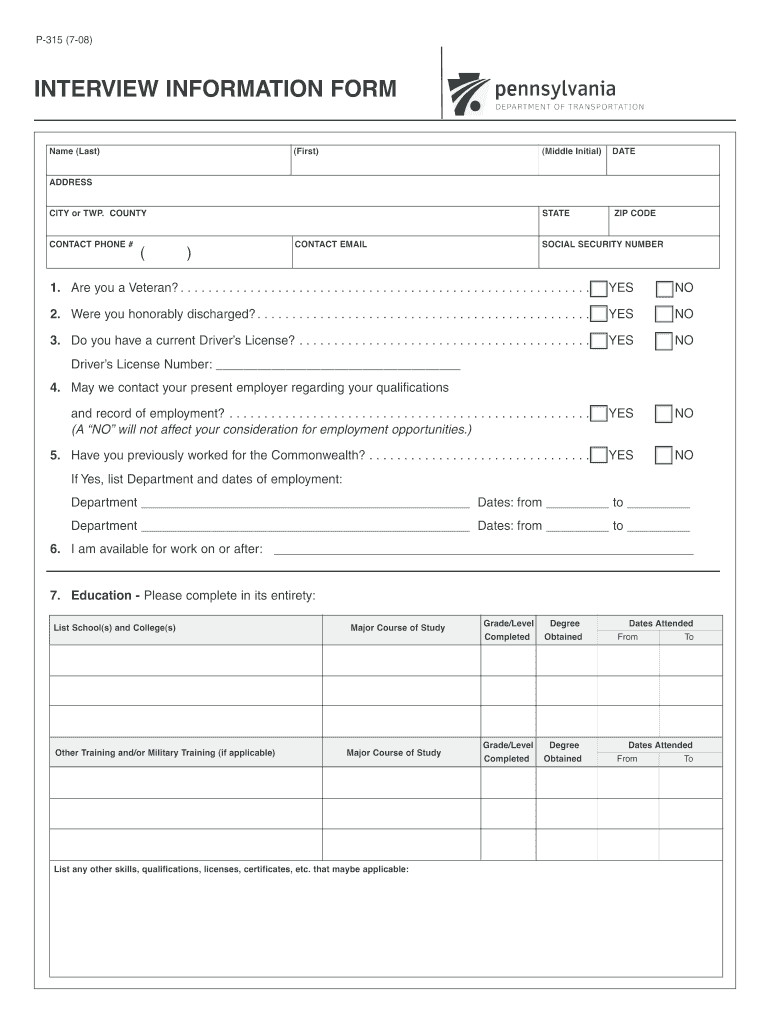
The interview information form is a structured document designed to collect comprehensive personal, educational, and employment details from job applicants. It serves several key roles in the hiring process:
- Personal Information: This section typically includes the applicant's name, contact details, and social security number, which are essential for identification and background checks.
- Employment History: Applicants are required to provide details about their previous employments, including job titles, responsibilities, and tenure, thereby allowing employers to evaluate the candidate's experience.
- Educational Background: This portion gathers information about the applicant's academic achievements, including degrees earned, institutions attended, and relevant certifications.
- Veteran Status: Some forms include a section where applicants can disclose their military service, which may be relevant for employers looking to fulfill diversity and inclusion goals.
- Criminal History: This section allows employers to understand any potential legal issues that may affect an applicant's eligibility for a position.
Overall, the form aims to streamline the recruitment process, helping employers make informed hiring decisions based on a well-rounded view of the applicant's qualifications.
How to Use the Interview Information Form Effectively
Using the interview information form correctly is crucial to ensuring a smooth hiring process. Here are the steps involved:
- Accessing the Form: The first step is to obtain a copy of the interview information form, often available as a downloadable PDF from the employer's website or recruitment portal.
- Filling Out the Form: Applicants should carefully complete each section, ensuring accuracy and completeness. It's advisable to use clear, legible handwriting or to fill it out digitally to enhance readability.
- Reviewing Information: Once filled, applicants should review their responses to catch any mistakes or omissions. Cross-checking against personal records can help ensure that all information is correct.
- Submitting the Form: The final step is submitting the form according to the specified method provided by the employer, which could be online, via email, or by mail.
Proper use of the interview form can not only demonstrate an applicant’s professionalism but also ensure that all relevant information is considered during the hiring process.
Steps to Complete the Interview Information Form
Completing the interview information form involves several critical steps that ensure all required information is accurately provided:
- Start With Personal Information: Fill in complete details, including full name, address, phone number, and email address. This information is vital for ongoing communication about the job application status.
- Detail Employment History: List previous jobs in reverse chronological order. Include employer names, positions held, dates of employment, and a brief list of responsibilities and accomplishments relevant to the new role.
- Provide Educational Background: Document each degree or diploma obtained, with the name of the institution and the graduation date. If relevant, include honors, awards, or special recognitions received.
- Declare Veteran Status: If applicable, indicating veteran status can benefit applicants eligible for certain hiring preferences. Applicants must accurately detail their military service dates and branch.
- Answer Criminal History Questions: Be honest when disclosing any criminal history. Many employers look favorably on transparency and may have policies that take context into account.
After completing these steps, signing the form where indicated is necessary for validation and to verify the truthfulness of the submitted information.
Important Terms Related to the Interview Information Form
Understanding key terms related to the interview information form can provide clarity during the completion process:
- Applicant: An individual applying for a job who submits the interview information form.
- Employer: The organization or entity conducting the hiring process and collecting the interview forms.
- Background Check: A standard procedure where employers verify the information provided by applicants, usually focusing on employment history, educational credentials, and criminal background.
- Confidentiality: This term refers to how personal information submitted in the interview form will be treated, assuring applicants that their data will be securely handled.
- Compliance: Refers to adherence to relevant labor laws and regulations that govern the hiring process, including how information on the interview information form must be collected and stored.
A firm grasp of these terms can facilitate better communication and understanding during the hiring process.
Legal Use of the Interview Information Form
The legal use of the interview information form is governed by various laws and regulations that aim to protect the rights of applicants while ensuring employers can conduct thorough evaluations. Key legal aspects include:
- Equal Employment Opportunity (EEO): Employers must comply with EEO guidelines, which prohibit discrimination based on race, color, religion, sex, or national origin. The interview information form should not request information that could lead to discriminatory practices.
- Fair Credit Reporting Act (FCRA): If the hiring process includes background checks, employers must inform applicants that their background information may be obtained and provide them with the right to dispute any inaccuracies.
- Privacy Laws: Compliance with federal and state privacy laws is essential in collecting, storing, and processing the information on the interview information form to safeguard applicants' personal data from unauthorized access.
Understanding these legal frameworks is crucial for both applicants and employers, ensuring that the hiring process is conducted fairly and transparently.