




01. Edit your information subpoena ny pdf online
Type text, add images, blackout confidential details, add comments, highlights and more.

Type text, add images, blackout confidential details, add comments, highlights and more.

Draw your signature, type it, upload its image, or use your mobile device as a signature pad.

Send sample information subpoena new york via email, link, or fax. You can also download it, export it or print it out.
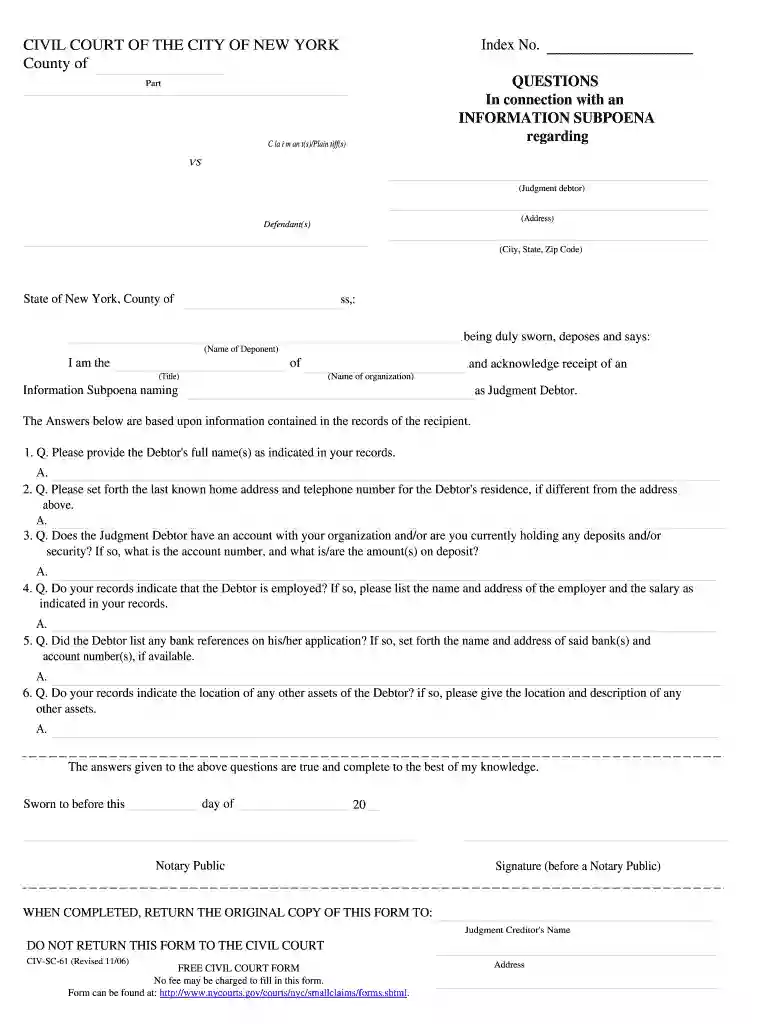
An Information Subpoena is a legal instrument utilized in the Civil Court of New York designed to gather comprehensive details about a judgment debtor. This form is essential for creditors seeking vital data to enforce a court judgment effectively. It includes items such as the debtor's name, address, employment status, bank account details, and other financial assets. The completed form is submitted to the judgment creditor rather than the court.
The Information Subpoena form contains specific sections that request critical information from the judgment debtor. These details typically include:
This structured approach ensures creditors have a clear picture of the debtor's financial situation, facilitating the collection process.
Information subpoenas adhere to legal standards outlined in the New York Civil Practice Law and Rules (CPLR). They are governed by specific legal provisions that dictate how creditors may obtain information while respecting debtors' rights.
Filling out the Information Subpoena form involves several important steps.
Once completed, the information must be returned to the judgment creditor, who will use it to further pursue the collection of the owed amount.
Typically, various parties utilize the Information Subpoena form, including:
Understanding who uses the form can help target its practical applications effectively within legal proceedings.
Several scenarios illustrate the application of Information Subpoenas in legal contexts:
These examples highlight the relevance of the Information Subpoena in various debt recovery situations.
Failure of a debtor to respond adequately to an Information Subpoena can lead to significant legal repercussions.
These consequences reinforce the importance of responding to an Information Subpoena diligently and in a timely manner.
While the Information Subpoena is a primary tool for debt collection, there are variations and alternatives that serve similar purposes, such as:
Understanding these alternatives can provide creditors with additional strategies for gathering information effectively.
Navigating the Information Subpoena process is vital for creditors seeking to enforce judgments in New York. The structured approach of gathering financial data facilitates informed decision-making during collection efforts, while adherence to legal obligations ensures that the rights of all parties are respected. Whether used by creditors, attorneys, or collection agencies, the Information Subpoena stands as a crucial tool in the landscape of debt recovery.
We've got more versions of the information subpoena ny pdf form. Select the right information subpoena ny pdf version from the list and start editing it straight away!
| Versions | Form popularity | Fillable & printable |
|---|---|---|
| 2006 | 4.9 Satisfied (240 Votes) |
At DocHub, your data security is our priority. We follow HIPAA, SOC2, GDPR, and other standards, so you can work on your documents with confidence.
Feb 14, 2022 Discovery can be in the form of an information subpoena. The refusal or willful neglect of any person to obey a subpoena or restraining noticeRead more
Apr 24, 2013 (G) REQUESTS; SUBPOENAS.The person complies with any request for information or administrative subpoena issued by the President under thisRead more


