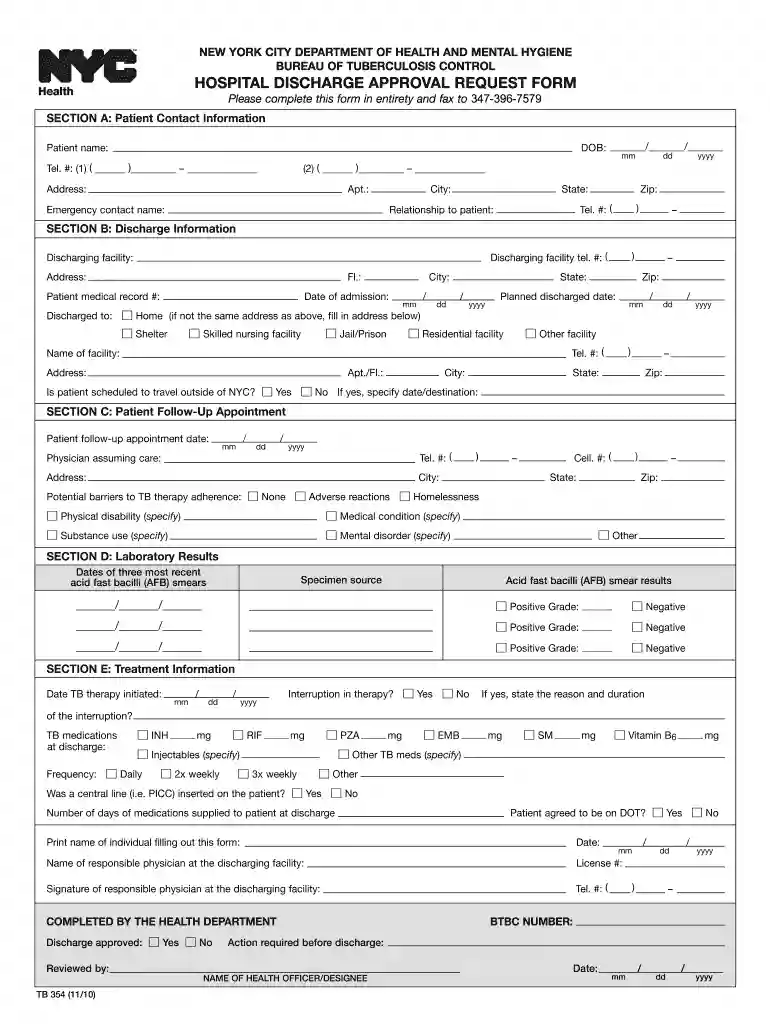
Blank hospital discharge forms 2026

Get Form
hospital discharge papers Preview on Page 1

Here's how it works

01. Edit your hospital discharge papers online
Type text, add images, blackout confidential details, add comments, highlights and more.

02. Sign it in a few clicks
Draw your signature, type it, upload its image, or use your mobile device as a signature pad.

03. Share your form with others
Send hospital discharge papers pdf free via email, link, or fax. You can also download it, export it or print it out.

Definition and Meaning of Blank Hospital Discharge Forms

Blank hospital discharge forms are official documents utilized by healthcare facilities to facilitate the process of releasing patients safely from medical care. These forms serve as a formal record that a patient has received the necessary medical treatment and is cleared for discharge.

  • Patient Information: The forms typically require crucial data about the patient, including their full name, date of birth, and hospital identification number, to ensure proper identification.
  • Healthcare Provider Details: Information about the attending physician, including their name and contact information, is often included, which enables continuity of care.
  • Discharge Details: The document outlines the reasons for discharge, including the patient's current health status, any active medical issues, and follow-up care instructions.

These forms play a vital role in transferring information to the patient and their caregivers, ensuring that all parties understand the necessary follow-up actions and observations.

How to Use Blank Hospital Discharge Forms

Using blank hospital discharge forms involves a systematic approach to filling out the required information accurately. Adhering to a clear procedure helps prevent paperwork errors and supports an efficient discharge process.

  1. Obtain the Form: The first step is to acquire the appropriate blank hospital discharge form from the hospital’s administrative office or download it from a trusted source.
  2. Fill in Patient Information: Enter all necessary personal details. Ensuring accuracy at this stage minimizes the risk of confusion later.
  3. Specify Discharge Reason: Indicate the medical justification for discharge, referring to medical records if needed.
  4. Include Follow-up Instructions: Summarize required follow-up appointments, post-discharge care, medications, and signs of complications that the patient should monitor.
  5. Review for Completeness: Double-check that all sections of the form are filled out as necessary to ensure smooth processing.

By utilizing the forms effectively, healthcare professionals can ensure a smooth transition for patients back to their home environment or into continued care settings.

Steps to Complete Blank Hospital Discharge Forms

Completing a blank hospital discharge form requires careful attention to detail and adherence to specific instructions to ensure clarity and compliance.

  • Step One: Start with Patient Identification

    • Write down the patient's full name, date of birth, and hospital ID for accurate tracking and record-keeping.
  • Step Two: Document Admission and Discharge Dates

    • Indicate the date of admission and the projected date of discharge to establish a clear timeline of the patient’s stay.
  • Step Three: Indicate Medical Condition

    • Clearly state the patient's medical diagnosis and any relevant procedures that were performed during their hospital stay, ensuring this aligns with the medical records.
  • Step Four: Provide Discharge Instructions

    • Fill in specific aftercare instructions tailored to the patient’s needs. These may include medication regimens, dietary recommendations, and necessary follow-up appointments.
  • Step Five: Sign and Date the Form

    • The healthcare provider must sign and date the form to validate the discharge and indicate that the patient has been informed about the necessary next steps.

Following these steps helps to ensure that the form not only meets regulatory requirements but also serves the patient's needs effectively.

Important Terms Related to Blank Hospital Discharge Forms

Understanding key terminology associated with blank hospital discharge forms helps individuals comprehend their contents accurately and utilize them effectively.

  • Discharge Summary: A document that summarizes a patient's hospital stay, including diagnosis, treatments received, and instructions for post-hospital care.
  • Follow-up Care: Instructions emphasizing the next steps patients should take after their discharge, which may involve seeing a specialist or continuing treatment.
  • Patient Consent: Referring to the explicit agreement given by a patient regarding their care and treatment decisions, as well as consent to share their health information.

Familiarity with these terms is essential for both healthcare providers and patients to navigate the discharge process successfully.

Legal Use of Blank Hospital Discharge Forms

Blank hospital discharge forms hold legal significance and must comply with specific regulations to ensure validity and enforceability.

  • Patient Rights: Forms should reflect compliance with patient rights regulations, ensuring that patients are sufficiently informed about their discharge and care instructions.
  • Confidentiality: Patient information must be protected under regulations like HIPAA (Health Insurance Portability and Accountability Act), guaranteeing that personal health information remains confidential.
  • Liability Requirements: Providers must understand their legal obligations regarding patient safety during and after discharge. Proper use of these forms can mitigate liability by documenting that necessary information was communicated.

Adhering to legal standards when utilizing discharge forms helps protect patient rights while also shielding healthcare entities from potential legal claims.

Who Typically Uses Blank Hospital Discharge Forms

Blank hospital discharge forms are utilized by various stakeholders in the healthcare system.

  • Healthcare Providers: Doctors, nurses, and discharge coordinators are primarily responsible for filling out and issuing these forms to patients during the discharge process.
  • Administrative Staff: Hospital administrative staff manage the distribution of these forms and ensure compliance with relevant regulations.
  • Patients and Caregivers: Patients receiving discharge instructions and their caregivers use the forms to understand post-hospital care requirements clearly.
  • Insurance Companies: Discharge forms may be reviewed by insurance providers to verify compliance with hospital protocols and coverage for follow-up care.

Each of these parties plays a critical role in ensuring that the discharge process is smooth, efficient, and legally compliant.

Examples of Using Blank Hospital Discharge Forms

Real-world examples illustrate how blank hospital discharge forms play a pivotal role in patient care and continuity.

  • Post-Surgery Discharge: After a patient undergoes a surgical procedure, the attending physician completes the discharge form, specifying follow-up appointments and any signs of complications the patient should watch for, ensuring the patient is well-prepared.
  • Emergency Room Discharges: In cases where a patient is treated and released from an emergency room, the discharge form captures treatment details, medication prescriptions, and guidance for care at home, providing crucial information for recovery.
  • Long-term Care Transition: For patients transferring to rehabilitation facilities or home healthcare services, discharge forms include detailed instructions that facilitate seamless transitions and ongoing care management.

These examples highlight the importance of comprehensive discharge documentation in providing clarity and continuity after hospital stays.

See more blank hospital discharge forms versions

We've got more versions of the blank hospital discharge forms form. Select the right blank hospital discharge forms version from the list and start editing it straight away!
Versions Form popularity Fillable & printable
2010 4.9 Satisfied (44 Votes)
be ready to get more

Complete this form in 5 minutes or less

Get form

Got questions?

We have answers to the most popular questions from our customers. If you can't find an answer to your question, please contact us.
Contact us
Types of hospital discharge include: Routine Discharge, Discharge to Rehabilitation Center, Discharge to Nursing/Long-Term Care, Discharge with Home Healthcare Services, Discharge Against Medical Advice (AMA), and Transfer to Another Hospital. Each depends on the patients condition and care needs.
Contents of a good discharge letter They need to have an understanding of key events decisions that occurred. Provides the same information for the patient and their relatives to digest in their own time, as well as an idea of what to do (or not) and what to expect next, both in terms of recovery and follow up.
If you wish to self-discharge against the advice of the Doctor or Nurse, you may be asked to sign a discharge AMA (against medical advice) form or self-discharge form before you leave. This letter states that you are aware self-discharge is contrary to medical advice.
Your hospital discharge summary should contain the following information: Reason for hospitalization. docHub findings. Procedures and Treatment. Patients discharge condition. Patient and family instructions. Attending Physicians Signature.
This discharge form is simple and straightforward. It contains six (6) parts: Patient Details, Primary Healthcare Professional Details, Admission and Discharge Details, Diagnosis and Procedures, Medication Details, and Prepared by section. Provide the required details of the patient.

Security and compliance

At DocHub, your data security is our priority. We follow HIPAA, SOC2, GDPR, and other standards, so you can work on your documents with confidence.

Learn more
ccpa2
pci-dss
gdpr-compliance
hipaa
soc-compliance

People also ask

Everywhere Ive worked has given patients a copy of their discharge letter. If you want a copy you can complete a subject access request and unless they have a good reason they will have to give it to you. This applies to the rest of your medical record.

hospital discharge papers template