






Definition & Meaning of the Physical Examination Form
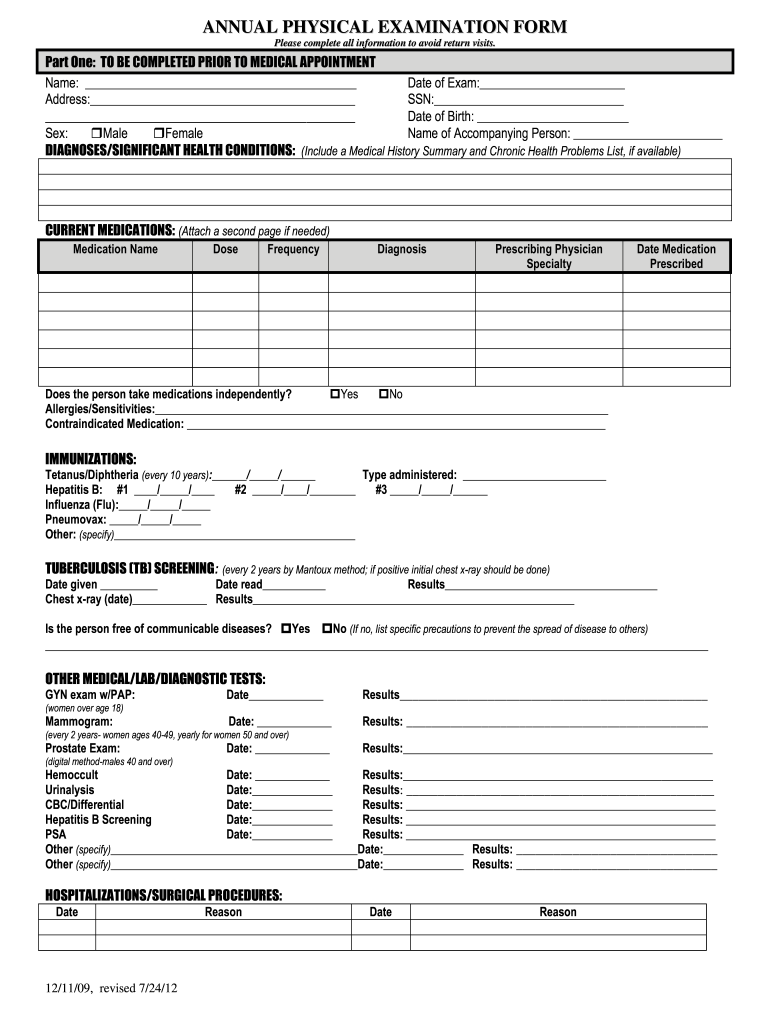
A physical examination form is a standardized document utilized to collect comprehensive health information from patients. It encompasses a variety of essential data points including personal identification details, medical history, current medications, and immunization records. This form is crucial for ensuring a thorough health assessment during annual check-ups or pre-requisite evaluations for specific activities like sports or employment.
Core Components of the Physical Examination Form
- Personal Information: Includes the patient's name, date of birth, and contact details.
- Medical History: Covers past illnesses, surgeries, and family health history.
- Current Medications: Lists all medications the patient is currently taking, including dosages.
- Immunization Records: Documents all vaccinations received by the patient, relevant for schools and workplaces.
- Physical Assessment Results: Summarizes findings from the physical examination performed by a healthcare provider.
Key Elements of the Physical Examination Form
Understanding the key elements of the physical examination form is essential for its effective use. This form typically includes several distinct sections each designed to elicit vital information.
Main Sections of the Form
- Demographics Section: Captures fundamental details like age, gender, and insurance information.
- Health History Section: Queries about chronic illnesses, allergies, and prior hospitalizations to inform the current health status effectively.
- Family History Section: Assesses hereditary conditions that may affect the patient’s health.
- Symptoms Assessment Section: Highlights any current symptoms the patient is experiencing, aiding the physician in diagnosis.
- Physical Exam Findings Section: Summarizes observations made by the healthcare professional during the examination.
Additional Features
- Patient Consent: Often includes a section for patient consent allowing for data sharing with other healthcare providers.
- Contact Information for Emergency: Ensures that emergency contacts are listed for unforeseen circumstances.
How to Use the Physical Examination Form
Using the physical examination form properly is key to ensuring accurate health assessments. It serves multiple purposes such as routine health checks, sports eligibility, job requirements, and more.
Step-by-Step Process to Utilize the Form
- Pre-Appointment Preparation: Complete as much of the form as possible before your appointment. This includes filling out personal information and medication lists.
- Consultation with Healthcare Provider: Discuss any symptoms or concerns during the appointment, ensuring that the provider has a complete picture of your health.
- Review of Findings: After the examination, review the findings noted by the physician to ensure all pertinent information has been captured accurately.
- Submit the Form: Depending on the requirements, submit the completed form to the relevant entity—this could include educational institutions, employers, or medical records departments.
Considerations for Effective Use
- Ensure all information is up-to-date and accurate to avoid any miscommunication regarding health status.
- Be prepared to clarify any responses during the healthcare consultation, as this will enhance understanding and care.
Steps to Complete the Physical Examination Form
Completing the physical examination form thoroughly is critical for both patient safety and effective care. Below are the detailed steps involved in accurately filling out the form.
Detailed Completion Steps
- Gather Necessary Information: Collect all relevant medical records, a list of current medications, and any previous examination documents.
- Complete the Demographics Section: Fill in your name, address, and date of birth, ensuring accuracy as inconsistencies can lead to issues later.
- Record Medical History: Provide comprehensive details on past medical conditions, surgeries, and family medical history, including chronic diseases.
- List Current Medications: Indicate all medications you are currently taking, including supplements, listing the dosage and duration.
- Immunization History: Document all vaccinations, including dates and types, as this section can affect eligibility for certain programs or employment.
- Detail Current Symptoms: Clearly outline any symptoms you are experiencing to assist healthcare providers in offering the best care.
- Review for Accuracy: Before submitting, review the entire form to catch any errors or omissions that could affect your health record.
Tips for Filling Out the Form
- Use clear, legible handwriting or typed responses to prevent misinterpretations.
- Maintain confidentiality and privacy when discussing sensitive health information.
- Double-check any dates, especially for immunizations and previous medical history to ensure they are correct.
Legal Use of the Physical Examination Form
The physical examination form holds significant importance in legal contexts, especially concerning compliance and documentation for various activities and practices.
Legal Implications of the Form
- Regulatory Compliance: Many institutions require a physical examination form to comply with state and federal health regulations, ensuring safety and health standards are met.
- Liability Protection: Properly completed forms can protect healthcare providers from legal liabilities by providing documented consent and a detailed health history.
- Record Keeping: Forms serve as legal documents that can be referenced for future medical treatment, improving continuity of care.
Documentation Importance
- Evidence for Legal Cases: In scenarios involving health-related disputes, such as insurance claims or workplace incidents, these forms can serve as critical evidence.
- Consent Documentation: The filled-out form often contains patient consent regarding treatments, which is vital for ethical and legal standards within healthcare.
Examples of Using the Physical Examination Form
The physical examination form can be employed in various scenarios, showcasing its versatility and necessity in healthcare and related fields.
Common Usage Scenarios
- Annual Physicals: Used in routine health checks to establish a baseline for future health assessments and detect any emerging health issues.
- Sports Participation: Required by schools and sports leagues to ensure participants are physically fit and not at risk of injury due to underlying health conditions.
- Employment Requirements: Many employers require a physical examination form to be completed prior to hiring to assess fitness for work, especially for physical labor jobs.
- Healthcare Transitions: Facilitates transfers between healthcare providers by providing a comprehensive health overview, aiding in uninterrupted patient care.
Real-World Case Studies
- A high school athlete submits a completed physical examination form to the school nurse to gain clearance for participation in sports, ensuring that the school maintains a safe environment.
- An employee returning from a medical leave submits a physical examination form to their HR department to validate their readiness to return to work and resume physical activities.
Conclusion
The physical examination form serves a critical role in healthcare by facilitating comprehensive assessments, ensuring legal compliance, and promoting patient safety. Understanding its elements and proper use is essential for both patients and healthcare providers to enhance care quality and delivery.