




01. Edit your dependent care fsa babysitter receipt online
Type text, add images, blackout confidential details, add comments, highlights and more.

Type text, add images, blackout confidential details, add comments, highlights and more.

Draw your signature, type it, upload its image, or use your mobile device as a signature pad.

Send dependent care fsa babysitter receipt template via email, link, or fax. You can also download it, export it or print it out.
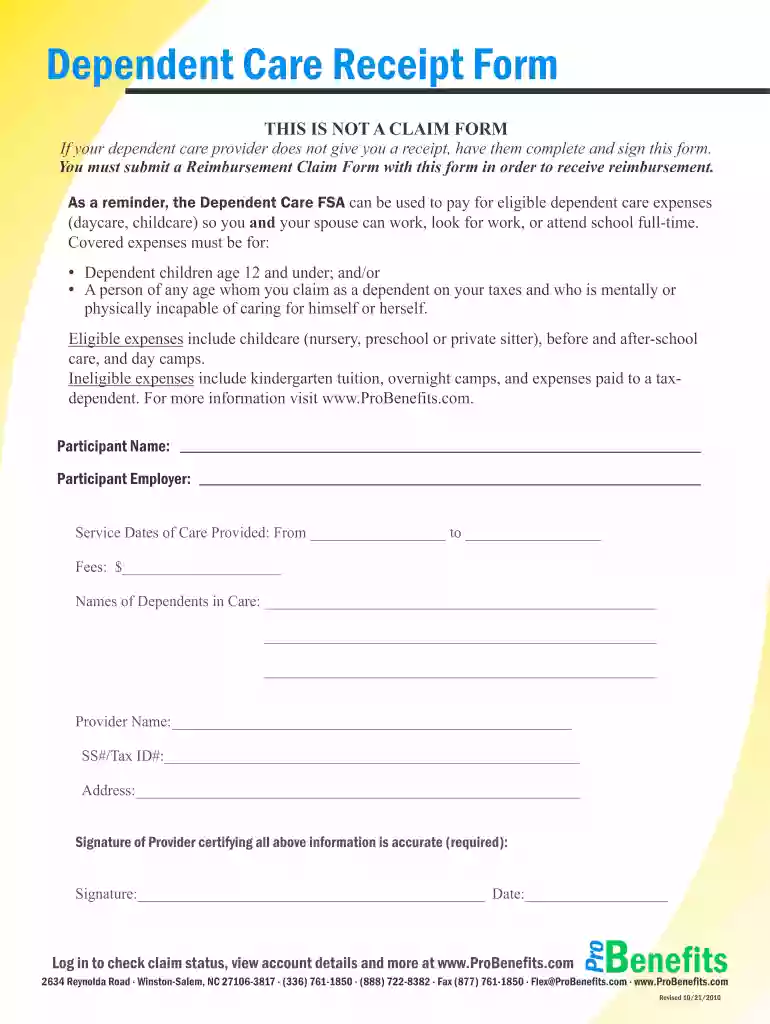
The dependent care FSA (Flexible Spending Account) babysitter receipt is essential for individuals seeking reimbursement for eligible childcare expenses through an FSA. This document serves as proof of payment for services provided by babysitters, nannies, or daycare facilities. Understanding its components and requirements can streamline the filing process and enhance the chances of successful claims.
The structure of a babysitter receipt needs to encompass specific details to ensure compliance with FSA guidelines. Essential elements typically include:
Provider Information: This includes the babysitter's full name, address, and contact information. It may also require the provider's Social Security number or Employer Identification Number (EIN) for verification.
Care Dates: The receipt should specify the exact dates when childcare services were rendered. It's crucial to itemize each date for clarity.
Payment Details: The amount paid for services must be clearly outlined. This section may break down costs per day or hour, depending on the agreement with the babysitter.
Signature/Certification: A signature from the provider, verifying that the services were provided and payment received, adds legitimacy to the receipt.
Creating a babysitter receipt that meets FSA requirements can be straightforward if you follow these steps:
Gather Information: Collect all necessary details regarding the provider, care dates, and payment amounts.
Document Format: Ensure that the receipt is formatted clearly. Templates often simplify this process and ensure no information is overlooked.
Fill Out the Receipt: Include the provider’s details, the dates of service, and the total amount paid. Always use accurate and professional language.
Signature Affixation: Have the babysitter sign the receipt to certify that the services were rendered, ensuring it meets FSA submission standards.
Submit for Reimbursement: Provide the completed babysitter receipt to your FSA administrator along with any supporting documents as required.
In navigating FSA submissions, it’s vital to distinguish between eligible and ineligible expenses. Common examples include:
Eligible Expenses:
Ineligible Expenses:
The IRS stipulates clear guidelines for reimbursements claimed through a dependent care FSA. These include:
Documentation: Receipts must include all essential information as mentioned. The IRS requires proper documentation to substantiate claims, ensuring the legitimacy of expenses.
Tax Implications: Understand that while dependent care FSAs allow pre-tax contributions, improper documentation may lead to tax penalties.
Claim Limits: There are annual contribution limits based on filing status, affecting how much can be claimed back through the FSA.
For those managing multiple receipts or claims, establishing best practices for documentation can facilitate a smoother process:
Digital Copies: Maintain digital records of all receipts in a cloud storage service. This ensures that documents are readily accessible when needed for claims.
Organized Filing: Use folders to categorize documents by date or provider type. This organization makes it easier to retrieve specific documents during the claim process.
Regular Reviews: Periodically review your documentation for completeness and compliance with IRS requirements, adjusting as necessary to adhere to evolving guidelines.
By understanding the nuances of the dependent care FSA babysitter receipt and adhering to best documentation practices, individuals can effectively navigate the reimbursement process, maximizing their benefits while minimizing the risk of claim denials.
We've got more versions of the dependent care fsa babysitter receipt form. Select the right dependent care fsa babysitter receipt version from the list and start editing it straight away!
At DocHub, your data security is our priority. We follow HIPAA, SOC2, GDPR, and other standards, so you can work on your documents with confidence.


