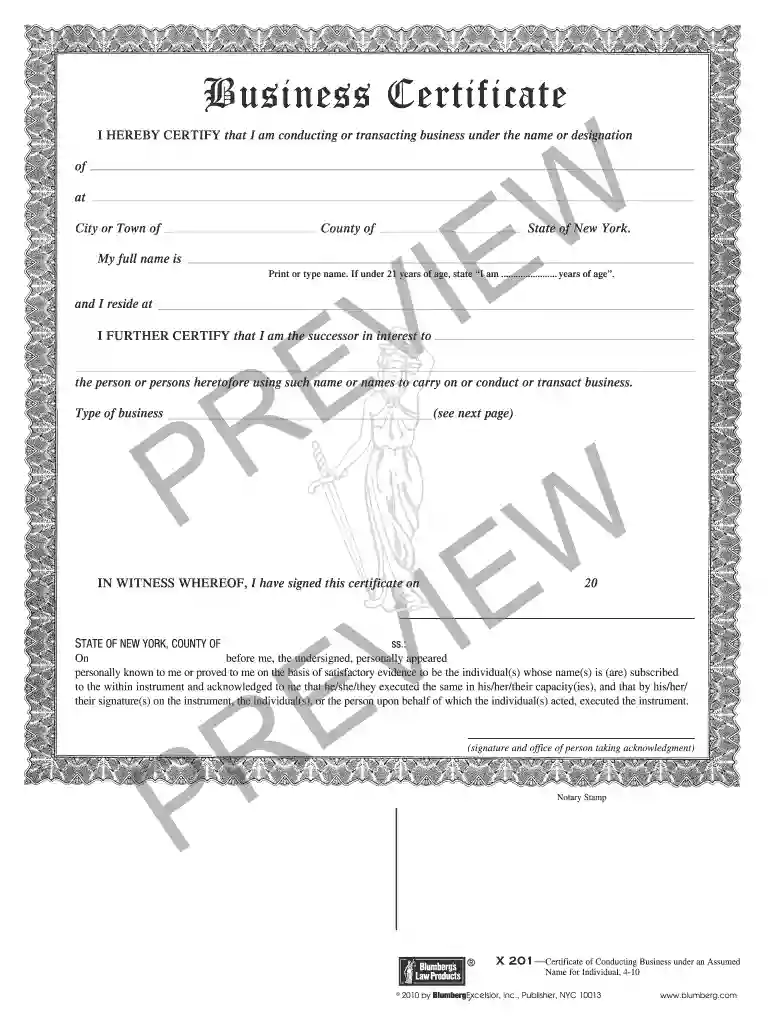
Definition & Meaning of Form X 201 for a Sole Proprietorship
The X 201 form serves as a business certificate specific to sole proprietorships in the State of New York, providing a legal acknowledgment of a business operating under an assumed name. This document is essential for individuals wishing to establish their businesses officially while protecting their personal liability in business dealings. Understanding the legal implications and requirements surrounding this form is critical for compliance and success.
Key Characteristics
- Legal Recognition: The X 201 form certifies that the business operates under a name that differs from the owner's legal name. Without this certification, businesses may face legal challenges or difficulties in establishing credit lines.
- Public Record: Once filed, the certificate becomes part of the public record, which can enhance credibility among customers and vendors.
- Easy Access: In New York, individuals can obtain the form through various government offices or online platforms.
Steps to Complete the X 201 for a Sole Proprietorship
Completing the X 201 form requires careful attention to detail to ensure accuracy and compliance with state laws. Here’s a step-by-step guide on how to fill out the form efficiently:
- Personal Information: Start with your full legal name and contact information. This usually includes your residential address, which will be publicly linked to your business.
- Business Name: Enter the assumed name under which the business will operate. Ensure that the name does not conflict with existing registered business names.
- Business Location: Provide the physical address where your business activities will occur. It is crucial that this address is accurate for licensing and zoning purposes.
- Nature of Business: Describe the business's intended activities. This section should clearly delineate how the business will operate.
- Owner's Signature: Review all information for accuracy, then sign and date the document, verifying that the information is correct and complete.
- Notarization: In some cases, a notary acknowledgment may be required to validate the filing, particularly if submitting the form in person.
Tips for Proper Completion
- Double-check for typographical errors, especially in the business name.
- Consider consulting with a legal advisor if you are uncertain about any terms or requirements.
- Use blue or black ink if filing a paper version to ensure legibility.
Who Typically Uses the X 201 for a Sole Proprietorship
The X 201 form is predominantly utilized by individuals who are establishing sole proprietorships within New York. This includes:

- Freelancers: Independent contractors offering services such as graphic design, writing, or consultancy may choose to file this form to formalize their business operations.
- Retail Entrepreneurs: Small business owners opening brick-and-mortar or online stores may need to operate under a unique business name, prompting the use of Form X 201.
- Service Providers: Home improvement professionals, hairstylists, and other service-oriented businesses often file this form to gain professional credibility.
Benefits of Filing
Filing the X 201 form provides several benefits:
- Legal Protection: Helps in protecting personal assets while doing business.
- Business Banking: Essential for opening a business bank account or applying for loans.
- Customer Trust: Instills confidence in potential customers who prefer working with formally recognized businesses.
Important Terms Related to X 201 for a Sole Proprietorship
Understanding the terminology associated with Form X 201 is vital for comprehension and compliance. Here are key terms to be familiar with:
- Assumed Name: This refers to the business name that differs from the owner’s legal name. It is essential for branding and marketing.
- Certificate of Assumed Name: An official document filed with the county clerk to establish the legal authority to operate under an assumed name.
- Sole Proprietorship: A type of business entity where a single individual owns and manages the business, holding full personal liability for its debts.
Clarification of Terms
Knowing these terms can help streamline the filing process and ensure that the applicant complies with all necessary legal requirements, preventing misunderstandings that could lead to penalties.
Legal Use of the X 201 for a Sole Proprietorship
The X 201 form plays a vital role in ensuring that businesses comply with local laws and operate legally. Here are key aspects of its legal use:
Filing Requirements
- Timeliness: The form should be filed prior to commencing business operations under the assumed name to avoid legal repercussions.
- Renewal and Updates: Should there be changes in ownership or business scope, an updated X 201 form must be filed.
Compliance Benefits
- Legal Recognition: Helps establish ownership and operational legitimacy in business transactions.
- Dispute Resolution: In case of legal disputes over business names or operations, the filed form serves as an official record of the business's legitimacy.
How to Obtain the X 201 for a Sole Proprietorship
Accessing the X 201 form is straightforward. Prospective business owners can obtain the form through several avenues:
Direct Downloads
- Online Availability: Many county clerk offices provide a downloadable version of the form directly from their websites. This allows immediate access for individuals looking to expedite the registration process.
In-Person Requests
- County Clerk Offices: Individuals may also visit their local county clerk’s office to request the form. This option is useful for obtaining additional guidance from officials who can assist with any queries.
Related Resources
- Local Business Support Centers: Various nonprofit organizations and business incubators can provide assistance in understanding and filing the form accurately.
By following these instructions and understanding the context of the X 201 form for sole proprietorships, business owners can ensure compliance and harness the benefits of legal recognition of their businesses.