






Definition and Meaning of CIWA-Ar
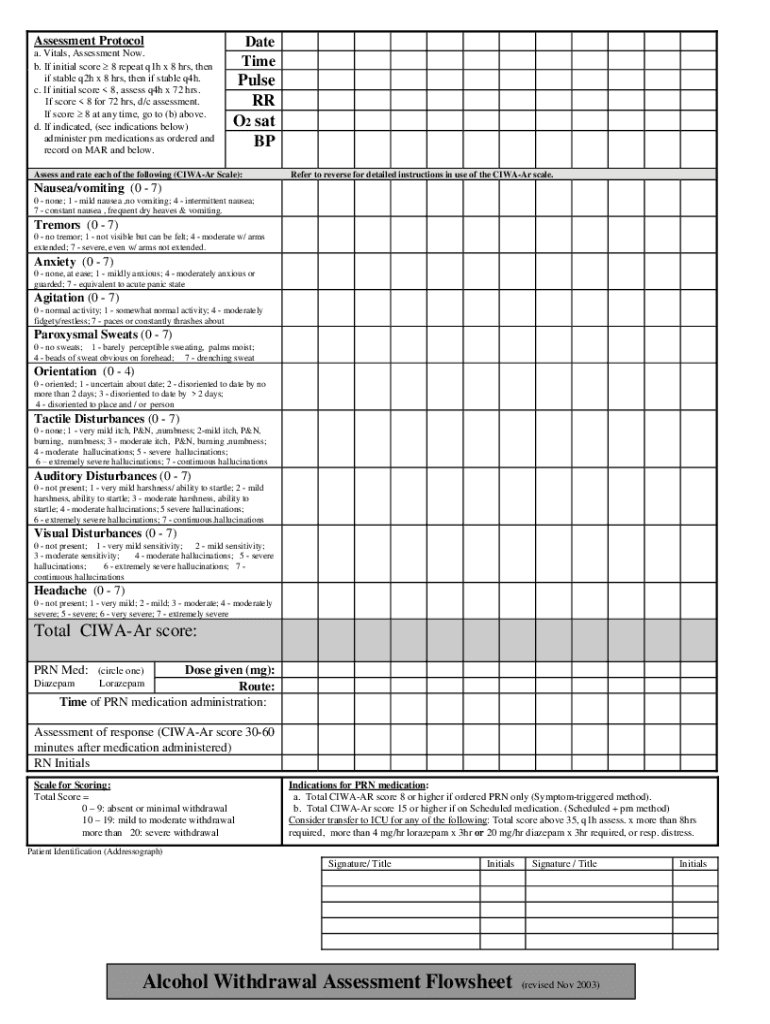
CIWA-Ar stands for Clinical Institute Withdrawal Assessment for Alcohol-Revised. It is a validated assessment tool used to quantify the severity of alcohol withdrawal symptoms in individuals undergoing detoxification. The assessment helps healthcare providers determine the level of care needed and the appropriate interventions required to manage withdrawal safely. The CIWA-Ar evaluates several symptoms, with a scoring system that ranges from zero to seventy, with higher scores indicating more severe symptoms and a higher risk of complications.
Understanding the CIWA-Ar Scale
The scale comprises several key symptoms:
- Nausea and vomiting
- Tremor
- Anxiety
- Agitation
- Sweating
- Orientation and clouding of sensorium
- Tactile, auditory, and visual disturbances
- Headache
Each symptom is rated on a scale from zero to seven, depending on the severity observed in the patient. The cumulative score helps healthcare professionals decide on further intervention, including medication to alleviate symptoms and manage the withdrawal process effectively.
Importance in Treatment Protocols
Using the CIWA-Ar allows for standardization in managing alcohol withdrawals, which is crucial for patient safety. It guides clinicians not just in making medication decisions, but also in workflows for monitoring and ensuring supportive care during what can be a challenging withdrawal period.
How to Use the CIWA-Ar
Using the CIWA-Ar involves a systematic observation of a patient's symptoms. The following steps outline its use effectively within a clinical setting:
- Initial Assessment: Before using the CIWA-Ar, perform a baseline assessment of the patient’s history with alcohol and any previous withdrawal experiences.
- Conduct the CIWA-Ar Evaluation:
- Ask the patient about their current symptoms, using the CIWA-Ar scoring system to evaluate them.
- Rate each symptom according to the scale provided.
- Interpret the Score:
- A score below eight suggests mild withdrawal, while scores of eight or higher indicate the need for medical intervention and possible medication.
- Monitor Regularly: Frequent assessments should occur to track changes in the patient's condition. Adjust treatment plans according to evolving symptoms and scores.
Practical Application
Healthcare professionals can conduct the CIWA-Ar evaluation multiple times a day, especially during the initial stages of detoxification, to ensure timely interventions are made.
Key Elements to Complete the CIWA-Ar
Completing the CIWA-Ar requires attention to detail and accurate symptom interpretation. Key elements include:
- Clear Criteria for Each Symptom: Understand what each scoring value represents, ensuring accurate assessments.
- Patient Interaction: Engage with patients in a supportive manner, easing communication about their subjective experiences.
- Documentation: Methodically document scores and observations for ongoing treatment evaluations.
- Consistency: Use the assessment consistently across different shifts and caregivers to maintain continuity in care.
Ideal Scoring Practices
- Sensitivity: Be sensitive to subtle changes in symptoms, as these can significantly impact treatment strategies.
- Training: Ensure staff members conducting the CIWA-Ar assessments are adequately trained and familiar with the scale to maintain reliability.
Who Typically Uses the CIWA-Ar
The CIWA-Ar is primarily utilized by healthcare professionals involved in addiction medicine and treatment facilities. Key users include:
- Emergency Department Personnel: To quickly assess individuals presenting with alcohol withdrawal symptoms.
- Inpatient Detox Facilities: Nurses and physicians administer the CIWA-Ar to monitor symptoms throughout the withdrawal process.
- Outpatient Treatment Centers: Clinicians use the scale to evaluate patients during follow-up visits or outpatient detox programs.


Cross-Disciplinary Use
Other professionals, such as psychologists or social workers, may also find the CIWA-Ar useful in assessing treatment appropriateness, though they are not typically the primary assessors.
Examples of Using the CIWA-Ar
Real-world scenarios illustrate the effectiveness of the CIWA-Ar in diverse contexts:
-
Hospital Emergency Room: A patient arrives exhibiting tremors and agitation following a prolonged period of heavy drinking. The attending physician conducts a CIWA-Ar assessment, scoring the patient at twelve, which triggers an immediate protocol for medication management.
-
Outpatient Setting: During regular follow-up, a patient presents with mild anxiety and sweating. A CIWA-Ar evaluation results in a score of five, indicating low withdrawal severity, allowing the clinician to decide on monitoring without hospitalization.
Tracking Treatment Progress
Consistent use allows clinicians to track symptoms and responses to interventions over time, ensuring dynamic adaptations to treatment plans based on CIWA-Ar evaluations.
Obtaining the CIWA-Ar
The CIWA-Ar is readily accessible for healthcare providers. Clinicians can find it through:
- Clinical Guidelines: Many treatment protocols include the CIWA-Ar as part of their standard care references.
- Professional Organizations: Organizations focusing on addiction medicine may offer access to forms and guidelines for using the CIWA-Ar.
- Training Courses: Continuing medical education programs may cover the CIWA-Ar, providing resources and training on its appropriate use.
Availability and Formats
The CIWA-Ar is often available in both paper and digital formats, facilitating its integration into electronic health records (EHR) systems, enhancing patient care efficiency.
Summary of Important Terms Related to CIWA-Ar
Understanding the terminology associated with the CIWA-Ar is essential for effective communication among healthcare providers. Important terms include:
- Withdrawal Symptoms: The physical and psychological effects that occur when a person stops consuming alcohol.
- Detoxification: The medical process of clearing alcohol from the body while managing withdrawal symptoms.
- Assessment Tool: A standardized method for evaluating patient symptoms, aiding in diagnosis and treatment planning.
Supporting Terminology
Familiarity with relevant terminology enhances communication in treatment settings, ensuring a shared understanding of protocols and patient care strategies.
Legal Use of the CIWA-Ar
The CIWA-Ar is used legally as a clinical tool to assess withdrawal symptoms and guide treatment. Compliance with state and federal guidelines is essential, especially in managing opioid and alcohol use disorders.
Regulatory Framework
Healthcare facilities are responsible for ensuring that the use of CIWA-Ar adheres to established laws and regulations in addiction treatment. Documenting assessments is vital for legal accountability and quality of care.
Each of these sections provides a comprehensive exploration of the CIWA-Ar, offering valuable insights for professionals involved in managing alcohol withdrawal. By focusing on separation of key elements, procedures, and real-world applications, the information aims to support effective treatment planning and execution.