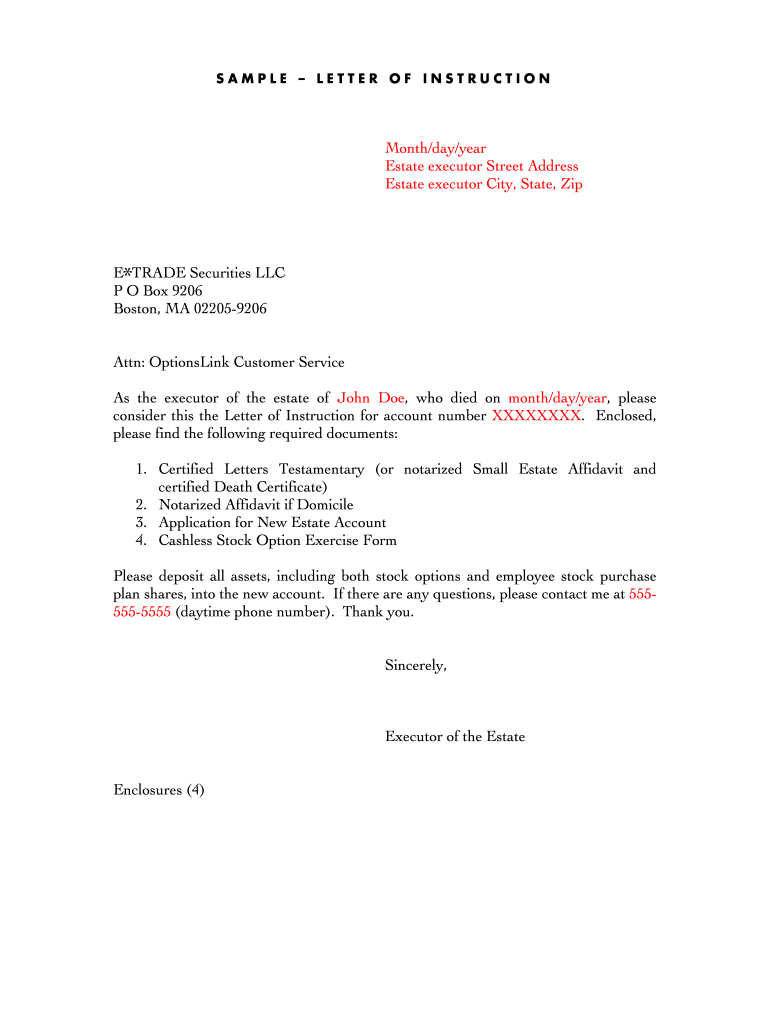







Definition & Meaning of a Letter of Instruction Template
A letter of instruction template is a structured document that provides guidance on how to manage an individual's estate, financial matters, or personal wishes upon their passing or incapacitation. It serves to communicate the decedent's preferences and can be crucial for executors, beneficiaries, and institutions such as banks or financial services. The letter usually complements a will but can stand independently to cover specific aspects such as personal possessions, care for dependents, and distribution of assets.
Key Purposes of a Letter of Instruction Template
- Clarity: Offers clear direction to executors and beneficiaries regarding the deceased’s wishes, reducing potential conflicts.
- Comprehensive Guidance: Addresses various aspects such as funeral arrangements, asset distribution, and any personal messages to loved ones.
- Documentation of Intentions: Acts as a reference point for the management of the estate, ensuring that personal preferences are followed.
How to Use the Letter of Instruction Template
Using a letter of instruction template involves several steps that ensure all pertinent information is captured accurately and clearly. The goal is to create a document that provides clarity and guidance to those managing personal affairs.
Step-by-Step Instructions
-
Download the Template: Start by obtaining a reliable letter of instruction template. Many resources offer customizable templates that can be tailored to individual needs.
-
Personalize the Document: Fill in the template with personal details. This includes your name, contact information, and specific instructions regarding assets, debts, and personal items.
-
Detail Your Wishes: Provide clear instructions regarding the distribution of assets, funeral preferences, and care for any dependents. The more detailed your instructions, the better.
-
Specify Important Contacts: Include details of critical contacts, such as an attorney, financial advisor, or trusted friend, who can assist the executor in carrying out your wishes.
-
Review and Update Regularly: Periodically review the document for changes in personal circumstances, assets, or preferences, ensuring that it remains current.
Key Elements of a Letter of Instruction Template
A well-prepared letter of instruction template should encompass several key components to ensure comprehensive guidance for executors and family members.
Essential Components
-
Asset Inventory: A detailed list of all assets, including bank accounts, real estate, investments, and personal items, with instructions on how to handle each.
-
Financial Obligations: Clear information about any debts or obligations that need to be settled, including outstanding bills or loans.
-
Funeral Preferences: Specific requests regarding funeral services, burial or cremation plans, and any associated costs.
-
Beneficiary Designations: Identification of beneficiaries for each asset, ensuring that wishes are clear regarding who receives what.
-
Executor Information: Designation of an executor or personal representative who will be responsible for ensuring that your wishes are carried out.
Legal Use of the Letter of Instruction Template
While a letter of instruction is generally not a legally binding document, its importance in guiding the executor and beneficiaries is significant within the legal framework.
Understanding Legal Implications
-
Supporting Document: The letter serves as a complementary document to a will, clarifying the decedent's intentions without conflicting with the will's terms.
-
Consistency with State Laws: It is essential to ensure that the instructions provided in the letter comply with state laws regarding estate management and distribution of assets.
-
Potential for Enforceability: In some circumstances, courts may consider the letter when interpreting the deceased’s wishes, particularly if the will is ambiguous.
Examples of Using the Letter of Instruction Template
To illustrate the functionality of a letter of instruction template, consider the following practical examples:
Scenario Examples
-
Estate Management upon Death: An individual outlines their wishes for asset distribution among family members and specifies how to handle their personal belongings, such as heirlooms and jewelry.
-
Care Instructions for Dependents: A parent documents who should take care of their children in the event of an unexpected passing, detailing the living arrangements and financial provisions.
-
Charitable Donations: A letter of instruction may specify that certain assets or amounts should be donated to designated charities, enhancing the social impact of the individual’s legacy.
Steps to Complete the Letter of Instruction Template
Completing a letter of instruction template requires careful attention to detail to ensure all relevant information is accurately documented.
Detailed Procedure
-
Gather Necessary Information: Collect all relevant details regarding assets, debts, and personal wishes. This might include statements, account numbers, and contact details of institutions.
-
Use Clear Language: Write in straightforward language to avoid any ambiguity. If legal terms are necessary, provide explanations or definitions.
-
Organize Content Logically: Structure the document into sections, such as asset lists, personal notes, and contact information, so that executors can easily navigate the contents.
-
Consider Notarization: Though not always necessary, notarizing the letter can add a layer of authenticity, which might be beneficial in certain circumstances.
-
Distribute Copies: Make sure that copies of the letter are distributed to relevant parties, including the executor, attorney, and trusted family members, ensuring its accessibility when needed.