




Here's how it works
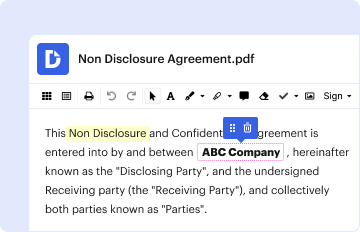
01. Edit your form online
Type text, add images, blackout confidential details, add comments, highlights and more.
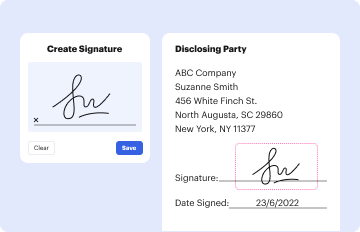
02. Sign it in a few clicks
Draw your signature, type it, upload its image, or use your mobile device as a signature pad.
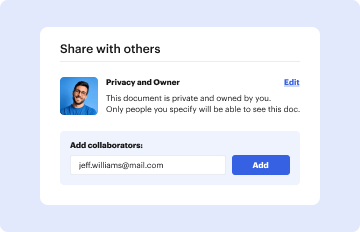
03. Share your form with others
Send it via email, link, or fax. You can also download it, export it or print it out.
How to use or fill out 560 04 form with our platform

- Click ‘Get Form’ to open the 560 04 form in the editor.
- Begin by filling in the 'Date of Report' section. Circle the appropriate quarter end date and enter the year.
- In the 'Licensee Information' section, provide your File Number, Name of Licensee, and Contact Person details including phone and fax numbers.
- Complete the 'Declaration' by having an authorized person sign, print their name, title, and date signed.
- Proceed to Sections I through V. For each service type (Check Cashers, Foreign Currency Exchangers, etc.), report your transactional data accurately. If no transactions occurred, enter zero (0) in the respective boxes.
- Ensure all dollar amounts are in U.S. Dollars and that you do not leave any boxes blank or mark them as 'N/A'.
- Finally, review your entries for accuracy before submitting your completed form to the Office of Financial Regulation.
Start using our platform today for free to streamline your form completion process!
Fill out 560 04 form online
It's free
It's free
See more 560 04 form versions
We've got more versions of the 560 04 form form. Select the right 560 04 form version from the list and start editing it straight away!
| Versions | Form popularity | Fillable & printable |
|---|---|---|
| 2009 | 4.8 Satisfied (121 Votes) |
Got questions?
We have answers to the most popular questions from our customers. If you can't find an answer to your question, please contact us.
Contact us
How much is a money transmitter license in Florida?
The fee for a Florida money transmitter license application is $375. However, there will be other costs that you will have to bear while preparing to complete the application. The most notable of these is the surety bond, the minimum net worth, and the compliance program.
What is the bond for money transmitter in Florida?
Applicants for a Money Transmitter license in Florida are required to provide a surety bond or an alternative security device in an amount between $50,000 and $2,000,000. The amount is determined by the total monetary amount of money transmissions and payment instruments sold in one year.
Is it illegal to keep money you find on the ground in Florida?
Everybody has heard of the old saying: finders keepers, losers weepers. Unfortunately, in Florida adhering to this rule could get you in trouble and even end with a jail or prison sentence for theft. If you find something in a public place in Florida, you cannot pick it up and keep it.
What are the rules for money transmitters?
Money transmitters are typically required to meet certain financial requirements to obtain a license. This may include providing audited financial statements, demonstrating adequate capital reserves, and maintaining a surety bond or other form of financial security to protect customers.
What is the Money transmitter Act in Florida?
(24) Money transmitter means a corporation, limited liability company, limited liability partnership, or foreign entity qualified to do business in this state which receives currency, monetary value, a payment instrument, or virtual currency for the purpose of acting as an intermediary to transmit currency, monetary
Security and compliance
At DocHub, your data security is our priority. We follow HIPAA, SOC2, GDPR, and other standards, so you can work on your documents with confidence.
Learn more


People also ask
What is a licensed money transmitter?
Money transmitters issue payment instruments (money orders), travelers checks, and stored value. Through licensing, regulation, and oversight of these issuers, the DFPI supports a healthy and trusted financial marketplace.
What is a money transmitter in Florida?
Money Transmitters Part II: Money Transmitter: This license authorizes the holder to transmit currency, monetary value, or payment instruments, either by wire, facsimile, electronic transfer, courier, the Internet, or through bill payment services or other businesses that facilitate such transfer, within this country