




01. Edit your daily collection report format in excel online
Type text, add images, blackout confidential details, add comments, highlights and more.

Type text, add images, blackout confidential details, add comments, highlights and more.

Draw your signature, type it, upload its image, or use your mobile device as a signature pad.

Send daily collection report via email, link, or fax. You can also download it, export it or print it out.
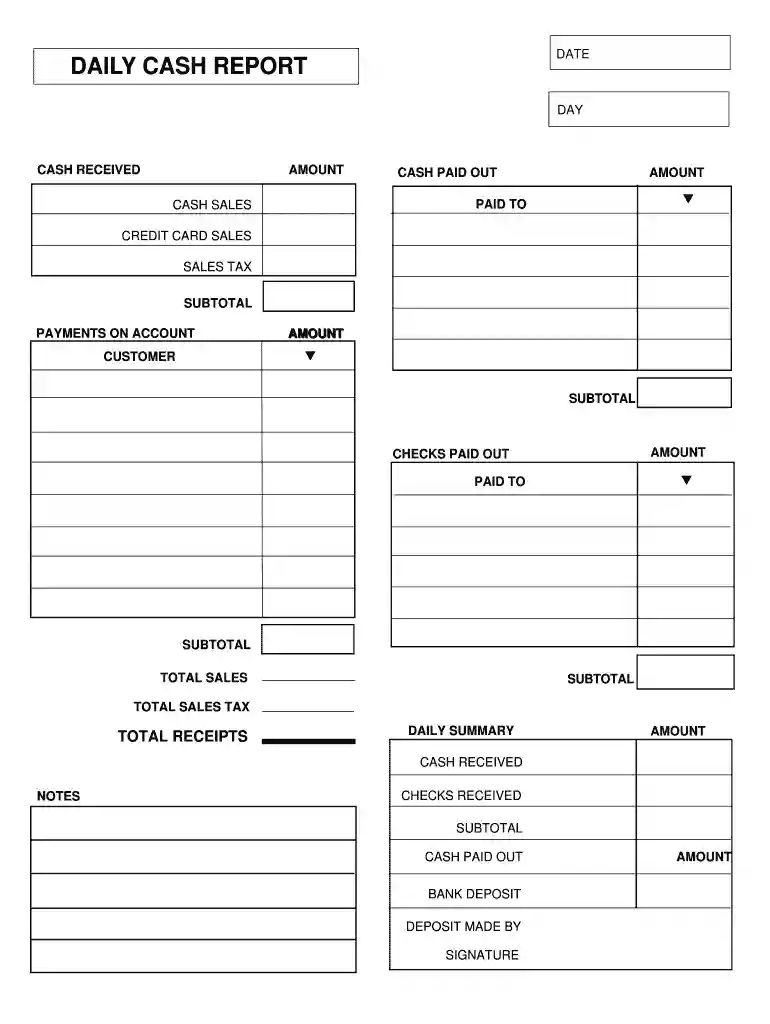
The daily collection report format in Excel is a vital document for businesses that need to track cash transactions effectively. This report typically includes data on cash received, cash paid out, and various subtotals, allowing businesses to have a clear overview of their daily financial activities. A well-structured daily collection report is essential for accurate financial reporting and helps organizations maintain accountability.
A daily collection report format in Excel usually consists of several key sections:
Header Information: This includes the date, business name, and the report title to provide context for the document.
Cash Inflows: A detailed section that records all cash received from sales. It generally includes:
Cash Outflows: This section captures all cash paid out, which may involve:
Net Cash Position: This is a calculated field that summarizes the cash inflows and outflows, helping businesses quickly assess their financial standing at day’s end.
Utilizing a predefined daily collection report format in Excel can streamline the reporting process. Here are some key advantages:
Creating a daily collection report in Excel requires a few systematic steps:
Daily collection reports are particularly beneficial for several scenarios, including:
When utilizing the daily collection report format in Excel, it's crucial to keep the following points in mind:
Creating practical examples can help illustrate the effectiveness of daily collection reports:
The daily collection report format in Excel serves as an essential tool for tracking financial transactions and ensuring that businesses maintain clear and accurate records of their daily cash activities. By following defined structures and leveraging Excel’s capabilities, organizations can enhance their financial oversight and operational efficiency.
We've got more versions of the daily collection report format in excel form. Select the right daily collection report format in excel version from the list and start editing it straight away!
| Versions | Form popularity | Fillable & printable |
|---|---|---|
| 1996 | 4 Satisfied (44 Votes) |
At DocHub, your data security is our priority. We follow HIPAA, SOC2, GDPR, and other standards, so you can work on your documents with confidence.
7, Jackson State University. 8, Business Office. 9, Cashiers Daily Report. 10. 11, Department Name. 12. 13, Depositors Name: Ext: J#, Date. 14. 15Read more
At the top of each spreadsheet under the registration number, use the following format for the Month/Year: mm/dd/yyy. This will fill in the entire date columnRead more
May 2, 2022 This is an Excel based report that shows you the date, budget group and number of schedules available. Availables By Week. This report lists theRead more


