







Understanding the Anthem 151 Form
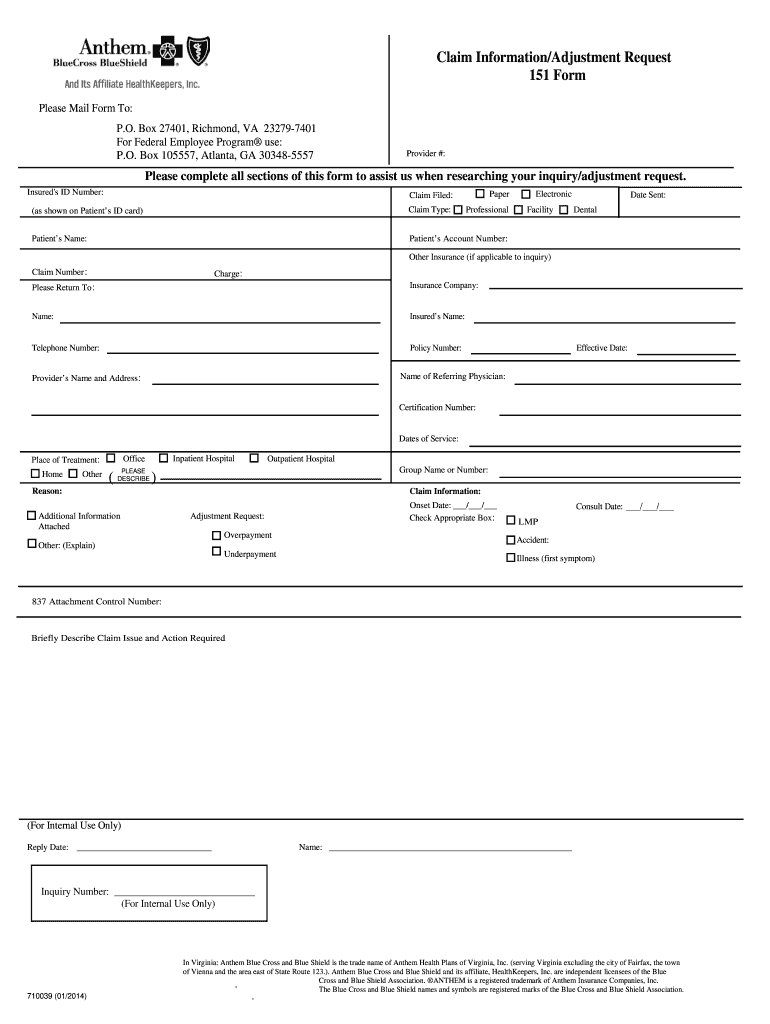
The Anthem 151 form, also known as the Anthem claim adjustment form or the Anthem claim correction form, is a crucial document utilized by healthcare providers to submit requests for inquiries or adjustments related to insurance claims. This form is essential for ensuring accuracy and efficiency in the reimbursement process, particularly when there are discrepancies in previously filed claims.
Key Elements of the Anthem 151 Form
The Anthem 151 form includes several critical components that healthcare providers must be aware of to effectively utilize it:
- Provider Information: This section requires detailing the provider's name, address, and contact information. Ensuring accuracy is vital, as any errors could delay the processing of claims.
- Patient Information: Essential identifiers such as the patient's name, date of birth, and policy number must be included.
- Claim Details: Specifics about the original claim, including the claim number, date of service, and the total amount billed, are necessary for reference.
- Adjustment Reason: Providers must specify why the adjustment is being requested. This could include claiming an underpayment, correction to patient information, or misunderstanding in service codes.
Steps for Completing the Anthem 151 Form
Filling out the Anthem 151 form involves several systematic steps to ensure that all pertinent information is captured:
- Gather Required Information: Compile all necessary details regarding the claim, including patient and provider information.
- Fill Out the Form: Carefully enter information into the designated fields, double-checking for accuracy to avoid errors that could impede processing.
- Specify the Adjustment Reason: Clearly articulate the reason for the adjustment request in the designated section, providing sufficient detail to facilitate understanding.
- Attach Supporting Documentation: If applicable, include any additional documentation that supports the adjustment request. This may include copies of previous claim submissions or correspondence related to the claim.
- Submit the Form: Send the completed form to the appropriate address or online portal provided by Anthem for processing adjustments. This may include mailing it to their designated PO box, such as PO Box 27401 Richmond, VA 23279, depending on the specifics of the provider's location.
Legal Use of the Anthem 151 Form
Using the Anthem 151 form legally involves adhering to the stipulations outlined by Anthem and other regulatory bodies. This means ensuring that the information provided is truthful and that the form is only submitted for legitimate reasons. Misuse of the form, such as falsifying information, could lead to severe penalties including denial of claims, repayment disputes, and potential legal actions.
Common Scenarios for Submitting the Anthem 151 Form
The Anthem 151 form is often submitted in various situational contexts, including:
- Underpayment Adjustments: Healthcare providers frequently use the form to request adjustments when they believe the payment they received does not accurately reflect the services rendered.
- Error Corrections: If there are mistakes in the billing codes submitted, providers can utilize the form to correct these discrepancies and resubmit the proper codes for reimbursement.
- Appeals: In cases where a claim has been denied, the Anthem 151 form may also serve as a basis for appealing that decision by providing additional supporting documentation to justify the request.
Additional Resources Related to the Anthem 151 Form
Providers may find it beneficial to familiarize themselves with related forms and documentation processes, such as the Blue Cross Blue Shield Virginia reconsideration form or other associated documents like the Anthem Healthkeepers Plus reconsideration form. Understanding the nuances of these documents can enhance providers’ ability to navigate the claims process more effectively and improve their chances of successful reimbursements.
The Anthem 151 form is a critical tool for healthcare providers seeking to ensure they receive proper reimbursement for services rendered. By accurately completing and submitting this form, providers can address discrepancies without unnecessary delays, ultimately fostering better financial health for their practice.




