






Definition and Meaning of the Salvage Title Disclosure Form in Colorado
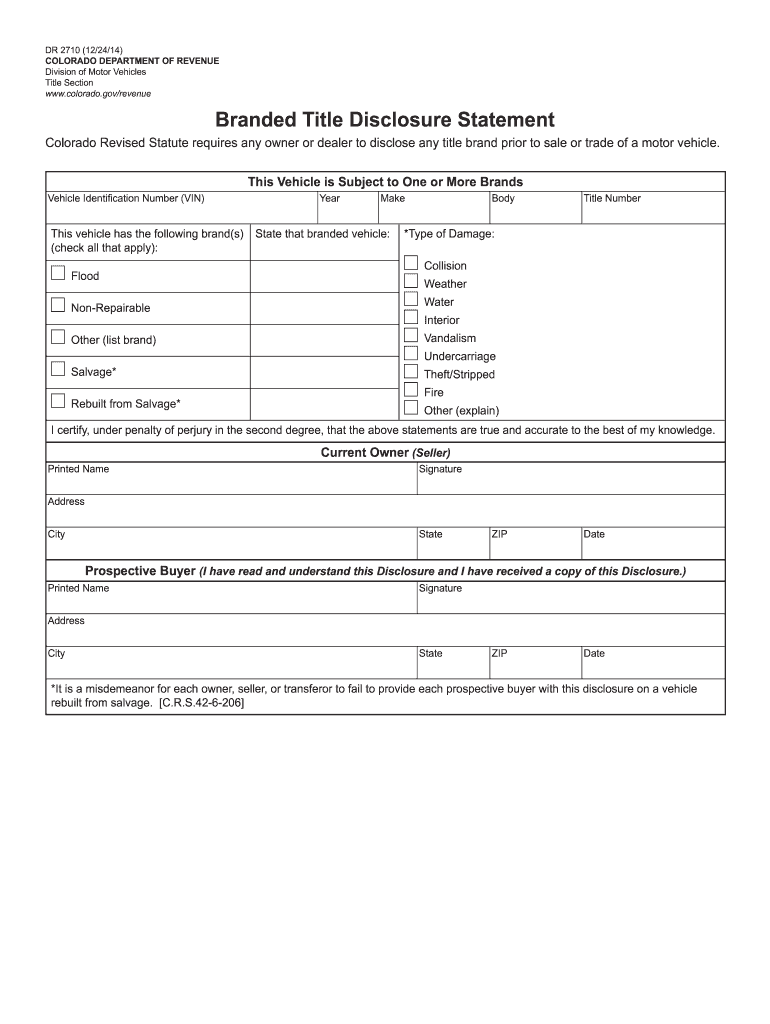
The salvage title disclosure form in Colorado, often referred to as the DR 2710, is a vital document used by vehicle sellers to disclose any title brands associated with a vehicle prior to selling or trading it. A branded title denotes that a vehicle has had significant damage due to various factors, such as accidents, floods, or theft. The DR 2710 is a legally mandated statement that informs prospective buyers about the vehicle's history, helping to ensure transparency and protect consumers from unforeseen liabilities associated with salvaged vehicles.
Understanding this form is crucial as it covers various types of title brands, including salvage and rebuilt titles. The seller must provide full disclosure about the vehicle's identification number, brand type, and the nature of any damage. Failure to submit this disclosure is treated as a misdemeanor under Colorado law, underscoring the legal obligation of vehicle sellers to be honest about a vehicle's condition and title history.
How to Use the Salvage Title Disclosure Form in Colorado
Utilizing the salvage title disclosure form involves several steps, each aimed at ensuring compliance with state regulations and enhancing buyer confidence. The following outlines the essential process:
-
Obtain the Form: Sellers can access the DR 2710 form through the Colorado Department of Revenue's official website or various authorized vehicle dealerships.
-
Complete the Vehicle Information: Fill out critical details, including the vehicle identification number (VIN), make, model, year, and current odometer reading.
-
Indicate Title Brands: Declare any relevant title brands affecting the vehicle. This includes specifying if the vehicle was previously assigned a salvage title, indicating that it has been reconstructed from a total loss.
-
Seller and Buyer Signature: Both parties must sign the form to confirm that the information is accurate and acknowledged. This signature also acts as a certification that the buyer understands the vehicle's history as disclosed.
-
Maintain Records: It is advisable for sellers to retain a copy of the completed form for their records, offering protection in case of future disputes.
This disclosure form not only protects buyers but also helps sellers uphold their reputation and comply with legal requirements.
Steps to Complete the Salvage Title Disclosure Form
Completing the salvage title disclosure form is an important part of the vehicle selling process. Here are the detailed steps involved:
-
Download or Request the Form: Start by obtaining the DR 2710 form from a reliable source. This can often be done online or through local Department of Motor Vehicles (DMVs).
-
Fill Out Vehicle Details: Provide comprehensive information about the vehicle. This includes:
- VIN: Ensure that this number is accurate to avoid future complications.
- Make and Model: Include the full name of the vehicle’s make, such as Ford or Honda.
- Year: State the year of manufacture.
-
Disclose Title Brand Information:
- Indicate if the vehicle had a salvage title.
- Specify any other brands or types of damage that may have affected the vehicle's value.
-
Signatures: After filling out the required sections, both the seller and the prospective buyer must sign the document. This indicates that both parties agree to the disclosures made.
-
Submission of Form: Depending on the situation, either the seller or buyer may need to submit the DR 2710 to the DMV as part of the vehicle registration process.
-
Keeping Copies: Make sure to retain a copy of the completed form for personal records, safeguarding both parties against potential disputes.
Important Terms Related to the Salvage Title Disclosure Form
Understanding key terminology related to the salvage title disclosure form is crucial for clarity in the vehicle selling process:
-
Salvage Title: A title indicating that a vehicle has been damaged to the extent that the insurance company deemed it a total loss. Vehicles with this title may require repairs before they can be legally driven again.
-
Branded Title: Covers various designations like salvage, rebuilt, and flood. Each designation affects a vehicle's value and marketability.
-
Rebuilt from Salvage: Refers to vehicles that have been repaired and inspected after being classified as salvage, indicating they are now roadworthy again.
-
VIN (Vehicle Identification Number): A unique code assigned to individual motor vehicles, used for tracking purposes.
-
Title Brands: Labels that indicate specific conditions under which a vehicle was assigned a title, such as salvage or salvage-rebuilt.
Familiarity with these terms aids in ensuring accurate and complete disclosures during the selling or purchasing processes.
Penalties for Non-Compliance with the Disclosure Form
Not adhering to the requirements of the salvage title disclosure form can lead to serious legal repercussions for sellers. The following outlines potential penalties for non-compliance:
-
Misdemeanor Charges: Failure to provide the required disclosures, such as neglecting to submit the DR 2710, is classified as a misdemeanor. This can result in fines and legal complications.
-
Financial Liability: Sellers may face lawsuits from buyers if undisclosed issues arise after the sale. This could lead to damages that far exceed initial fines and penalties.
-
Loss of Reputation: Non-compliance can hurt a seller's reputation in the marketplace. Buyers may hesitate to engage with sellers known for hiding such critical information.
-
Difficulty in Future Transactions: Legal issues stemming from past sales can complicate or impede future vehicle transactions for the non-compliant seller.
By ensuring that the salvage title disclosure form is accurately completed and submitted, sellers can avoid these pitfalls and promote a smoother transaction process.