







Definition and Meaning of Refusal of Treatment Against Medical Advice
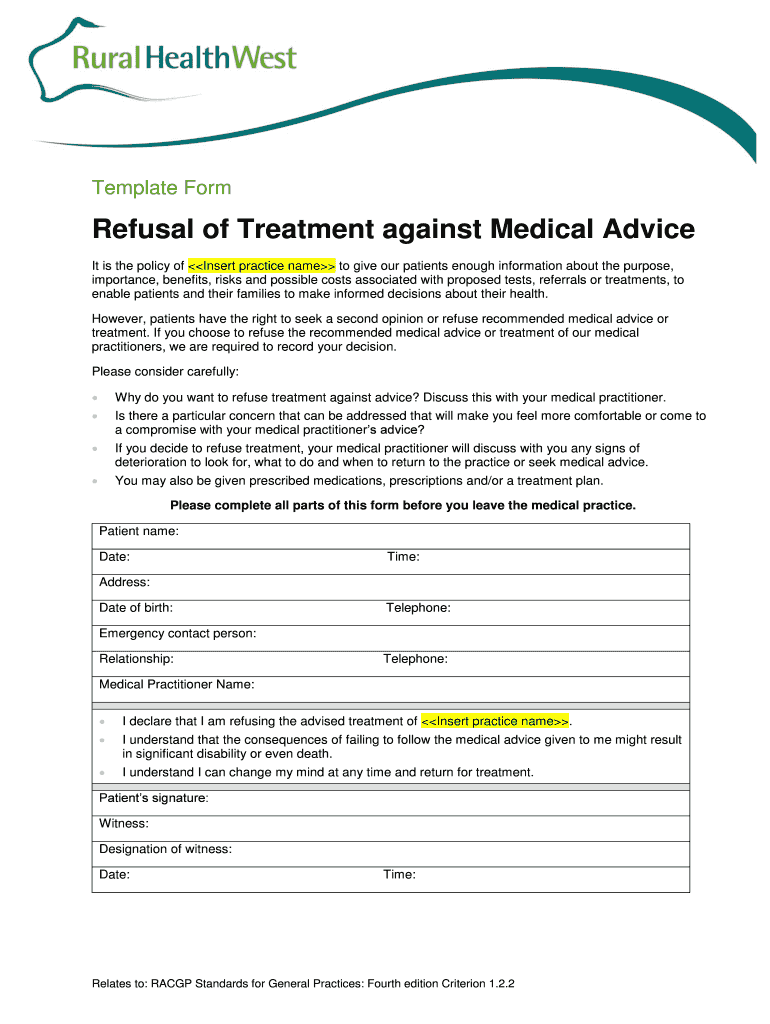
The refusal of treatment against medical advice (AMA) occurs when a patient chooses not to follow their healthcare provider's recommended treatment plan. This decision can stem from various reasons, including personal beliefs, concerns about potential side effects, or dissatisfaction with the healthcare setting. It is crucial to document this refusal clearly, ensuring that both the healthcare provider and the patient understand the implications of such a decision.
When patients decide to refuse treatment AMA, they may sign an against medical advice form that outlines their rights and the potential consequences. This documentation is vital for both legal protection and future medical reference, demonstrating that the patient was fully informed about their decision.
Key Elements of an Against Medical Advice Form
An effective AMA form contains specific components that ensure comprehensive understanding between the patient and healthcare provider. Essential elements include:
- Patient Information: Basic identification details, such as name, date of birth, and medical record number.
- Treatment Description: A clear explanation of the recommended treatment and its intended benefits.
- Risks of Refusal: An outline of potential health risks or complications resulting from the decision to refuse treatment, signifying informed consent.
- Patient Declaration: A statement for the patient to acknowledge understanding of the provided information, often requiring their signature and date.
These components work together to facilitate informed decision-making and create a clear record of the patient’s choice.
Importance of Documenting Patient Refusal of Treatment
Documenting a patient's refusal of treatment against medical advice is critical for several reasons. Firstly, it serves to protect healthcare providers from potential liability claims resulting from adverse events related to the patient's decision. A well-documented refusal establishes that the patient was informed about the risks and benefits of available treatments, thus supporting the medical professional's adherence to ethical and legal standards.
Additionally, this documentation enhances continuity of care. If a patient later experiences complications due to their refusal, other healthcare providers can refer back to this documentation to understand the patient's decisions and the advice given previously, ensuring comprehensive medical care in future encounters.
Example of Documenting Patient Refusal
When documenting a refusal, a sample process might involve:
- Verbal Discussion: The healthcare provider discusses the treatment options thoroughly with the patient, ensuring they understand the potential benefits and risks.
- Providing Written Information: The patient receives a detailed explanation or a pamphlet outlining their condition, treatment options, and the consequences of refusing treatment.
- Obtaining Signature: The patient is asked to read and sign the AMA form, confirming their understanding and acceptance of their choice.
This systematic approach to documentation reinforces the importance of a well-rounded discussion about treatment options.
Patient Rights and Responsibilities in Refusal of Medical Treatment
Patients possess the right to refuse treatment; however, they also have corresponding responsibilities. The refusal process should be rooted in informed decision-making, allowing patients to exercise their autonomy while remaining cognizant of their health.
Rights of Patients
- Autonomy: Patients have the inherent right to make decisions about their health, including the choice to refuse treatment.
- Informed Consent: Patients are entitled to receive complete information regarding their diagnosis, treatment options, and potential consequences of refusal.
- Privacy: Personal health information must be kept confidential, including documentation of any treatment refusals.
Responsibilities of Patients
- Informed Decision-Making: Patients need to engage with their healthcare providers to understand their treatment choices and associated risks fully.
- Communication: They should communicate any concerns or reasons for their refusal, facilitating a dialogue that can lead to better health outcomes or alternative solutions.
- Acknowledgment of Risks: By signing the AMA form, patients acknowledge understanding the consequences of their choices, taking on the responsibility of their health outcomes.
Steps to Complete a Refusal of Treatment Form
Completing a refusal of treatment form requires several structured steps to ensure clarity and accuracy in documentation. Following a defined process can minimize potential misunderstandings or disputes.
- Preparation of Information: Gather all necessary patient information, including current health status and treatment recommendations.
- Discussion: Conduct a thorough discussion with the patient about their treatment options. Ensure that they are aware of the risks associated with their decision.
- Presentation of Form: Provide the patient with the refusal of treatment form. Explain each section clearly, ensuring they understand its contents.
- Consent Verification: After reviewing the form, verify the patient’s consent by asking them to sign and date the document.
- File the Document: Ensure the completed form is securely stored in the patient's medical record for future reference.
These steps foster a clear channel of communication while providing a structured method for documenting refusals.
Consequences of Refusing Medical Treatment
Patients should recognize the potential consequences that arise from refusing medical treatment against medical advice. Understanding these can better inform their decisions and underscore the significance of the AMA form.
- Health Deterioration: Foregoing recommended treatments could lead to worsening health conditions, requiring more intensive intervention later.
- Psychological Impact: Patients may experience anxiety or regret about their choices, especially if complications arise that could have been prevented through treatment.
- Healthcare Access: Some healthcare facilities may take a patient’s refusal into account in future care decisions, impacting their access to specific treatments or services.
Awareness of these factors helps patients comprehensively evaluate their choices, reinforcing the necessity of the refusal documentation within their health journey.




