
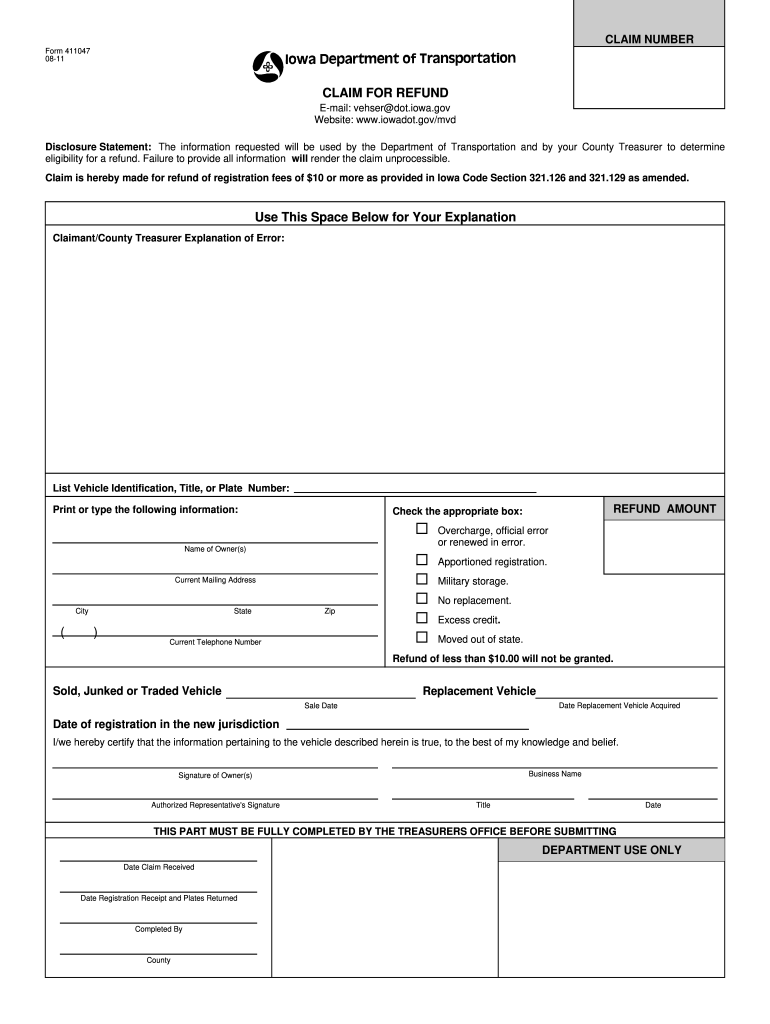







Definition & Meaning
The 411047 form is a crucial document used in specific legal and administrative contexts, often related to financial transactions or regulatory compliance. This form serves multiple functions depending on the jurisdiction and can encompass filing applications, claiming refunds, or providing official declarations. Understanding its purpose is essential for accurate completion and submission, ensuring compliance with relevant regulations.
The term "411047 form" may be utilized interchangeably with other identifiers, but it primarily refers to the standardized template recognized by governing bodies within the United States. Use of this form is typically guided by state or federal statutes, thereby making its correct usage vital for legal and financial accountability.
Steps to Complete the 411047 Form
Accurate completion of the 411047 form is critical for successful submission. It involves several clearly defined steps to ensure all necessary information is included and correctly formatted.
-
Gather Required Information:
- Identify personal details such as full name, address, and contact information.
- Gather any financial data or documentation that supports your submission, such as receipts or prior correspondence relevant to the form's purpose.
-
Fill Out the Form:
- Carefully input all necessary details, following any specific instructions provided within the form itself.
- Use clear and legible handwriting if completing a paper version, or ensure typed information is easy to read if using a digital format.
-
Review for Accuracy:
- Double-check all entries for typos or incomplete fields. Pay attention to dates and numerical information, as errors may delay processing.
- Cross-reference your data with any supporting documents to ensure consistency.
-
Submit the Form:
- Determine the appropriate submission method (online, by mail, or in-person at designated locations).
- Make copies of the completed form and any accompanying documents for your records before submission.
-
Follow Up:
- Once submitted, track the status of your application or claim by noting confirmation details if provided.
- Be prepared to respond to any requests for additional information if needed.
Who Typically Uses the 411047 Form
The 411047 form is predominantly utilized by individuals and entities involved in specific sectors that require formal documentation for regulatory purposes. Typical users include:
- Businesses: Companies seeking to comply with legal obligations or claim refunds, particularly in regulated industries such as finance or real estate.
- Taxpayers: Individuals filing for refunds or reporting specific financial conditions to state or federal agencies.
- Non-Profit Organizations: Groups that require formal acknowledgment of status or financial reporting as part of their operational compliance.
- Government Entities: Various levels of government using this form to provide a structured framework for information submission related to specific legal matters.


Important Terms Related to the 411047 Form
Understanding specific terminology associated with the 411047 form is crucial for proper usage. Key terms include:
- Submission: The act of formally delivering the completed 411047 form to the appropriate authority.
- Compliance: Adherence to laws and regulations that govern the submission and processing of the form.
- Refund Claim: A request for return of funds based on conditions specified in the form and supported by documentation.
- Notification: Correspondence from the authority regarding the status or outcome of the submission.
Familiarity with these terms can streamline the process and enhance the user’s ability to navigate any challenges that may arise.
Legal Use of the 411047 Form
The legal framework surrounding the 411047 form stipulates that it must be completed and submitted in accordance with local, state, and federal regulations. Key legal considerations include:
- Signature Requirement: Many versions of the form require a signature to validate the information provided, affirming its authenticity.
- Deadline for Submission: Legal timeframes often dictate when the form must be submitted, underscoring the importance of adhering to posted deadlines.
- Documentation: Any supporting documents must be included as stipulated; failure to do so may lead to rejection of the submission.
Understanding the legal implications ensures that individuals or businesses use the form accurately, reducing potential risks of penalties or compliance issues.




