






Definition & Meaning
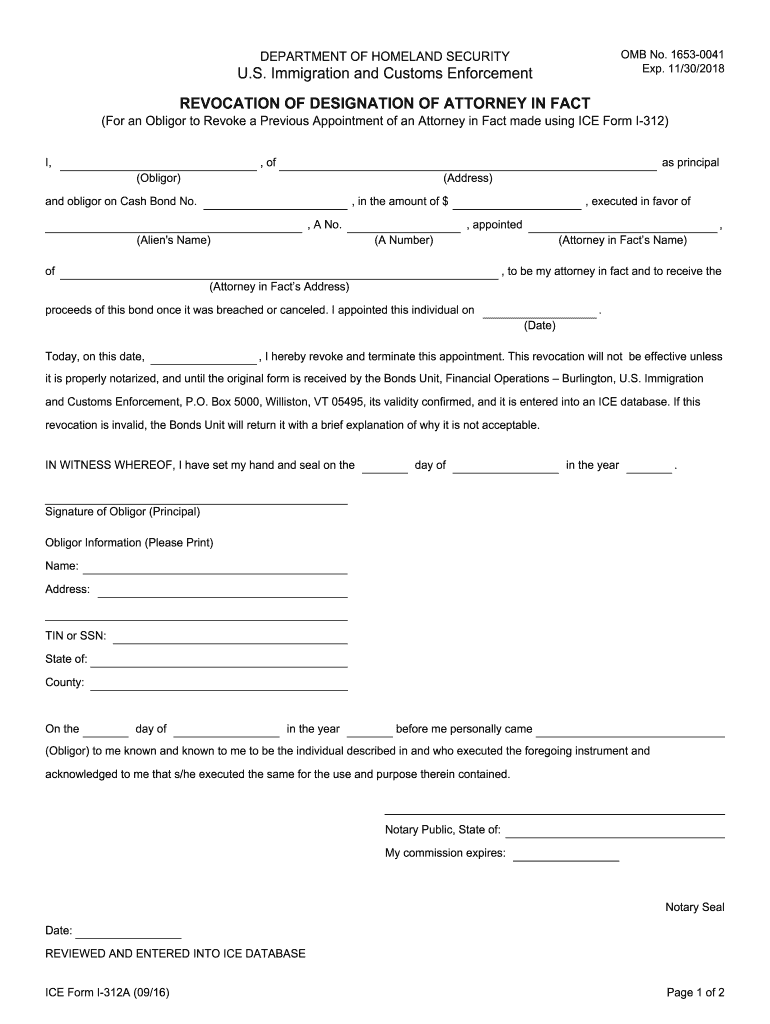
The ICE customs designation form serves as an official document related to U.S. Immigration and Customs Enforcement (ICE) operations, especially focusing on matters involving cash bonds. This form allows individuals to designate an authorized representative—often an attorney—who has the right to manage bond proceeds on their behalf. The significance of this designation is twofold: it safeguards the obligor's interests by allowing a trusted individual to handle funds and ensures compliance with ICE regulations concerning bond procedures. Clarity regarding the roles and responsibilities outlined in this form is essential to avoid misunderstandings during the processing of immigration cases.
Key Terms Associated with the ICE Customs Designation Form
- Obligor: The person who is responsible for the bond.
- Attorney in Fact: The designated individual authorized to act on behalf of the obligor.
- Notarization: A mandatory step where the signature on the form must be verified by a notary public.
How to Use the ICE Customs Designation Form
Using the ICE customs designation form involves specific steps to ensure proper completion and submission. Firstly, the obligor must accurately fill out the designated fields, including personal details and the information of the designated attorney in fact. This may require collecting identifying information such as addresses and contact details. Secondly, the form needs to be notarized to verify authenticity and prevent fraud. Finally, the completed form must be submitted to the relevant ICE Bonds Unit for validation to ensure that the designation is recognized and processed correctly.
Steps in Using the Form
- Gather Required Information: Ensure you have all relevant information about yourself and the attorney in fact.
- Complete the Form: Fill in the details as accurately as possible.
- Get Notarized: Arrange for a notary public to notarize your form.
- Submit Your Form: Send the notarized form to ICE's Bonds Unit as per their submission guidelines.
Steps to Complete the ICE Customs Designation Form
Completing the ICE customs designation form requires careful attention to detail to avoid any errors that could delay processing.
- The form typically begins with the obligor’s personal information, including their full name, address, and contact details.
- Following this are sections requesting the attorney's information. It’s crucial to ensure that all information is current and accurately reflects the person’s identity who will represent you.
- Ensure that you sign the form and arrange for notarization, where a notary must witness your signature, confirming your identity and the authenticity of your request.
Detailed Completion Process
- Locate the Form: Obtain the form from the official ICE website or relevant sources.
- Accurate Entry: Enter information without leaving any blanks. If a section does not apply, mark it as ‘N/A’.
- Review for Accuracy: Double-check all entries before proceeding to the next step.
- Notarization: Have the document notarized by an authorized professional.
- Final Submission: Confirm the submission method (online or mail) and ensure it reaches the correct address.
Important Terms Related to the ICE Customs Designation Form
Understanding terms associated with the ICE customs designation form is crucial for effective use and clarity. Key terms include:
- Power of Attorney: A legal document allowing one person to act on another's behalf in legal or financial matters.
- Bond Proceeds: The funds associated with a cash bond in immigration proceedings.
- ICE Bonds Unit: The specific division within ICE that processes these forms and oversees bond transactions.
Legal Use of the ICE Customs Designation Form
The ICE customs designation form is used within the legal framework established by U.S. immigration law. Proper use of the form ensures compliance with the relevant guidelines set forth by ICE. Failure to use the form correctly can result in denied requests or issues during immigration proceedings. The form not only protects the rights of the obligor but also establishes a legal framework for carrying out financial transactions related to immigration bonds.
Legal Implications
- Binding Agreement: Once submitted and accepted, the designations outlined in the form create a binding agreement between the obligor and the designated attorney.
- Compliance with Regulations: The use of this form is mandated by immigration regulations to ensure proper representation and management of bond proceeds.
Examples of Using the ICE Customs Designation Form
Real-world examples can illustrate the practical application of the ICE customs designation form. For instance, an individual facing immigration proceedings might need to establish a cash bond. They would fill out the ICE customs designation form to appoint their attorney as the personal representative who would manage the bond funds. Similarly, in situations where a bond has been revoked, the obligor might use the form to officially rescind the previous authorization of an attorney.
Practical Scenarios
- Scenario One: A family member wants to assist a detainee by managing bond funds. They must use the form to appoint a trusted lawyer to navigate the complexities of immigration law on behalf of the detainee.
- Scenario Two: An attorney requires formal confirmation of their ability to handle bond transactions on behalf of their client; the client submits the ICE customs designation form for this purpose.
Form Submission Methods (Online / Mail / In-Person)
Submitting the ICE customs designation form can be accomplished through various methods, depending on preferences and the urgency of the situation. Each method has its own set of procedures:
- Online Submission: Some jurisdictions may allow for electronic submission of the form, which can expedite the process.
- Mail: Traditional mailing remains a common method, where the completed form is sent directly to the ICE Bonds Unit.
- In-Person: Individuals may have the option to deliver the form directly to the appropriate ICE office.
Guidelines for Submission Methods
- Choose a Method: Consider urgency and convenience when selecting a submission method.
- Check Requirements: Ensure that you follow any additional instructions for the chosen method, including mail tracking or electronic confirmation.
- Document Copies: Keep copies of the submitted form for your records, regardless of the submission method.
Who Typically Uses the ICE Customs Designation Form
The ICE customs designation form is typically used by individuals who are navigating the immigration process and need to establish a cash bond for release from detention. This includes non-citizens facing deportation and their family members or legal representatives. The form serves as a vital resource for attorneys who represent these individuals, providing them with the authority to act on behalf of their clients in bond matters.


Common Users
- Immigration Attorneys: Legal professionals assisting clients with immigration matters.
- Family Members: Relatives of detainees seeking to manage financial responsibilities.
- Detainees Themselves: Individuals who must designate someone to act on their behalf during legal representation.