What not to say to Workmans Comp?
When dealing with workers comp, avoid saying youre fine, downplaying pain, admitting fault, guessing about recovery, or discussing legalities, as these can hurt your claim; instead, stick to factual, detailed descriptions of the injury and let your doctor and lawyer handle medical and legal specifics to protect your benefits. What NOT to Say to an Adjuster or Doctor: Im fine, Its not that bad, or Ill be back to work soon: These minimize your injury and can reduce your benefits, even if youre not fully recovered. Admitting Fault or Blame: Dont say you were partly at fault, engaged in horseplay, or were impaired (drugs/alcohol) at work, as this can deny your claim. Speculating on Cause or Recovery: Avoid guessing about how it happened, how long youll be out, or your future medical needs; stick to facts. Using Absolute Words: Words like always or never can create inconsistencies in your medical records. Discussing Legal Matters: Dont talk about your lawyer, settlement, or legal strategy; let your attorney handle that. Lying or Exaggerating: Be honest but dont lie about prior injuries or symptoms, as inconsistencies damage credibility. Negative Comments About Your Employer: Dont badmouth your boss or company; it can undermine your credibility. What to Do Instead: Be Factual Detailed: Clearly describe the injury, when/where it happened, and your symptoms. Be Honest About Pre-Existing Conditions: Disclose them but explain how the work injury differs or worsened them. Let Professionals Lead: Allow doctors to diagnose and lawyers to manage the legal aspects. Control Your Emotions: Stay calm and polite, even if frustrated. Ask for Clarification: If you dont understand a question, ask for it to be repeated or rephrased. Key Takeaway: Be truthful, focus on the facts of your injury, and understand that adjusters work for the insurer, so limit what you say to protect your rights. Consulting a workers comp lawyer is always a good step. AI can make mistakes, so double-check responses5 Things You Should Never Say to a Workers Comp DoctorWhat You Shouldnt Tell Your Workers Comp Doctor. Here is a quick list of things that you should never say to your workers comp Krasno Krasno OnwudinjoTop 10 Things NOT to Say To Your Workers Comp Adjuster Ty Wilson Law - Straightforward, No Nonsense Help for Georgia Work Comp InjuryThe adjuster will want details on: * How the injury happened * When and where it took place * Anything that may be relevant to theTy Wilson Law
What is a NYS CE 200 form?
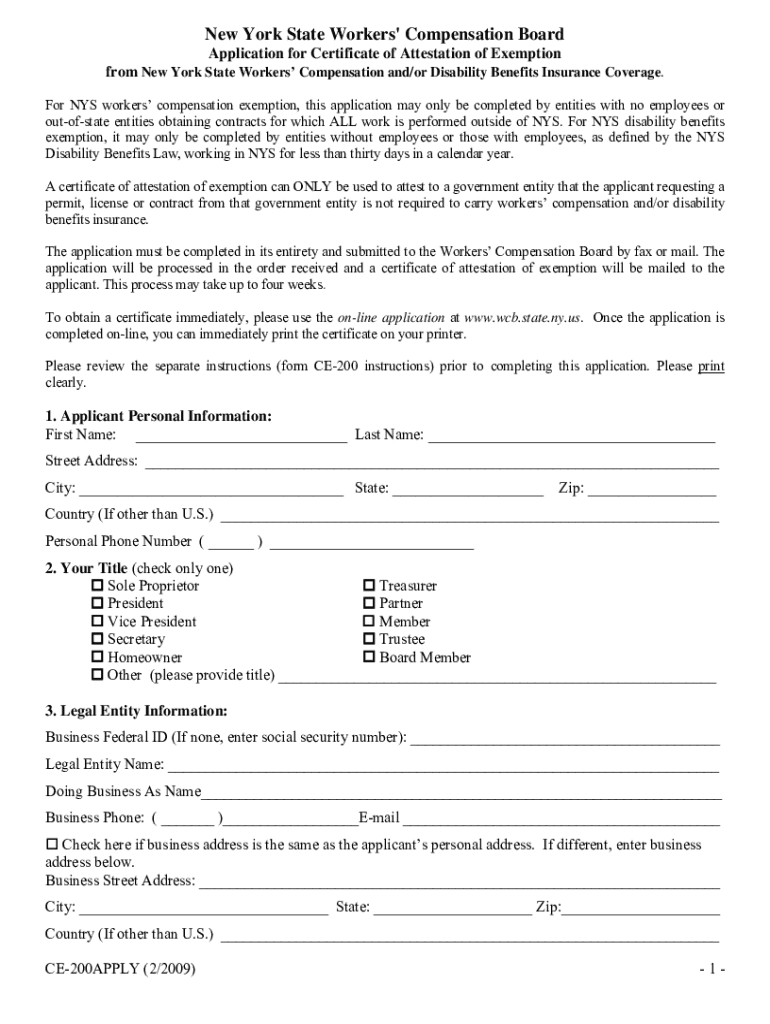
The Certificate of Attestation of Exemption (CE-200) is completed by entities with no employees and/or out-of-state entities obtaining a contract or license in which all the work is being performed outside of New York State. Using this online application, you can search for the CE-200.
How do I get an exemption certificate?
To get an exemption certificate, you must first determine the type of exemption you need (like tax-exempt status for a nonprofit or a sales tax exemption for purchases) and then apply through the relevant authority, such as the IRS for federal tax exemption (using Forms 1023/1024) or your states Department of Revenue for sales tax (using specific state forms like Floridas DR-14), providing required details and documents like your EIN and organizational papers. For Federal Tax Exemption (IRS) Identify Your Status: Determine if youre a charity (501(c)(3)), social welfare group (501(c)(4)), or another type of nonprofit. Get an EIN: Obtain an Employer Identification Number from the IRS. Gather Documents: Collect your articles of incorporation and bylaws. Apply Online: Use Pay.gov to file the appropriate form (e.g., Form 1023-EZ or Form 1023 for 501(c)(3), Form 1024-A for 501(c)(4)). For State Sales Tax Exemption Check State Requirements: Visit your states Department of Revenue website (e.g., Alabama, Florida). Complete the Form: Fill out the specific application for your type of exemption (e.g., Form ST: EX-A1 in Alabama, Form DR-14 in Florida). Submit Get Your Certificate: Send the form and required ID (like EIN) to your state tax authority to receive your certificate. For Health Coverage Exemptions (Healthcare.gov) Apply Online: Go to HealthCare.gov. Qualify: Determine if you meet criteria for hardship or affordability exemptions. Receive ECN: If eligible, youll get an Exemption Certificate Number (ECN) to enroll in a plan. For financial advice, consult a professional. Florida Dept. of Revenue - Nonprofit Organizations and Sales and Use TaxFlorida RevenueExemption Certificate Number (ECN) - Glossary | HealthCare.govWhen you fill out an exemption application, the Marketplace will review it and determine if you qualify. The Marketplace will mailHealthCare.gov