
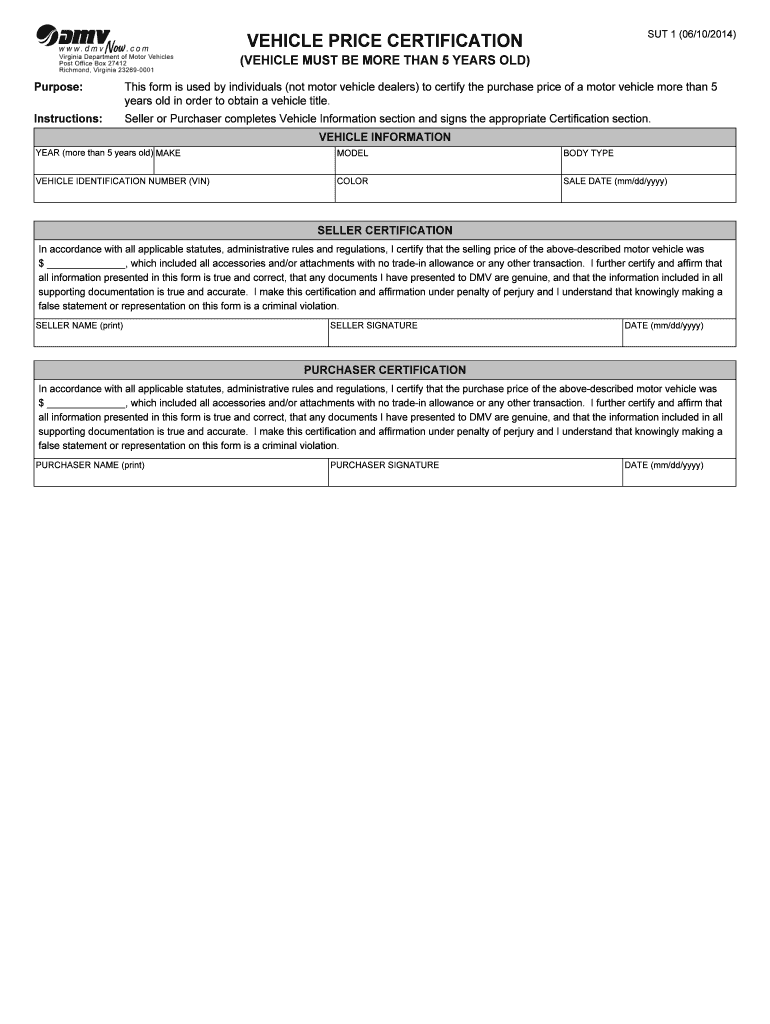







Definition and Purpose of the VA SUT 1
The VA SUT 1 form, also known as the Virginia Sales and Use Tax Certificate of Exemption, is officially used for certifying exempt sales transactions. This form allows buyers to purchase goods or services without paying the sales tax, provided they meet certain criteria. The primary purpose of this form is to document the tax-exempt status of the buyer and ensures compliance with Virginia tax regulations. Understanding the correct use of this form is crucial for businesses and individuals alike to avoid unnecessary tax liabilities and to ensure regulatory adherence.
This certificate is often utilized by non-profit organizations, government entities, and certain educational institutions that qualify for exemption under state law. It is vital for sellers to obtain this form from buyers claiming an exemption to protect against future tax liabilities. By using the VA SUT 1 accurately, a seller can ensure they are not responsible for collecting and remitting sales tax on exempt transactions.
How to Use the VA SUT 1 Form
Using the VA SUT 1 form involves several key steps to ensure that it is completed correctly. Here’s a breakdown of the process:
- Accessing the Form: The VA SUT 1 form can be obtained from the Virginia Department of Taxation website or through tax professionals.
- Filling Out the Form:
- Buyer Information: Include the name and address of the purchaser.
- Seller Information: Clearly state the name and address of the seller.
- Exemption Reason: Specify the reason for claiming an exemption, referencing relevant statutes or regulations.
- Signature: The buyer must sign and date the form to verify the accuracy of the information provided.
- Submission: Once completed, the seller retains the form for their records and may need to provide a copy to the buyer.
This form is valid only in the context of the specific transaction it supports. It is ineffective if used for future purchases unless a new form is generated for each individual transaction.
Common Users of the VA SUT 1 Form
The VA SUT 1 form is primarily used by certain groups and individuals. Here are some of the typical users:
- Non-profit Organizations: Entities recognized by the IRS as tax-exempt often utilize this form for their purchases related to operational needs.
- Educational Institutions: Public schools and certain private institutions may also be eligible to claim exemptions on educational materials.
- Government Entities: Federal, state, and local government agencies use this form for their purchases, ensuring they do not incur sales tax.
- Qualified Businesses: Particular businesses eligible for exemptions under specific circumstances, like resellers, may utilize the VA SUT 1 to avoid paying sales tax on items intended for resale.
Each user must ensure they meet the eligibility criteria outlined in Virginia tax law to effectively use the VA SUT 1 form.


Key Elements of the VA SUT 1
When filling out the VA SUT 1 form, several critical elements must be addressed to ensure its validity and acceptance:
- Purchaser's Name and Address: Clearly identify the entity or person seeking the exempt purchase.
- Seller's Name and Address: Document the seller’s information to establish the transaction context.
- Exemption Details: Provide detailed information regarding the exemption type, citing relevant laws or codes to support the claim.
- Signature Line: The form must bear the signature of the authorized person making the purchase, affirming the truthfulness of the information.
Ensuring that these key elements are accurately filled out is essential for compliance and for preventing future disputes with the Virginia Department of Taxation.
Applicable Legal Use of the VA SUT 1 Form
The VA SUT 1 form has specific legal applications that must be understood to avoid penalties for misuse. A key aspect involves:
- Legitimate Claim of Exemption: Users must only utilize the form for transactions that genuinely qualify for tax exemption. Misuse by falsely claiming exemption can lead to significant penalties.
- Retention Requirements: Sellers are obligated to retain copies of the VA SUT 1 form as part of their documentation for audit purposes.
- State Compliance: Familiarity with Virginia tax laws and regulations concerning exemptions is crucial. Sellers should be vigilant and regularly review changes in regulations that might affect the use of the VA SUT 1 form.
Understanding these legal implications aids both buyers and sellers in navigating the complexities associated with tax exemptions and potential liabilities.
Steps to Complete the VA SUT 1
Completing the VA SUT 1 requires careful attention to several steps. Here’s a systematic approach:
- Obtain the Form: Download it from the official Virginia Department of Taxation website.
- Identify the Parties Involved:
- Enter the buyer's information: Include the name, address, and ID number if applicable.
- Enter the seller's information: Provide the seller’s name and address.
- Specify the Type of Exemption: Clearly indicate the type of exemption being claimed, detailing the reason based on Virginia law.
- Sign and Date: The purchaser must sign the form to certify that the exemption claim is accurate and true.
- Storage and Distribution: Keep copies of the form for records and provide a copy to the seller.
Following these steps carefully ensures that the transaction can be properly documented and handled within the bounds of Virginia tax law.
Summary of Important Terms Related to the VA SUT 1
A few important terms related to the VA SUT 1 form can further clarify its use:
- Sales Tax: A tax levied by the government on the sale of goods and services, which is exempted under specific conditions with the use of the VA SUT 1.
- Exempt Purchases: Transactions where the buyer does not need to pay sales tax due to their qualification under state law.
- Certification: The act of confirming the legitimacy of the exemption claim using the VA SUT 1 form.
- Virginia Department of Taxation: The state agency responsible for administering tax laws, including sales and use tax regulations.
Understanding these terms provides insight into the functionality and relevance of the VA SUT 1 form in various transaction contexts.


