




01. Edit your kentucky tax exempt form online
Type text, add images, blackout confidential details, add comments, highlights and more.

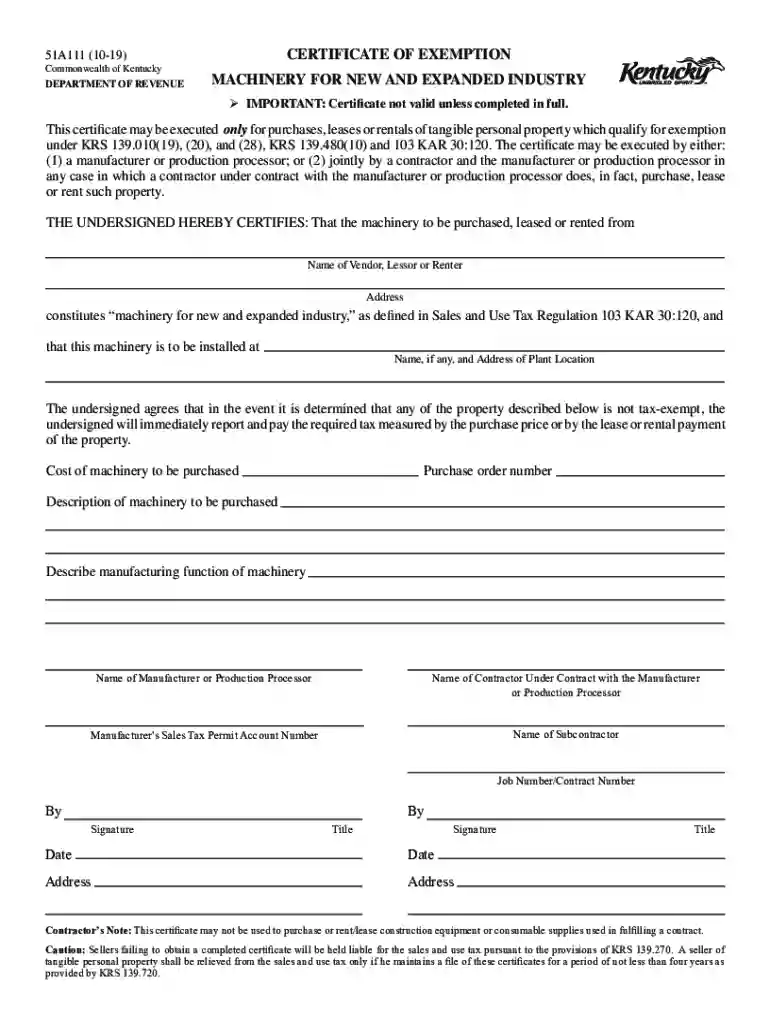
Type text, add images, blackout confidential details, add comments, highlights and more.

Draw your signature, type it, upload its image, or use your mobile device as a signature pad.

Send ky tax exempt form pdf via email, link, or fax. You can also download it, export it or print it out.
The KY Certificate Exemption, formally known as the Kentucky Sales Tax Exemption Certificate, is a crucial document issued by the Commonwealth of Kentucky’s Department of Revenue. This certificate allows eligible manufacturers and production processors to purchase, lease, or rent specialized equipment and machinery without incurring sales tax. By understanding its definition, usage, and requirements, businesses can effectively leverage this exemption to enhance operational efficiency and reduce costs.
To qualify for the KY Certificate Exemption, businesses must meet specific eligibility requirements. The exemption primarily targets manufacturers and production processors engaged in:
Eligible entities must provide evidence of their manufacturing or processing activities and maintain proper documentation to substantiate claims of exemption.


Understanding key terms is vital for effectively navigating the KY Certificate Exemption process:
Acquiring the KY Certificate Exemption involves several structured steps:
Maintaining accurate and organized records of all transactions and communications with the Department of Revenue will facilitate a smooth application process.
The KY Certificate Exemption comprises several critical components that businesses must understand for compliance:
Compliance with filing deadlines is essential to prevent penalties. Key deadlines include:
Real-world application scenarios can clarify how businesses benefit from the KY Certificate Exemption:
Failure to comply with the terms of the KY Certificate Exemption can lead to severe repercussions, including:
Understanding the intricacies of the KY Certificate Exemption equips businesses to navigate the sales tax landscape effectively while benefiting from available tax relief mechanisms.
We've got more versions of the kentucky tax exempt form form. Select the right kentucky tax exempt form version from the list and start editing it straight away!
At DocHub, your data security is our priority. We follow HIPAA, SOC2, GDPR, and other standards, so you can work on your documents with confidence.
The. Out-Of-State Exemption Certificate, Revenue Form 51A127, must be provided to sellers to substantiate the exempt status of each purchase in this state..Read more
Any official or employee who uses this certificate to make tax-free purchases for his own personal use or that of any other person will be subject to theRead more
This certificate may not be issued for purchases of tangible personal property (materials, machinery and equipment) which will be incorporated.Read more


