




01. Edit your case management needs assessment template online
Type text, add images, blackout confidential details, add comments, highlights and more.

Type text, add images, blackout confidential details, add comments, highlights and more.

Draw your signature, type it, upload its image, or use your mobile device as a signature pad.

Send case management assessment template via email, link, or fax. You can also download it, export it or print it out.
A social work case management template is a structured framework designed to guide social workers in managing client cases effectively. This tool enhances the organization and execution of the various components involved in case management, promoting better outcomes for clients. This template typically includes essential elements such as client demographics, assessment tools, service plans, and progress notes, allowing social workers to comprehensively document each case.
Social work case management templates often encompass several critical components, which can significantly influence their effectiveness. These components include:
Client Information: This section captures essential data such as the client's name, contact details, date of birth, and unique identifiers. It sets the foundation for personalized case management.
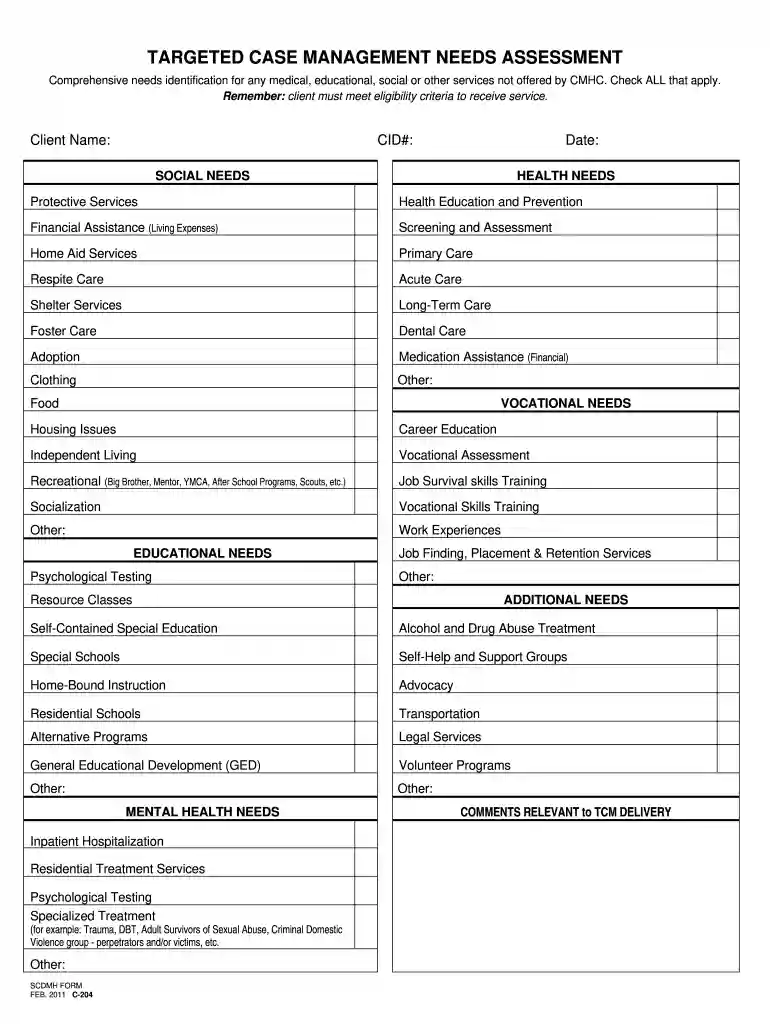
Assessment Tool: Incorporating a case management needs assessment tool is vital for identifying a client's comprehensive needs across various domains, including health, vocational, and mental health services. This can be a checklist that guides the social worker in evaluating the eligibility criteria for service provision.
Goal Setting: Clearly defined objectives allow both the social worker and the client to establish expectations and measure progress. Goals should be Specific, Measurable, Achievable, Relevant, and Time-bound (SMART).
Service Plan: A detailed service plan outlines the interventions and services to be provided, detailing responsibilities for both the case manager and the client, while also specifying timelines for implementation.
Progress Notes: Regular updates documenting interactions and changes in the client's situation are essential for continuity of care. These notes should include insights from various service providers, adjustments to the service plan, and any client feedback.
Implementing a social work case management template involves a systematic approach to case monitoring and follow-up:
Initial Assessment: Begin by collecting baseline information using the assessment tool. This step forms the basis for understanding client needs and developing a tailored service plan.
Set Goals: Collaborate with the client to establish meaningful, realistic goals. Document these clearly within the template to ensure accountability and direction.
Implement Services: Utilize the service plan to coordinate various resources and services. Clearly defined tasks and responsibilities for each party help streamline this process.
Document Progress: Consistently fill in progress notes as services are delivered. These reflections are crucial for evaluating the effectiveness of interventions and making necessary adjustments.
Regular Review: Schedule regular reviews to assess the accomplishment of goals and make modifications to the service plan as needed. This is essential for adapting to evolving client circumstances.
With sensitive client data involved, ensuring the security of case management documentation is paramount. Document management platforms should incorporate robust security measures, such as:
Encryption: Utilizing 256-bit SSL encryption protects data during transfer and storage, ensuring confidentiality.
Access Control: Implement strong authentication protocols that restrict access to only authorized personnel.
By integrating these measures, social workers can maintain their clients' trust while fulfilling ethical and legal obligations related to confidentiality.
Modern case management templates can be enhanced by integrating digital platforms that support their use. Tools like DocHub allow social workers to efficiently manage documentation through features such as:
Real-Time Collaboration: Multiple team members can work on the same case file simultaneously, facilitating comprehensive input from various stakeholders.
Fillable Forms: Creating interactive documents that guide clients through necessary information can enhance data collection.
Electronic Signatures: The ability to sign documents electronically helps streamline processes, ensuring that legal agreements are efficiently managed.
By leveraging these advanced tools, social workers can optimize their case management processes, leading to improved service delivery and client satisfaction.
We've got more versions of the case management needs assessment template form. Select the right case management needs assessment template version from the list and start editing it straight away!
| Versions | Form popularity | Fillable & printable |
|---|---|---|
| 2011 | 4.8 Satisfied (140 Votes) |
At DocHub, your data security is our priority. We follow HIPAA, SOC2, GDPR, and other standards, so you can work on your documents with confidence.


