






Understanding the California Child Abuse Report
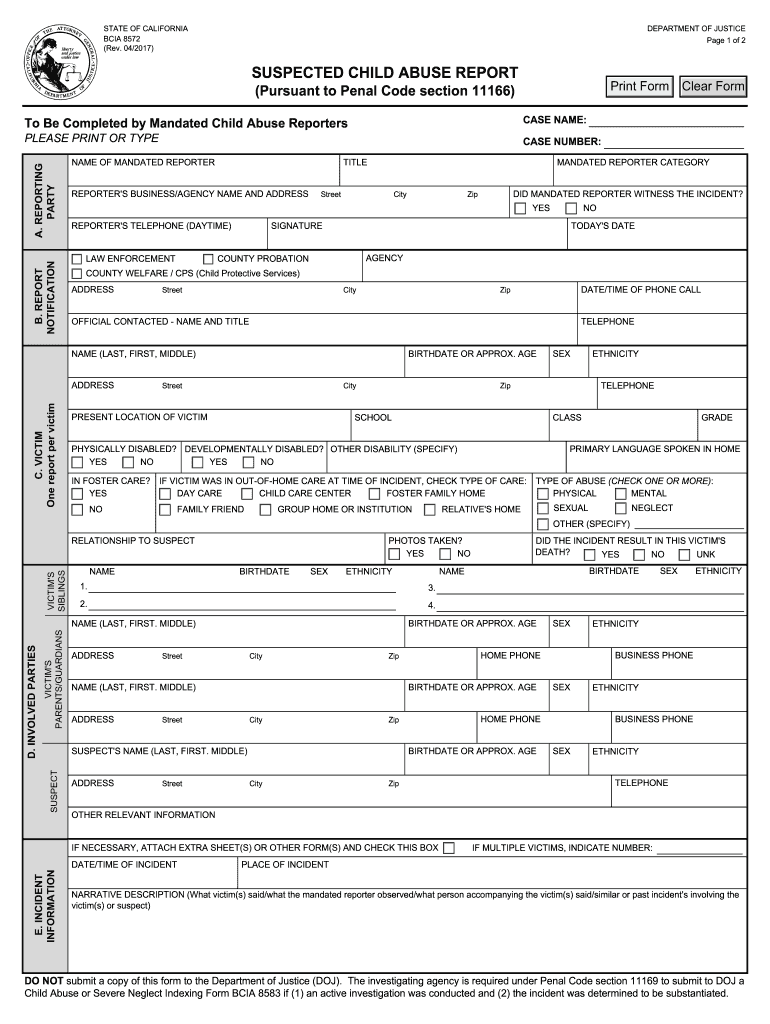
The California Child Abuse Report, specifically the BCIA 8572 form, is an official document used by mandated reporters to report suspected child abuse or neglect. This form is crucial for ensuring the safety and welfare of vulnerable children. The completion and submission of this form are mandated under California Penal Code section 11166, which outlines the responsibilities of certain professionals who are legally required to report any suspected child abuse.
Legal Responsibilities of Mandated Reporters
Mandated reporters include teachers, doctors, social workers, and other professionals who work with children. Under California law, these individuals are required to report any reasonable suspicion of child abuse. Failing to do so can result in legal consequences. It is important for mandated reporters to understand their obligations, which include:
- Immediate Reporting: Reports must be made as soon as there is reasonable suspicion. Delaying can compromise the investigation and the child's safety.
- Confidentiality: While the report will involve disclosing personal information, the identity of the reporter is kept confidential to protect them from retaliation.
- Documentation: A thorough and accurate report is essential, as this document can play a significant role in catalyzing a child welfare investigation.
Key Information Required on the BCIA 8572 Form
Completing the BCIA 8572 form requires detailed information to ensure that the report is actionable. The following sections are crucial:
- Reporting Party Information: Include the name, contact information, and professional details of the reporter. This information is essential for any follow-up.
- Victim Information: Provide the child’s name, age, and current location. It is important to include a physical description if available.
- Allegation Details: Clearly describe the nature of the suspicions, including specific incidents, observable injuries, or behaviors that prompted the report.
- Involved Parties: Detail any individuals involved in the suspected abuse, including family members or others who may have information relevant to the suspicion.
Submission Methods for the BCIA 8572
The BCIA 8572 form can be submitted through various methods, depending on the urgency of the situation and the reporter’s preferences:
- Online Submission: Certain jurisdictions may allow for online submission through designated channels.
- Mail: The completed form can be mailed to the appropriate child welfare agency. Ensure to retain a copy for record-keeping.
- In-Person: Reporters can deliver the form in person to local child protective services for immediate attention.
Important Considerations for Anonymity
In California, reporters have the option to remain anonymous; however, providing identifying information can aid investigations. When opting for anonymous reporting, the following points are significant:
- Limits of Anonymity: While reporters can remain anonymous, offering a method for follow-up can enhance the effectiveness of the investigation.
- Access to Information: Anonymity may restrict the amount of information that investigators can provide back to the reporter regarding the outcome of their report.
Collaborative Process in Reporting
The process of filling out and submitting the California Child Abuse Report is collaborative, often requiring input from multiple parties. Encouraging collaboration among various stakeholders can improve reporting outcomes:
- Multi-Agency Cooperation: Professionals may need to coordinate with law enforcement, health agencies, and social workers during the investigation.
- Feedback Loop: It is beneficial for reporters to engage in discussions with colleagues and supervisors about reported cases, as shared experiences can provide valuable insights and strengthen the overall reporting process.
Scenarios Highlighting the Importance of the Report
Several scenarios can illustrate the significance of the BCIA 8572 form in protecting children:
- Immediate Medical Attention: A teacher notices a child with unexplained bruises and contacts authorities after submitting the report, leading to prompt medical intervention.
- Ongoing Neglect: A social worker observes signs of neglect over multiple visits and files a report that leads to a thorough investigation, ultimately ensuring the child’s safety.
Potential Penalties for Non-Compliance
Understanding the penalties for failing to report suspected child abuse is essential for mandated reporters. These penalties can include:
- Criminal Charges: Failure to report can lead to misdemeanor charges, carrying fines and potential jail time.
- Civil Liability: Reporters may also face civil lawsuits if a child suffers harm after they have failed to report suspected abuse.
Variants of Child Abuse Reporting Forms
In addition to the BCIA 8572, various other forms are used for reporting child abuse in different contexts. These may include state-specific reporting forms or forms tailored for specific types of incidents, such as sexual abuse or dire cases requiring immediate intervention.
Ultimately, the California Child Abuse Report (BCIA 8572) serves as a crucial tool in the protection of vulnerable children and the enforcement of legal obligations among mandated reporters. Understanding how to properly complete and submit the form is essential for ensuring effective intervention in cases of suspected child abuse.