




01. Edit your unemployment form online
Type text, add images, blackout confidential details, add comments, highlights and more.

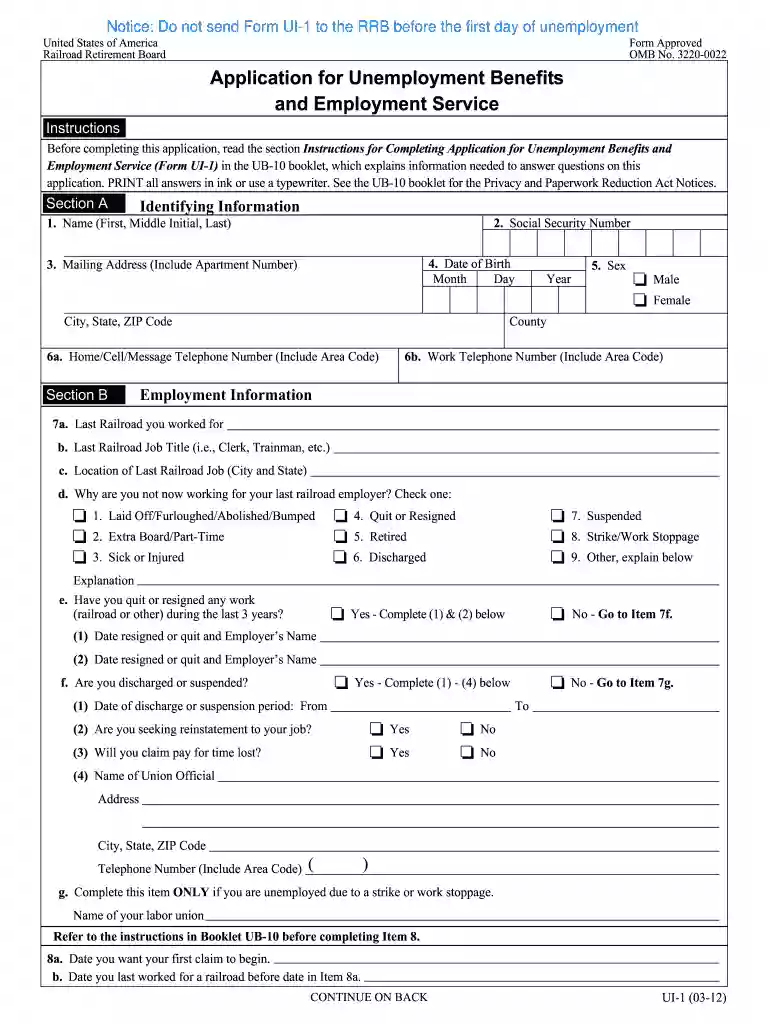
Type text, add images, blackout confidential details, add comments, highlights and more.

Draw your signature, type it, upload its image, or use your mobile device as a signature pad.

Send unemployment application form via email, link, or fax. You can also download it, export it or print it out.
Unemployment forms are critical documents used by individuals seeking financial assistance after losing their jobs. These forms not only facilitate the application for unemployment benefits but also help streamline the entire process for both the applicant and the administering agency. The importance of correctly completing these forms cannot be overstated, as inaccuracies can lead to delays in processing or denial of benefits.
Different states may require specific forms when applying for unemployment benefits. Common types include:
Initial Application Forms: This is the primary form that job seekers must fill out to initiate their claim for benefits. It typically includes personal information, employment history, and the reason for job loss.
Continued Claim Forms: After the initial claim, recipients may need to submit continued claim forms weekly or bi-weekly to certify ongoing eligibility for benefits.
Appeal Forms: In cases where an application for benefits is denied, applicants can file an appeal using designated forms which allow them to contest the decision.
Unemployment application forms generally contain several essential sections. Each needs careful attention:
Personal Information: Basic details such as name, address, Social Security Number, and contact information.
Work History: A detailed account of the applicant's previous employment, including names of employers, dates of employment, and reasons for leaving each job.
Claim Certification: A section that requires applicants to confirm their availability for work and willingness to accept suitable employment when offered.
Additional Benefits Section: This part may require the applicant to disclose any other sources of income or benefits, such as severance pay or retirement plans.
Direct Deposit Information: Applicants can often provide their banking information to facilitate quicker payment processing.
Filling out the unemployment application form correctly is crucial. Here are step-by-step guidelines to ensure accuracy:
Gather Necessary Documentation: Before starting, collect all required documents such as pay stubs, W-2 forms, or any notification of separation from your previous employer.
Fill in Personal Information Accurately: Double-check the spelling of your name, address, and Social Security Number. Small errors can lead to processing delays.
Provide Comprehensive Employment History: When listing previous jobs, ensure the dates are precise and include all relevant job titles and responsibilities.
Review Before Submitting: Carefully go over the completed form for accuracy. Look for missing signatures or required sections that may not have been filled out.
After completing the unemployment form, submit it according to your state’s guidelines:
Online Submission: Many states offer online portals where applicants can fill out and submit their forms electronically. This method is often faster and allows for immediate confirmation of submission.
Mailing Instructions: If submitting via mail, check the mailing address and ensure you use the correct postage. Keep a copy of the submitted form for your records.
In-Person Options: Some states allow for in-person submissions at local unemployment offices. This can be beneficial for applicants who have questions or need assistance.
Deadlines: Be aware of application deadlines specific to your state. Submitting forms within the designated period is vital to receiving benefits.
Legal Requirements: Understand the legal implications of the information provided. Falsifying information can result in penalties, including fines or disqualification from receiving benefits.
Eligibility Criteria: Each state has specific eligibility requirements based on work history and circumstances surrounding job loss. Familiarizing yourself with these standards ensures that your application aligns with state regulations.
By understanding the nuances of unemployment forms, applicants can significantly enhance their chances of a smooth application experience, ensuring they receive the assistance they need without unnecessary delays.
We've got more versions of the unemployment form form. Select the right unemployment form version from the list and start editing it straight away!
| Versions | Form popularity | Fillable & printable |
|---|---|---|
| 2012 | 4.8 Satisfied (223 Votes) |
Electronic document approval demands a software solution that complies with data security and eSignature standards. DocHub is a great tool for that, as it meets all the aforementioned requirements. Whatever method you prefer to sign your unemployment form pdf in DocHub, your electronic signature will be legally binding and court-admissible.
Apart from an extensive toolset for editing PDFs on mobile phones, DocHub allows you to sign your unemployment forms along the way. Open our editor in your browser, make modifications using DocHub’s toolset, and finish your editing by eSigning the finished form.
At DocHub, your data security is our priority. We follow HIPAA, SOC2, GDPR, and other standards, so you can work on your documents with confidence.
Mar 24, 2020 The TERS process came into effect on 11 December 2019 when it was approved by the Director General of the Department of Employment and Labour.Read more
This form has been given to you because (1) you have been separated from your job, or (2) you were placed in a nonpay status, or (3) your records have beenRead more
Find forms, publications, and other important documents related to the EDD and unemployment insurance.


