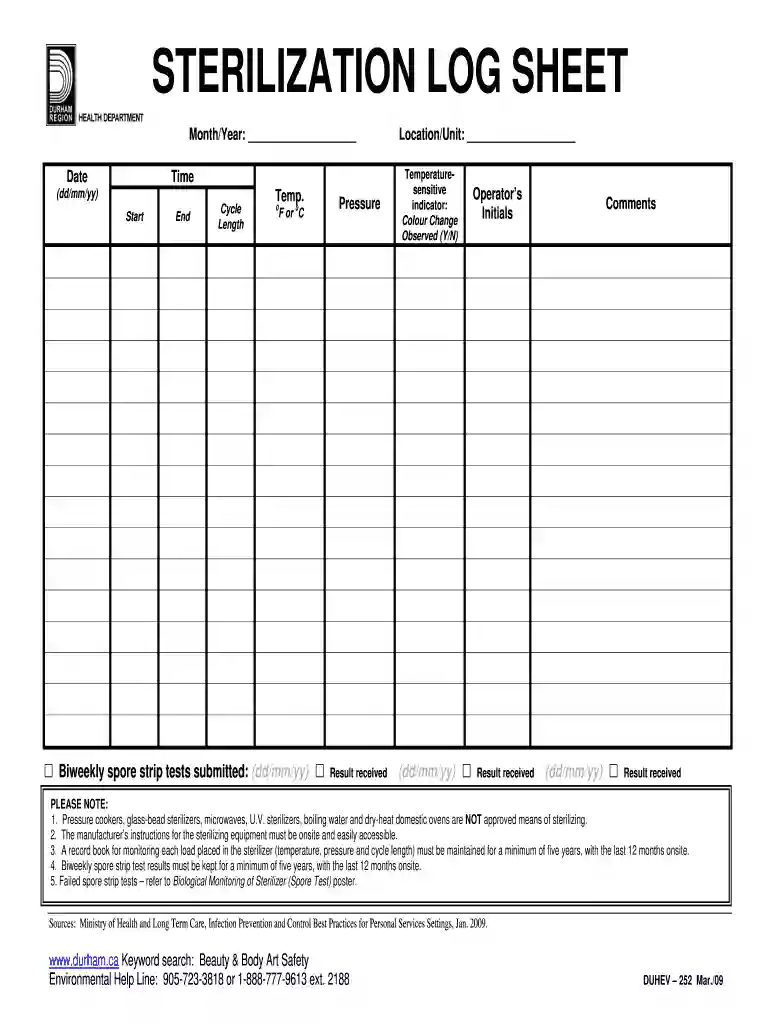
Sterilization log 2026

Get Form
sterilization log sheet Preview on Page 1

Here's how it works

01. Edit your sterilization log sheet online
Type text, add images, blackout confidential details, add comments, highlights and more.

02. Sign it in a few clicks
Draw your signature, type it, upload its image, or use your mobile device as a signature pad.

03. Share your form with others
Send sterilization log sheet dental via email, link, or fax. You can also download it, export it or print it out.

Understanding the Sterilization Log and Its Importance

The sterilization log is a critical document used primarily in healthcare settings to ensure that sterilization processes are adequately monitored and documented. This record tracks essential details regarding the sterilization of equipment and tools, confirming that they are safe for use in patient care or procedures. By documenting the date, time, temperature, pressure, and the results of spore strip tests, the sterilization log provides a comprehensive overview of sterilization efficacy.

Key Elements of a Sterilization Log

For effective sterilization monitoring, several key elements must be included:

  • Date and Time: Each record entry should precisely state when the sterilization cycle was initiated and completed. This timestamp is crucial for tracking the history of sterilization processes and ensuring proper scheduling.
  • Temperature and Pressure: These readings confirm that the sterilizer operated within the designated parameters for adequate sterilization. Records should detail the specific temperature and pressure used, as variations can significantly impact the efficacy of the process.
  • Spore Test Results: Documentation of biological monitoring using spore tests signifies whether the sterilization process was successful. This includes the identification of any failures, which need to be addressed immediately to maintain safety.
  • Personnel Signature: The individual responsible for monitoring the sterilization process should sign the log. This provides accountability and ensures all procedures were followed appropriately.

Steps to Complete the Sterilization Log

Completing a sterilization log involves a systematic approach to ensure all necessary information is recorded accurately:

  1. Initiate the Sterilization Process: Start by marking the date and time of the sterilization cycle in the log.
  2. Monitor Sterilizer Parameters: As the cycle progresses, record temperature and pressure readings at required intervals. Ensure these values align with manufacturer specifications.
  3. Conduct Biological Indicators Test: After sterilization, utilize spore tests to assess the efficacy. Document the results in the log.
  4. Review and Sign: Once all entries are completed, the responsible personnel must sign the log to confirm that the sterilization process adhered to established protocols.
  5. Store for Compliance: Retain the log securely for a minimum of five years. This is essential for regulatory compliance and for future inspections.

Legal Use of the Sterilization Log

The sterilization log serves a vital legal function, particularly in healthcare environments. By maintaining thorough documentation, facilities can demonstrate compliance with local and federal regulations regarding sterilization processes. Failure to keep accurate records may result in legal repercussions, including fines or closure by regulatory bodies. Essential legal considerations include:

  • Regulatory Compliance: Facilities must adhere to guidelines set forth by organizations such as the Centers for Disease Control and Prevention (CDC) and the Occupational Safety and Health Administration (OSHA).
  • Risk Management: In the event of a patient infection linked to improperly sterilized equipment, a well-maintained log can provide evidence of compliance and due diligence.

Who Uses the Sterilization Log?

The sterilization log is utilized by a range of professionals in various settings, including:

  • Dental Practices: Dental sterilization log sheets are specifically designed for documenting sterilization processes in dental offices, ensuring the safety of instruments used in patient care.
  • Surgical Units: In hospitals, surgical teams rely on sterilization logs to maintain standards in operating rooms and procedural areas.
  • Veterinary Clinics: Veterinary professionals utilize similar logs to ensure all surgical instruments are adequately sterilized before use on animals.

Digital vs. Paper Version of the Sterilization Log

In today's increasingly technology-driven environment, facilities may choose between digital and paper sterilization logs. Each option has its benefits:

  • Digital Logs: These often come with the added capabilities of data backup, easier tracking of compliance data, and potential integration with other health record systems. They can simplify the process of fulfilling regulatory requests.
  • Paper Logs: While traditional, paper logs can lead to issues like legibility and storage space. However, they are sometimes preferred in settings where technology use is limited.

Implementing a suitable sterilization log method, whether digital or paper, is critical for maintaining the safety and integrity of sterilization practices.

See more sterilization log versions

We've got more versions of the sterilization log form. Select the right sterilization log version from the list and start editing it straight away!
Versions Form popularity Fillable & printable
2017 4.8 Satisfied (143 Votes)
2009 4.4 Satisfied (47 Votes)
be ready to get more

Complete this form in 5 minutes or less

Get form

Security and compliance

At DocHub, your data security is our priority. We follow HIPAA, SOC2, GDPR, and other standards, so you can work on your documents with confidence.

Learn more
ccpa2
pci-dss
gdpr-compliance
hipaa
soc-compliance