
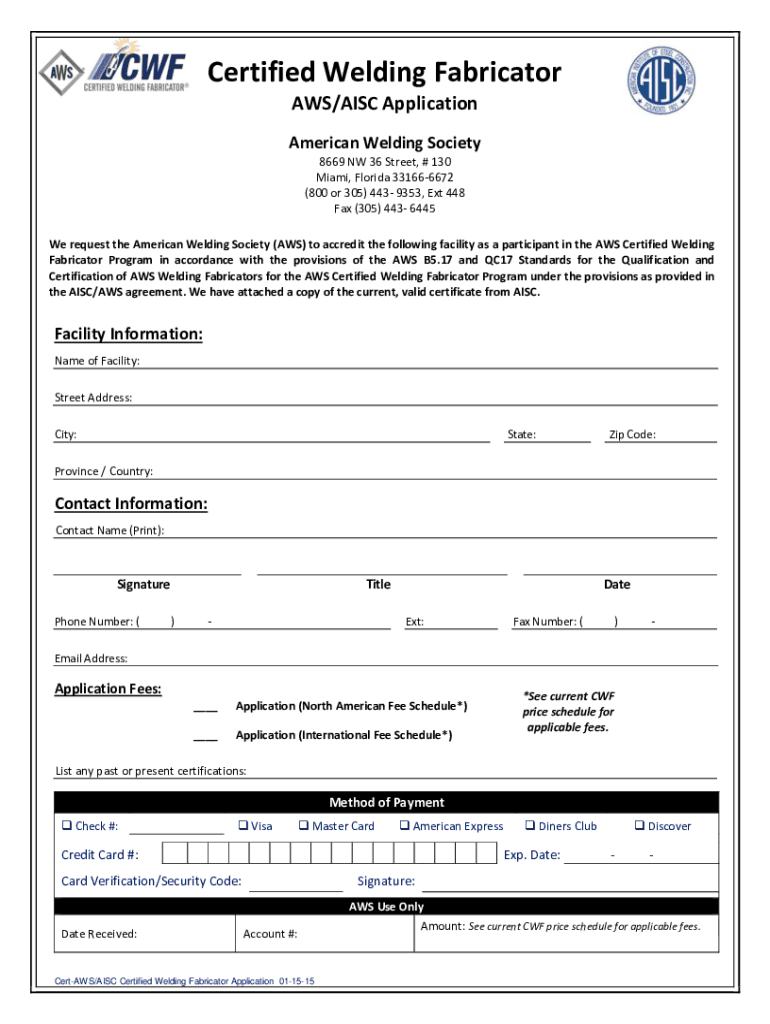







Definition and Meaning of the Blank Welding Certificate
A blank welding certificate serves as an official document that verifies a welder's competence and qualifications in performing welding tasks. It is essential in industries where safety and regulatory compliance are critical, such as construction, manufacturing, and repair services. The certificate typically includes details such as the welder's name, the type of welding performed, the materials used, and the standards adhered to during the process. Understanding this certificate's role is vital for professionals in the welding field, as it not only signifies skill but also builds trust with clients and employers.
Key Characteristics of a Blank Welding Certificate
- Verification of Skills: It validates that a welder has met specific industry standards.
- Regulatory Compliance: Often required to comply with safety regulations in various industries.
- Transferable Document: Can be used across different states within the U.S., although local requirements may vary.
This certificate is commonly issued by accredited organizations, such as the American Welding Society, which maintains high standards in the welding industry.
How to Use the Blank Welding Certificate
Using a blank welding certificate involves filling it out with accurate and relevant information regarding the welding project and the welder's qualifications. This document is mainly used by employers to demonstrate a welder's credentials and is often required for job applications or tender submissions in projects.
Steps for Effective Use
- Obtain the Certificate: Ensure you have a legitimate blank welding certificate format from a recognized source.
- Fill in the Details: Accurately input information such as the welder's name, qualifications, and specific welding types.
- Verify Compliance: Check that all required standards and regulations are adhered to in the document.
- Distribute Appropriately: Submit the filled certificate to relevant stakeholders, such as employers or project managers.
By accurately utilizing the blank welding certificate, professionals can enhance their credibility and ensure compliance with industry standards.
How to Obtain the Blank Welding Certificate
Obtaining a blank welding certificate typically involves undergoing training and certification processes set by recognized organizations. Welders must demonstrate their skills and knowledge to receive this certificate officially.
Key Steps in the Acquisition Process
- Complete Relevant Training: Enroll in welding programs that cover the necessary skills and knowledge areas.
- Pass Certification Exams: Successfully passing examinations administered by organizations like the American Welding Society is often required.
- Request the Certificate: After qualifications are achieved, formally request the blank welding certificate from the certifying body.
- Maintain Records: Keep track of all certifications obtained and any continuing education to ensure that your qualifications remain current.
This structured approach ensures that welders understand the processes involved in obtaining a legitimate and valid blank welding certificate.
Steps to Complete the Blank Welding Certificate
Completing a blank welding certificate involves several crucial steps to ensure all necessary information is accurately captured. This process requires attention to detail to maintain the validity and effectiveness of the certificate.
Detailed Completion Process
- Begin with Basic Information:
- Enter the welder's full name.
- Include the date of issuance.
- Detail the Welding Process:
- Specify the type of welding performed (e.g., MIG, TIG, Stick).
- Indicate the materials used (e.g., steel, aluminum).
- Include Certifications:
- List relevant certifications or training that the welder has completed, referencing specific standards (like AWS D1.1).
- Finalize and Sign:
- Ensure all information is accurate, then sign the certificate.
- Optionally, include a witness or employer's signature for additional authenticity.
Following these steps leads to a properly completed certificate that highlights the welder's qualifications comprehensively.
Important Terms Related to the Blank Welding Certificate
Understanding various terms associated with the blank welding certificate is essential for clarity in the welding industry. Familiarity with these terms aids in effectively communicating within the field and ensuring compliance with industry standards.
Key Terms Defined
- Welder Qualification: The process of evaluating a welder's ability to perform welding tasks per specified standards.
- Welding Procedure Specification (WPS): A formal document that provides direction for creating a specific weld.
- Non-Destructive Testing (NDT): Techniques used to evaluate material properties without causing damage, often referenced in certification contexts.
- Quality Assurance (QA): Procedures that ensure products meet specified standards, directly linking to welding excellence.
Familiarity with these terms facilitates compliance with industry standards and enhances communication among professionals in the field.
Legal Use of the Blank Welding Certificate
The legal use of a blank welding certificate is significant in various applications across industries. Understanding its legal implications ensures that welders and employers utilize this certificate effectively while remaining compliant with local and federal regulations.
Legal Implications
- Contractual Obligations: In many contracts, proof of welder certification is a requirement, binding the parties legally.
- Liability and Responsibility: Should an accident occur due to faulty welding, possessing an adequate certification can mitigate liability for the welder and their employer.
- Regulatory Compliance: Certain industries mandate that all welders possess valid certificates to ensure safety and quality standards are met.
Understanding these legal dimensions empowers welders and employers to navigate the complexities of certification and adhere to necessary regulations effectively.
Examples of Using the Blank Welding Certificate
Several practical examples illustrate how the blank welding certificate can be utilized in various scenarios, emphasizing its importance in establishing credibility and compliance in the welding industry.
Practical Applications
- Job Applications: A welder includes their certificate when applying for jobs, showcasing their qualifications and compliance with industry standards.
- Project Proposals: In bidding for contracts, companies submit the certifications of their welders to demonstrate competence to potential clients.
- Regulatory Inspections: During inspections, a blank welding certificate serves as proof to regulatory bodies that qualified personnel conducted welding work.
These examples highlight the blank welding certificate's critical role across diverse applications, emphasizing its value for professional credibility.




