







Definition & Meaning
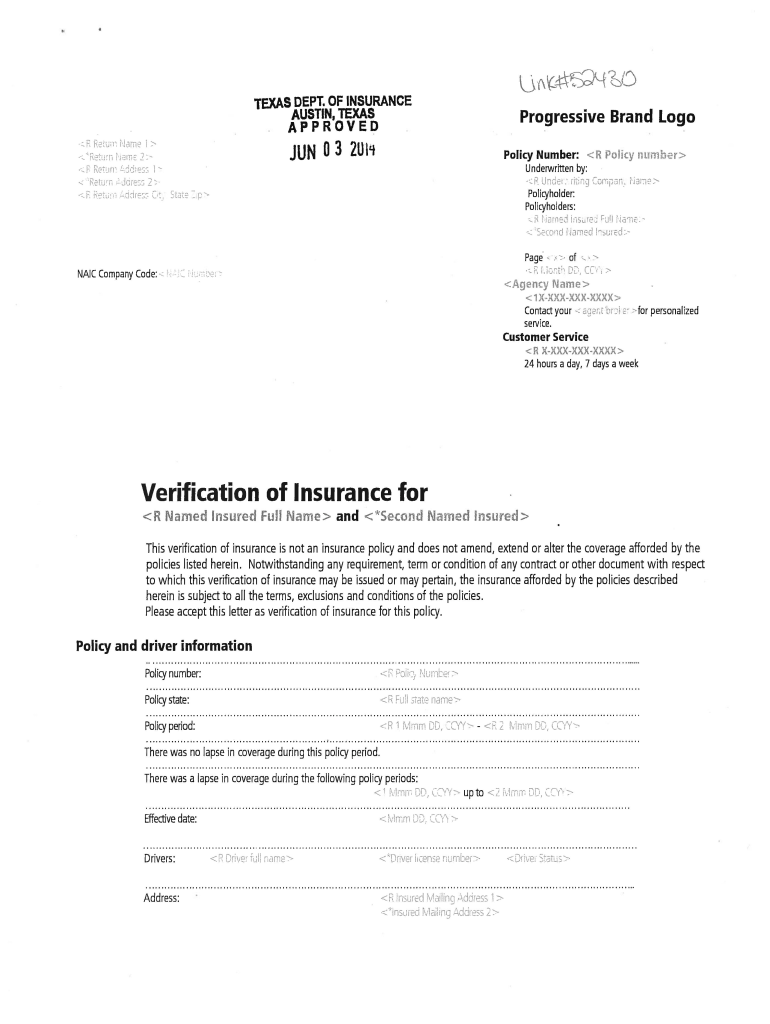
Progressive lienholder verification is a formal document used primarily in the automotive insurance industry to confirm the existence of a lien on a vehicle. This verification is particularly relevant for lienholders, such as banks or finance companies, to ensure their financial interests are protected in case the vehicle owner defaults on payments. The document explicitly states that the lienholder has a legal claim on the vehicle, thereby allowing them to repossess it if necessary.
The document typically includes essential details such as the insured's information, the lienholder's information, and specifics regarding the vehicle covered under the lien. It's important to note that this verification is not an insurance policy itself; rather, it serves as proof that the required coverage exists, helping to facilitate trust between the vehicle owner and the lienholder.
Key Elements of the Progressive Lienholder Verification
A progressive lienholder verification comprises several vital components that solidify its purpose and utility, making it essential for all parties involved. Key elements include:
-
Insured's Information: Includes the name, address, and policy number of the vehicle owner.
-
Lienholder Details: This section contains the name and address of the financial institution or individual holding the lien on the vehicle.
-
Vehicle Information: Details about the vehicle such as make, model, year, Vehicle Identification Number (VIN), and license plate number are crucial for identifying the asset in question.
-
Coverage Information: A summary of the insurance coverage in place, highlighting the types of coverage (liability, comprehensive, collision) and the effective dates.
-
Signature and Date: A signature from an authorized representative from the insurance company and the date on which the verification was issued, validating the document’s authenticity.
Inclusion of these elements not only strengthens the document but also ensures compliance with industry standards and satisfies the requirements of financial institutions and stakeholders.
How to Complete the Progressive Lienholder Verification
Completing the progressive lienholder verification can seem daunting, but it follows a straightforward process aimed at ensuring all necessary data is captured correctly. The steps include:
-
Gather Required Information: Collect all relevant details about the insured, the lienholder, and the vehicle itself. Names, addresses, policy numbers, and vehicle details must be current and accurate.
-
Access the Verification Form: Depending on your insurance provider, obtain the official verification form from their website or customer service representatives. The form may also be available in your insurance policy documentation.
-
Fill in Details: Carefully enter the gathered information into the respective fields of the verification form. Ensure accuracy to prevent any discrepancies.
-
Review the Information: Double-check all entries to confirm correctness. Misspellings or inaccuracies can lead to delays or complications.
-
Submit the Form: Send the completed verification to the relevant parties (typically the lienholder) using the preferred submission method, which could include email, online portal uploads, or traditional mail.
-
Keep Records: Retain a copy of the submitted verification for your records. This might be useful for future reference or in case of disputes.
Following these steps ensures that the lienholder verification process is clear, efficient, and transparent, facilitating smooth transactions related to vehicle financing.
Important Terms Related to Progressive Lienholder Verification
Understanding the terminology associated with progressive lienholder verification can demystify the process and enhance clarity for all parties involved. Some important terms include:
-
Lien: A legal claim against an asset that allows the holder to seize the asset if debts associated with it are not paid.
-
Insurance Policy: A contract between the policyholder and the insurer, providing financial protection against particular risks.
-
Verification: The act of confirming the authenticity of information stated in a document, ensuring that all parties agree on the coverage details and associated claims.
-
Underwriting: The process through which an insurer evaluates the risk of insuring a client and decides the terms of the insurance provided.
-
Proof of Insurance: Documentation that verifies a vehicle is covered by an insurance policy, often required by lienholders during financing.
Familiarity with these terms enables smoother communication and understanding during the verification process and helps mitigate misunderstandings regarding responsibilities and obligations.
Who Typically Uses the Progressive Lienholder Verification
The progressive lienholder verification serves various stakeholders within the automotive financing ecosystem. Typical users include:
-
Lenders: Banks or financial institutions that provide auto loans utilize this document to confirm the insurance coverage protecting their interest in the vehicle.
-
Vehicle Owners: Individuals financing their vehicles through loans must present the verification to demonstrate compliance with lender requirements.
-
Insurance Agents: Professionals in the insurance industry may be responsible for issuing and verifying these documents as part of their duties to clients and lenders.
-
Regulatory Bodies: Certain state agencies may require lienholder verification as part of regulatory protocols to ensure compliance in insurance practices.
Each party relies on the verification to fulfill responsibilities related to financial agreements, creating a clear line of communication and understanding throughout the vehicle financing process.


Why You Should Use Progressive Lienholder Verification
Utilizing progressive lienholder verification is essential for numerous reasons that benefit both vehicle owners and financial institutions. The verification serves to:
-
Protect Financial Interests: Lenders can ensure that their investment is secured by confirming that the vehicle is insured properly against potential losses or damages.
-
Facilitate Compliance: Vehicle owners demonstrate their adherence to lender requirements, helping avoid penalties or legal issues that may arise from inadequate insurance.
-
Enhance Credibility: The presence of a lienholder verification builds trust between the borrower and the lender, reinforcing the legitimacy of the transaction.
-
Streamline Claims Processes: In the event of a loss, having a verified document in place expedites the claims process, ensuring all necessary parties are informed and compliant.
-
Avoid Penalties: Failing to provide adequate proof of insurance could lead to financial penalties or legal repercussions for vehicle owners, making the verification a vital step in responsible management of vehicle finances.
Employing progressive lienholder verification ultimately contributes to a smoother financial experience by ensuring all parties are informed, protected, and compliant with industry standards.




