







Definition & Meaning of the Daily Vehicle Inspection Sheet
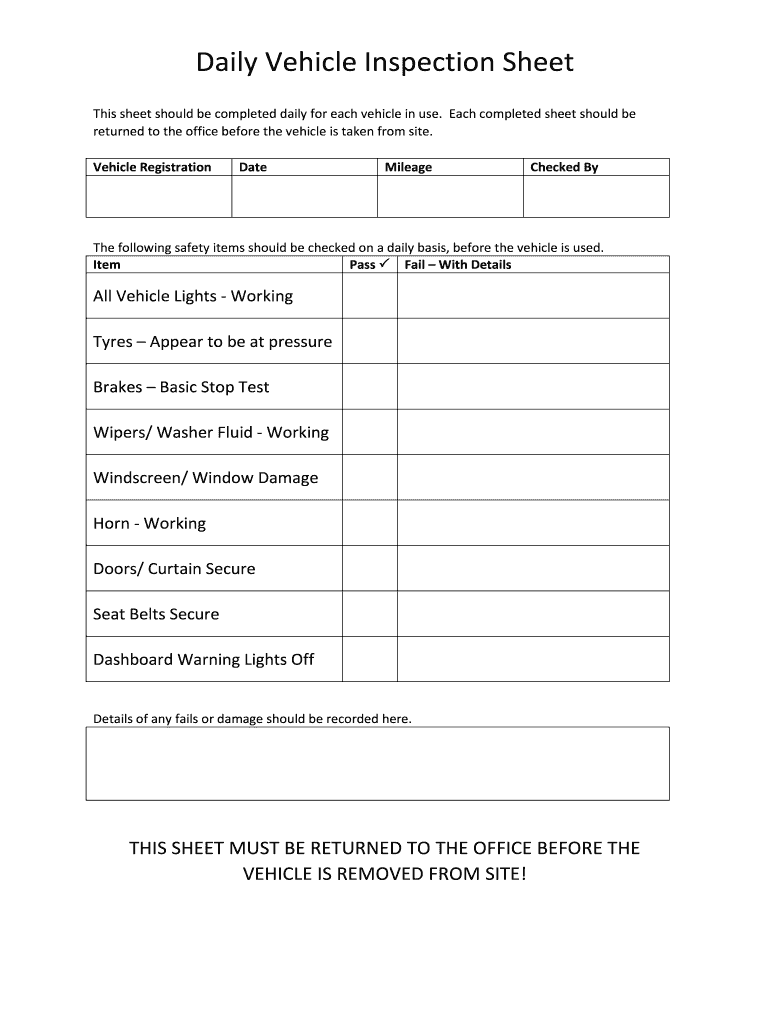
The Daily Vehicle Inspection Sheet is an essential document used to ensure that vehicles are safe and operational before being used for any purpose. This standardized form captures vital information regarding the vehicle's condition and compliance with safety regulations. Typically mandated by various transportation and safety regulatory bodies, the sheet is a crucial tool for fleet management, particularly in industries reliant on vehicles, such as logistics, public transportation, and construction.
The inspection sheet encompasses multiple categories of checks, ensuring that all necessary components of the vehicle are vetted. Commonly included are elements such as brakes, lights, tires, and safety equipment. The document serves as proof of due diligence, demonstrating that proper inspections have been conducted prior to operating a vehicle. Failure to utilize the Daily Vehicle Inspection Sheet can lead to unsafe vehicle operation, potential accidents, and legal repercussions.
Key features of the Daily Vehicle Inspection Sheet include the vehicle identification section, a checklist of safety items, and space for remarks regarding any issues found during the inspection. By maintaining thorough records, organizations can track vehicle performance over time and make informed decisions regarding maintenance and repairs.
Key Elements of the Daily Vehicle Inspection Sheet
Understanding the key elements of the Daily Vehicle Inspection Sheet is vital for effective completion and compliance. The sheet typically includes sections designed for identifying the vehicle and recording inspection details:
-
Vehicle Information: This section captures critical details including the vehicle make, model, year, and registration number. Accurate information here is crucial for accountability and tracking.
-
Date and Mileage: It's important to document the date of the inspection and the vehicle's current mileage to keep a comprehensive maintenance record that aligns with operational timelines.
-
Inspection Checklist: This is often the most extensive section, containing a list of safety items that must be inspected. Common checklist items include:
- Brakes functionality
- Tire conditions (pressure, tread depth)
- Fluid levels (oil, coolant)
- Lights (headlights, taillights, turn signals)
- Windshield wipers and mirrors
-
Pass/Fail Indicators: For each item on the checklist, there is typically an option to mark whether the item passed or failed inspection. This immediate feedback helps prioritize follow-up actions.
-
Comments Section: This area allows the inspector to note any specific issues or observations that may require attention, providing a clear pathway for maintenance teams to address concerns.
-
Signature of Inspector: The form must be signed and dated by the person conducting the inspection, adding a layer of accountability and compliance with safety regulations.
Steps to Complete the Daily Vehicle Inspection Sheet
Completing the Daily Vehicle Inspection Sheet is a structured process that helps guarantee vehicle safety and operational readiness. Here is a step-by-step guide to effectively finish this crucial task:
-
Gather Necessary Information:
- Before starting, ensure you have all vehicle details readily available. This includes the vehicle registration, make, model, and any specific identifiers.
-
Record Date and Mileage:
- Clearly document the date of inspection and the vehicle's current mileage on the form. This helps in maintaining an accurate maintenance log.
-
Perform Physical Inspections:
- Methodically inspect all checklist items. Pay close attention to safety elements such as brakes, lights, and fluid levels. Use a systematic approach to ensure nothing is overlooked.
-
Mark Pass/Fail Outcomes:
- For each item listed on the inspection checklist, indicate whether it passed or failed. For items that fail, make sure to include specific notes in the comments section regarding the issues observed.
-
Add Comments as Necessary:
- Use the comments section to provide further details on any observed issues, including potential repairs needed or any concerns that may arise from the inspection.
-
Sign and Date Form:
- After completing the inspection, the inspector must sign and date the form, signifying that all evaluations were accurately performed.
-
Submit the Completed Sheet:
- Finally, submit the Daily Vehicle Inspection Sheet to the appropriate office or storage location as required by company policy or regulatory guidelines.
Implementing these steps ensures that inspections are thorough and consistent, leading to improved vehicle safety and compliance.
Why Use the Daily Vehicle Inspection Sheet?
The Daily Vehicle Inspection Sheet serves as a fundamental component of vehicle safety management and operational efficiency. Several key reasons highlight the importance of this document:
-
Regulatory Compliance: Many industries are legally required to conduct daily inspections to prevent accidents and ensure public safety. Failing to maintain proper documentation can lead to legal penalties.
-
Safety Assurance: Regular inspections help detect and address potential issues before they result in accidents. Using the Daily Vehicle Inspection Sheet can significantly reduce the risk of breakdowns and safety incidents.
-
Maintenance Tracking: The form helps organizations maintain a historical record of vehicle inspections, repairs, and maintenance, enabling more informed decision-making regarding fleet management.
-
Operational Efficiency: By identifying problems early, businesses can ensure that vehicles remain operational and reduce downtime due to unexpected repairs. This leads to better resource utilization.
-
Accountability: Completing the sheet adds a layer of accountability. The signature of the inspector indicates that proper procedures are being followed, fostering a culture of safety within the organization.
Incorporating the Daily Vehicle Inspection Sheet into daily operations ultimately enhances safety, compliance, and overall vehicle performance.
Legal Use of the Daily Vehicle Inspection Sheet
Understanding the legal implications of the Daily Vehicle Inspection Sheet is crucial for organizations that operate fleets. The sheet must adhere to regulations set forth by bodies such as the U.S. Department of Transportation (DOT) and Occupational Safety and Health Administration (OSHA). Here are the legal uses of the inspection sheet:
-
Regulatory Requirement: Many transportation regulations mandate that vehicles be inspected regularly to promote safety on public highways and roads. Non-compliance can result in fines, citations, or other penalties.
-
Documentation for Audits: The completed inspection sheets serve as documentation during audits by regulatory agencies. Adequate records can demonstrate compliance and due diligence.
-
Liability Protection: In the event of an accident, having a well-maintained record of inspections can serve as defense in legal proceedings, illustrating that safety practices were followed.
-
Insurance Compliance: Insurance companies often require proof of regular inspections as part of the policy terms. Non-compliance could jeopardize coverage in the event of an incident.
-
Employee Safety: Use of the Daily Vehicle Inspection Sheet also falls under workplace safety laws, ensuring that employees operate vehicles that are safe and compliant with safety standards.
By diligently using and maintaining the Daily Vehicle Inspection Sheet, organizations can safeguard themselves against potential legal issues while promoting a culture of safety and responsibility.


