




Here's how it works
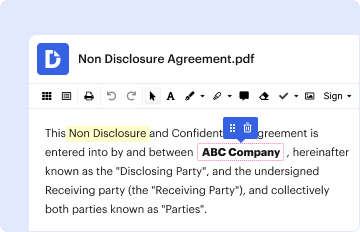
01. Edit your short term rental management agreement online
Type text, add images, blackout confidential details, add comments, highlights and more.
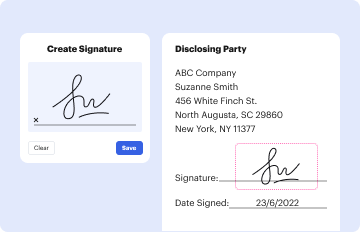
02. Sign it in a few clicks
Draw your signature, type it, upload its image, or use your mobile device as a signature pad.
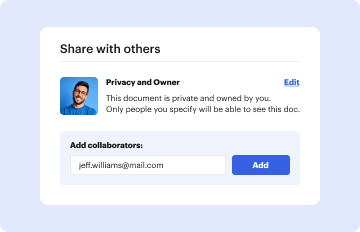
03. Share your form with others
Send airbnb property management contract via email, link, or fax. You can also download it, export it or print it out.
How to use or fill out SHORT TERM RENTAL PROPERTY MANAGEMENT AGREEMENT

- Click ‘Get Form’ to open the SHORT TERM RENTAL PROPERTY MANAGEMENT AGREEMENT in our editor.
- Begin by filling in the date at the top of the form. This establishes when the agreement is effective.
- In the OWNER section, enter your name and details as the property owner. Ensure accuracy for legal purposes.
- Complete the PROPERTY section with your rental property's address, unit number, and type (bedrooms and bathrooms).
- Review sections regarding management responsibilities and fees. Make sure you understand CR's role and any associated costs.
- Fill out any additional terms or special considerations that apply to your property or management preferences.
- Sign and date at the bottom of the form. If there are multiple owners, ensure all signatures are collected.
Start using our platform today to streamline your rental management process for free!
Fill out SHORT TERM RENTAL PROPERTY MANAGEMENT AGREEMENT online
It's free
It's free
See more SHORT TERM RENTAL PROPERTY MANAGEMENT AGREEMENT versions
We've got more versions of the SHORT TERM RENTAL PROPERTY MANAGEMENT AGREEMENT form. Select the right SHORT TERM RENTAL PROPERTY MANAGEMENT AGREEMENT version from the list and start editing it straight away!
| Versions | Form popularity | Fillable & printable |
|---|---|---|
| 2009 | 4.7 Satisfied (36 Votes) |
Got questions?
We have answers to the most popular questions from our customers. If you can't find an answer to your question, please contact us.
Contact us
Can short-term rental losses offset ordinary income?
If done properly, short-term rentals can offset directly against this ordinary income without the real estate professional status. Losses can be generated by increasing your depreciation expense by using cost segregation studies to offset active business income without qualifying as a real estate professional.
What is the Airbnb income tax loophole?
The Airbnb Tax Loophole allows hosts to earn rental income tax-free when they rent out their place for 14 days or less in a year. It is known as the 14-Day Rule this part of U.S. tax law lets short-term rental hosts avoid reporting income to the IRS and save big on taxes.
What is an example of a tax loophole?
Backdoor IRAs, carried interest, and life insurance are just some of the loopholes you can use to reduce your tax bills. Its important to plan correctly and use the right loopholes, credits, and deductions for your unique situation.
What is the short-term rental loophole?
The STR loophole can be summarized easily- if your rental property has an average guest-stay of 7 nights or fewer, then it is considered short-term. Next, if you have a short-term rental, the losses, especially during the early years, are deemed non-passive and therefore deductible beyond the passive loss limitations.
What is the average management fee for short-term rentals?
Generally, the average property management fees for short-term rentals could be anything between 25-40% of the rent collected. In general, commissions will be lower for urban properties than rural, mountain, or beach locations.
Security and compliance
At DocHub, your data security is our priority. We follow HIPAA, SOC2, GDPR, and other standards, so you can work on your documents with confidence.
Learn more


People also ask
What is the minimum period for a property management agreement?
While most property management contracts are 12 months long, there are benefits to shorter ones. Normally there are no changes to contracts until they renew. With a shorter contract, both owners and property management companies have more opportunities to make changes benefiting their working arrangement.
What is a hold harmless agreement for short-term rental?
The Owner/Host is not liable for any accidents, injuries, or illnesses that occur while on the Property or its facilities. By accepting this agreement, guests agree to indemnify and hold harmless the Owner/Host from any and all claims of personal injury or property damage.
What is the 7 day rule for rental property?
The 7-day rule is a general rule of thumb for vacation rental owners trying to keep the deductible losses to zero for their taxes. If a property is rented for an average of 7 days or less then owners will be eligible for tax-deductible losses.