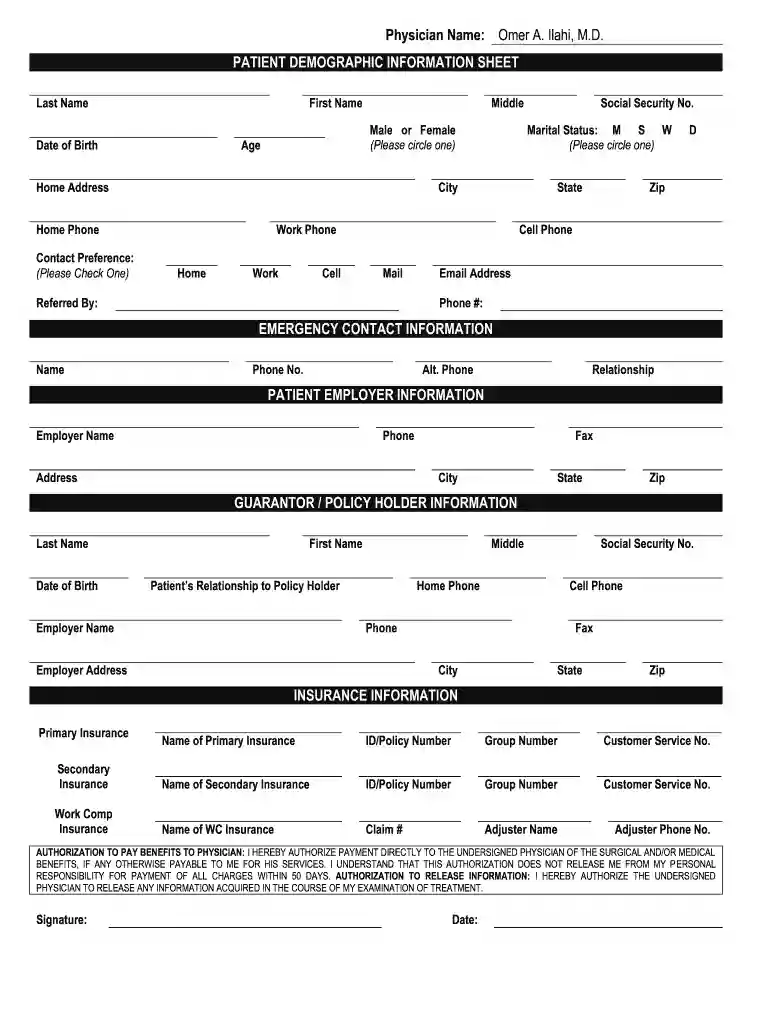
PATIENT DEMOGRAPHIC INFORMATION SHEET 2026

Get Form
patient demographic form Preview on Page 1

Here's how it works

01. Edit your patient demographic form online
Type text, add images, blackout confidential details, add comments, highlights and more.

02. Sign it in a few clicks
Draw your signature, type it, upload its image, or use your mobile device as a signature pad.

03. Share your form with others
Send demographic sheet via email, link, or fax. You can also download it, export it or print it out.

Definition and Meaning of the Patient Demographic Information Sheet

The Patient Demographic Information Sheet is a critical document utilized in healthcare settings to collect and organize essential information about patients. This document typically includes personal details such as the patient's name, date of birth, contact information, insurance details, and emergency contacts. The primary purpose of the sheet is to ensure that healthcare providers have comprehensive demographic data to facilitate patient care, billing, and legal compliance.

  • Patient Identification: Includes full name, Social Security number, and contact information.
  • Demographics: Such as age, gender, ethnicity, and occupation, which can assist in understanding patient backgrounds.
  • Insurance Information: Details related to the patient's health insurance provider, policy number, and coverage specifics are crucial for billing purposes.
  • Emergency Contacts: The document also typically requests information on a designated emergency contact to ensure reliable communication.

Understanding the definition and purpose of the Patient Demographic Information Sheet is essential for both healthcare providers and patients, ensuring streamlined processes and better patient outcomes.

How to Use the Patient Demographic Information Sheet

Utilizing the Patient Demographic Information Sheet is a straightforward process that enhances the efficiency of patient registration and record-keeping. Here are the steps on how to effectively use the sheet within a healthcare environment:

  1. Preparation: Ensure you have the most recent version of the patient demographic form, whether in physical or digital format.
  2. Distribution: Provide the form to new patients upon their arrival at the clinic or hospital. This can be done electronically for convenient access, especially if integrated within an online patient portal.
  3. Completion: Patients fill out the necessary fields with accurate information to avoid complications during appointment scheduling or billing.
  4. Verification: Once submitted, the healthcare staff should verify the details provided. This step is crucial to ensure all information is current and complete.
  5. Storage: Safeguard the completed forms in accordance with HIPAA regulations to maintain patient confidentiality, ensuring that sensitive information is protected against unauthorized access.

By following these steps, healthcare facilities can streamline patient intake processes while maintaining high standards for data accuracy and security.

Key Elements of the Patient Demographic Information Sheet

A comprehensive Patient Demographic Information Sheet typically contains several key elements that form the backbone of patient data collection. Understanding these elements can optimize usage and compliance:

  • Patient Identification: Personal details such as full name, date of birth, gender, and marital status. This information is vital for personalizing care and ensuring accurate medical records.
  • Contact Information: Addresses, phone numbers, and email addresses allow healthcare providers to reach patients for appointments or follow-ups.
  • Insurance Information: Important for billing purposes, this section includes the name of the insurance provider, policy number, and group number. Understanding this ensures that claims are processed correctly.
  • Medical History: While not always featured in the basic demographic sheet, sections detailing previous medical conditions, surgeries, and allergies can significantly improve patient care.
  • Emergency Contacts: Names and contact details of individuals authorized to be contacted in emergencies, facilitating timely communication during critical situations.

Incorporating these elements within the Patient Demographic Information Sheet is crucial for comprehensive patient management.

Steps to Complete the Patient Demographic Information Sheet

Completing the Patient Demographic Information Sheet accurately is essential for all parties involved in patient care. Here’s a breakdown of the steps involved:

  1. Personal Details: Start by providing your full name, ensuring it matches any identification documents.
  2. Contact Information: Include all relevant contact details, such as home address, phone numbers, and email addresses.
  3. Demographics: Fill in demographic data including date of birth, gender, and race or ethnicity. It’s important for cultural competency in patient care.
  4. Insurance Details: Provide your health insurance information, including policy numbers and group identifiers, if applicable.
  5. Emergency Contact Information: List one or two individuals to be contacted in case of emergencies, along with their relationship to you and their contact details.
  6. Review and Sign: Before submission, review all entered information for accuracy and completeness. Sign the form if required, affirming that the information provided is truthful.

Following these steps ensures that the demographic sheet is completed correctly, facilitating smoother healthcare interactions.

Who Typically Uses the Patient Demographic Information Sheet

The Patient Demographic Information Sheet is utilized by various stakeholders in the healthcare sector, each serving a specific purpose:

  • Healthcare Providers: Physicians and clinics require this information for effective patient management, ensuring all necessary data is on file for treatment and billing.
  • Administrative Staff: Registration and intake coordinators manage the collection and verification of demographic forms, which play a key role in patient record creation.
  • Insurance Companies: Insurers rely on accurate demographic information to process claims and assess coverage eligibility, making completeness critical.
  • Public Health Officials: Data aggregators and health department officials may utilize anonymized parts of demographic sheets for public health monitoring and resource allocation.

Understanding the varied audiences for the Patient Demographic Information Sheet helps reinforce its importance across healthcare operations.


decoration image ratings of Dochub

Legal Use of the Patient Demographic Information Sheet

The legal use of the Patient Demographic Information Sheet is framed by several standards and regulations that govern patient data protection and privacy, particularly in the United States:

  • HIPAA Compliance: Healthcare entities must comply with the Health Insurance Portability and Accountability Act (HIPAA) to protect patient information. The demographic sheet must be managed and stored securely to prevent unauthorized access and breaches.
  • Informed Consent: Patients should be informed about how their demographic information will be used, including for treatment, payment, and healthcare operations. This ensures an understanding of both legal rights and responsibilities.
  • Data Retention Laws: Many states require healthcare providers to keep patient records, including demographic information, for a specific duration. Understanding these requirements is essential for compliance as well as for operational management.

Legal frameworks around the Patient Demographic Information Sheet ensure patient rights are upheld while facilitating effective healthcare delivery.

See more PATIENT DEMOGRAPHIC INFORMATION SHEET versions

We've got more versions of the PATIENT DEMOGRAPHIC INFORMATION SHEET form. Select the right PATIENT DEMOGRAPHIC INFORMATION SHEET version from the list and start editing it straight away!
Versions Form popularity Fillable & printable
2014 4.6 Satisfied (30 Votes)
be ready to get more

Complete this form in 5 minutes or less

Get form

Got questions?

We have answers to the most popular questions from our customers. If you can't find an answer to your question, please contact us.
Contact us
Demographic information can include but is not limited to: Date of birth. Gender. Sex. Ethnicity/race. Address. Contact information. Medical history. Drug allergies. Surgeries. Medical conditions. Current medications. Family medical history. Insurance provider.
Demographic data refers to the statistical characteristics of a population, typically used for identifying and analysing groups within a given context.
Patient demographic data refers to all of the non-clinical data about a patient, including: name, date of birth, address, phone number, email address, sex, race, etc.
Description. The Personal Demographics Service (PDS) is the national electronic database of NHS patient demographic details such as name, ADDRESS, date of birth and NHS NUMBER. For further information on the Personal Demographics Service, see the NHS England website at: Demographics.
Demographic and biographic data includes basic characteristics about the patient, such as their name, contact information, birthdate, age, gender and preferred pronouns, allergies, languages spoken and preferred language, relationship status, occupation, and resuscitation status.

Security and compliance

At DocHub, your data security is our priority. We follow HIPAA, SOC2, GDPR, and other standards, so you can work on your documents with confidence.

Learn more
ccpa2
pci-dss
gdpr-compliance
hipaa
soc-compliance
be ready to get more

Complete this form in 5 minutes or less

Get form

People also ask

DO ask to see the patients license, insurance card, or government issued ID and use the demographic information on the ID to put into the system. DO provide the patient with their demographic information in writing, and ask them to review it to ensure all fields are up to date and spelled correctly.

patient demographics template