







Definition & Meaning
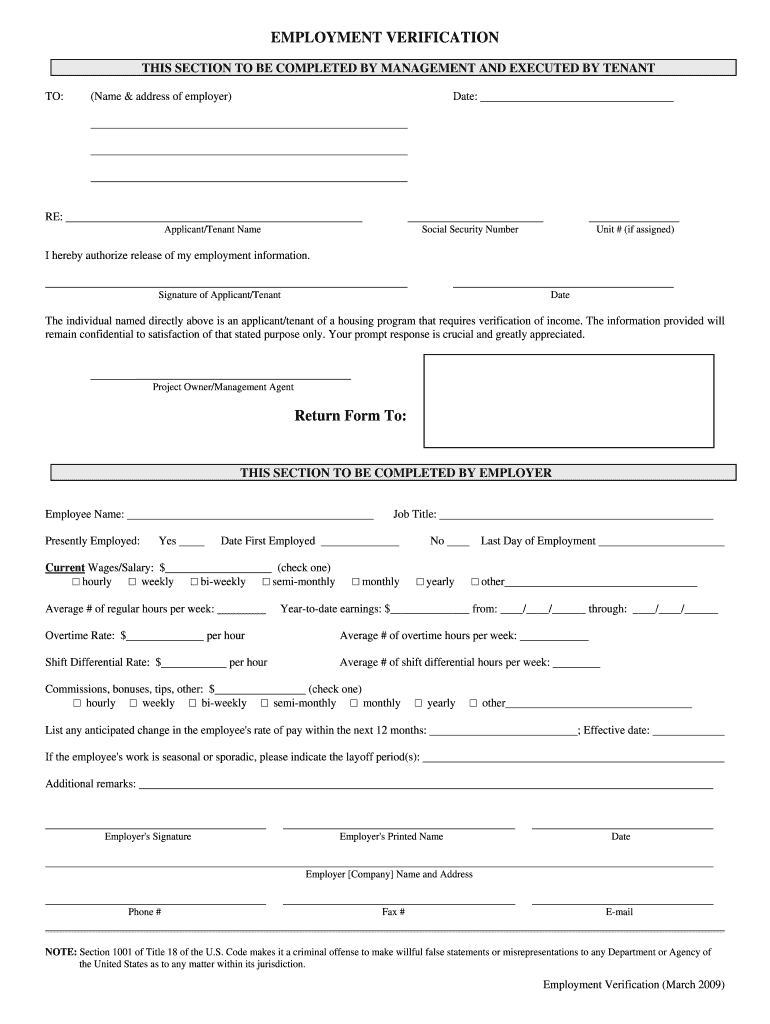
The employment verification form is a standard document used to confirm an individual's work history and income details. It is often requested by agencies, landlords, and lenders to verify the accuracy of an applicant's employment claims. This document typically includes essential information such as the applicant's job title, employment duration, salary, and employer contact details. It serves as a critical tool for assessing an individual's financial stability and employment status, often needed in contexts like loan applications or housing leases.
Practical Scenarios
- Loan Applications: Lenders require this form to ascertain the applicant's ability to repay loans.
- Rental Agreements: Landlords use it to confirm an applicant's income and employment stability.
- Government Programs: Eligibility for certain government assistance programs may hinge on employment verification.
How to Use the Employment Verification Form
Using the employment verification form involves several key steps to ensure its efficiency. Primarily, it begins with the requester identifying the necessary information required for verification. The requester, who might be an employer or a third-party verifier, then fills out the relevant sections pertaining to the employment specifics of the individual.
Filling out the Form
- Section for Employee Details: Ensure all personal and career information is accurate.
- Employer Confirmation Section: The employer must authenticate employment details, such as wages and job responsibilities.
- Authorization and Consent: Obtain the consent of the individual whose employment information is being verified.
Examples of Usage
- Mortgage Lenders: Use the filled form to verify a potential borrower's income.
- Background Checks: Employers may necessitate detailed work history for new hires.
- Educational Institutions: To confirm the employment status of students applying for financial aid.
Key Elements of the Employment Verification Form
A complete employment verification form includes distinctive sections that capture relevant employment data. Understanding these elements aids in ensuring that the form is used effectively.
Vital Sections
- Applicant Authorization: This section grants permission to release employment details.
- Employment Data: Details such as job title, duration, salary, and employer details.
- Verification Statement: Includes confirmation from the employer, ensuring the details are accurate and truthful.
Detailed Breakdown
- Mandatory Information:
- Employee's full name and position
- Employer's name and contact information
- Optional Sections:
- Bonuses and additional benefits
- Employment status as full-time or part-time
Legal Use of the Employment Verification Form
Legally, the employment verification form must align with privacy and data protection laws, particularly when handling sensitive information. The form is used as a legitimate means for verifying employment and must adhere to relevant employment laws.
Legal Compliance Considerations
- Data Privacy: Compliance with laws such as the Fair Credit Reporting Act (FCRA) is mandatory.
- Authorization Requirement: Explicit consent from the employee is needed prior to verification.
- Confidentiality: The information on the form must be kept confidential and used solely for the verification purpose intended.
Legal Scenarios
- Third-party verification companies: Must ensure compliance with all regulatory requirements before processing employment data.
- Employers: Responsible for providing correct data and ensuring that authorizations are obtained.
Steps to Complete the Employment Verification Form
Filling out the employment verification form correctly requires a structured approach. Each section should be completed with precision to avoid errors that might delay the verification process.
Completion Steps
- Gather Necessary Information: Prepare all details related to the employee's current and past employment.
- Fill Out Employee Information: Enter basic identification details such as name and contact.
- Enter Employment Details: Add information about job position, salary, and length of employment.
- Employer Verification: The employer must review and sign the form to verify the accuracy of the information provided.
- Review for Accuracy: Ensure all information is correct and complete before submission.
Considerations for Accuracy
- Ensure all dates are correct and correspond to actual employment periods.
- Double-check salary figures to match payroll records.
State-Specific Rules for the Employment Verification Form
While the employment verification form is standardized, various U.S. states may have specific rules or considerations regarding its application. It is essential to be aware of these differences when using the form.
State Variations
- Disclosure Requirements: States like California may have specific privacy regulations affecting how employment data can be disclosed.
- Form Customization: Some states may require additional information or specific form templates.
Practical Implications
- Be aware of local regulations regarding data privacy and handling.
- Consult state-specific guidelines to ensure compliance with local laws.
Examples of Using the Employment Verification Form
Real-world use cases highlight the utility and necessity of the employment verification form across various contexts. These examples illustrate how different sectors leverage the form for verification purposes.
Use Case Scenarios
- Financial Institutions: Verifying income sources of loan applicants.
- Real Estate Agencies: Ensuring a tenant's ability to pay rent through confirmed employment.
- Educational Grants: Assessing applicants' employment for scholarship eligibility that involves work-based qualifications.
Practical Example
Consider a scenario where a bank needs to confirm a prospective borrower's employment to approve a mortgage. The bank requests the borrower to provide an employment verification form filled out by their employer, detailing their job title, salary, and employment duration, ensuring they meet income requirements for the loan.




