






Comprehensive Overview of the Non-Fiction Book Report Form
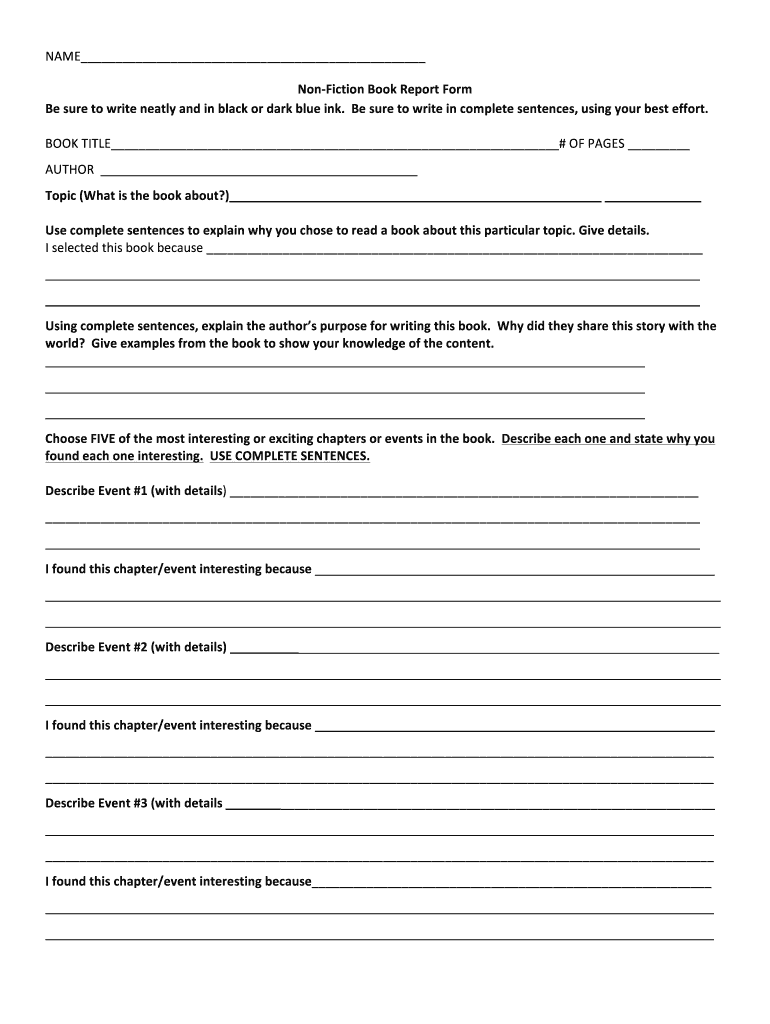
The Non-Fiction Book Report Form serves as a valuable tool for students to summarize and critically analyze a non-fiction book they have read. By filling out this form, students can reflect on their reading experience while honing their analytical and comprehension skills.
Structure of the Non-Fiction Book Report Form
The form is structured to guide students through specific components of their reading experience. It typically includes the following sections:
-
Book Title and Author: Students begin by noting the complete title and the author of the book. This section ensures that key bibliographic details are captured early in the report.
-
Main Topic of the Book: In this part, students describe the central theme or subject matter of the book. This helps them to articulate the primary focus and purpose of the author’s work.
-
Reason for Choosing the Book: Students provide insight into their motivations for selecting the book. This could range from personal interest to recommendations received, encouraging students to connect more personally with their reading choices.
Author's Purpose and Perspective
The form prompts students to explain the author's intent behind the book. This section allows them to consider:
-
What message or themes does the author convey? Understanding the author's purpose deepens comprehension and analytical skills.
-
How effectively does the author present this purpose? This critical evaluation fosters a more nuanced understanding of the text.
Insights Gained and Key Events
This section encourages students to highlight significant chapters or events that stood out during their reading. Examples of prompts include:
-
Interesting or impactful events: What chapters resonated the most?
-
New facts or perspectives learned: How has the book changed their understanding of a topic? This helps students in synthesizing information and thinking critically about what they read.
Feedback for the Author
The form invites students to offer constructive feedback about the book. They can indicate:
-
Suggestions for improvement: If any areas felt underdeveloped, students can articulate this clearly.
-
What they would like to see expanded: This fosters a critical approach to literature and encourages personal engagement with the author's work.
Recommendation and Conclusion
Finally, the report includes a recommendation section where students determine whether they would suggest the book to others. This part may address:
-
Who might find the book valuable: Considering the intended audience can enhance the analytical depth of students' reflections.
-
Criteria for their recommendation: What makes a book worth sharing?
Utilizing the Non-Fiction Book Report Form
This report form can be particularly effective for different educational settings, such as middle school or high school, where students are expected to engage more critically with texts. Here’s how students can maximize the use of the form:
-
Pre-Reading Preparation: Students should familiarize themselves with the non-fiction genre and what makes a well-structured report.
-
Consistent Entry Throughout Reading: Keeping notes in real-time can aid recall of thoughts on chapters or themes that may otherwise be forgotten after reading.
-
Reviewing and Reflecting: After completing the report, students should take time to review their responses. This reflection can lead to a deeper understanding of what they have learned.
Educational Importance of Book Reporting
The exercise of completing a Non-Fiction Book Report Form encourages critical thinking and enhances comprehension skills. It prompts students to engage actively with the text, which is essential in their academic and personal development.
-
Development of Writing Skills: Summarizing and articulating thoughts enhances written communication.
-
Cultivation of Analytical Skills: Evaluating an author's purpose and approach fosters critical thinking, applicable across various disciplines.
Engaging with the Non-Fiction Book Report Form provides students a structured way to reflect on their reading, enhances their learning experience, and cultivates valuable academic skills that can benefit them throughout their educational journey.