Definition and Overview of the Early Childhood Behavior Questionnaire
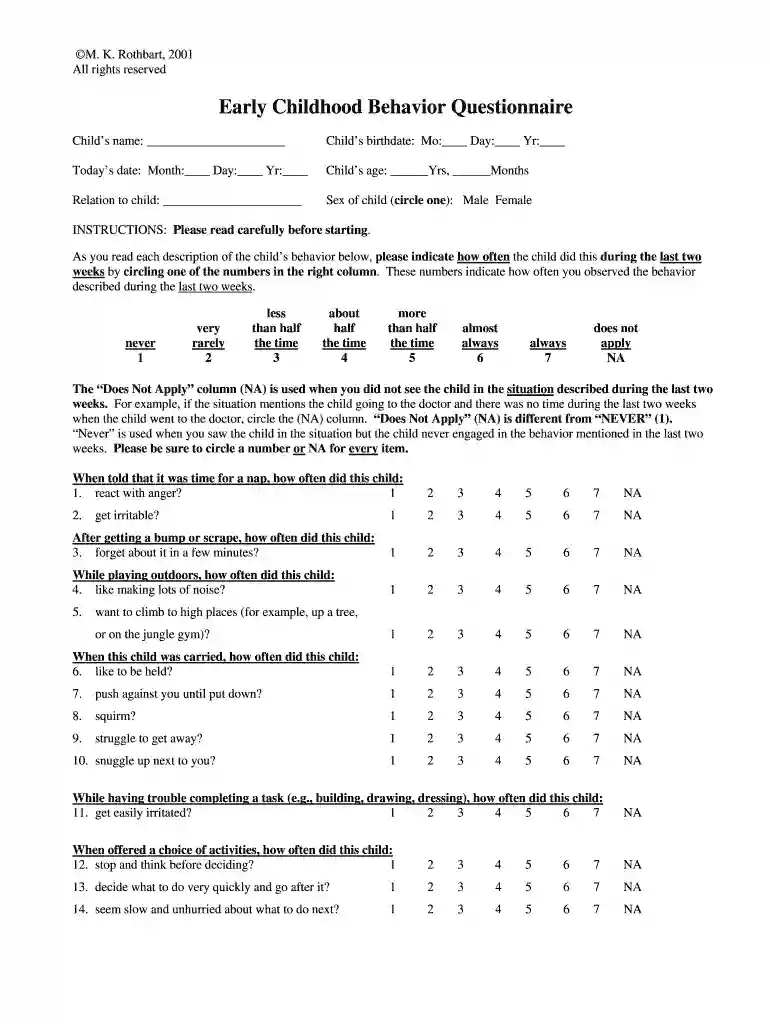
The Early Childhood Behavior Questionnaire - NCRLAP is a specialized assessment tool utilized to evaluate and understand the behavioral patterns of young children. This instrument focuses primarily on the child’s actions over a specific time frame, usually the past two weeks. By assessing these behaviors, caregivers and professionals can gain insights into a child's emotional responses, interactions during play, attention spans, and overall social development.
Purpose of the Questionnaire
- Behavioral Insight: The primary aim of the questionnaire is to gather detailed information regarding a child's behavior in various contexts, allowing for a deeper understanding of developmental milestones and any potential areas for concern.
- Informing Interventions: The results can guide caregivers and educators in implementing targeted interventions that foster positive behavioral outcomes, ultimately supporting the child's overall growth and development.
Structure of the Early Childhood Behavior Questionnaire
The structure of the Early Childhood Behavior Questionnaire is designed to facilitate ease of use while ensuring comprehensive data collection. It includes the following components:
- Rating Scale: Caregivers assess frequency of behaviors by rating them on a scale from 'never' to 'always,' or they may choose an option indicating that the behavior does not apply. This scaled approach provides clarity and consistency in responses.
- Scenarios and Situations: The questionnaire is composed of various hypothetical scenarios that reflect common interactions and behaviors observed in children, ensuring that the assessment is relevant and applicable.
Categories and Behaviors Assessed
- Emotional Responses: Questions about how a child reacts to frustration, joy, or disappointment offer valuable insights into their emotional development.
- Social Skills: Items focused on sharing, cooperation, and interaction with peers evaluate the child’s ability to engage socially.
- Attention and Focus: The questionnaire assesses behaviors relating to attention span during activities, which can indicate cognitive development and readiness for more structured learning environments.
Administering the Questionnaire
The administration of the Early Childhood Behavior Questionnaire requires careful consideration to ensure accurate responses. Here are the steps to effectively conduct this assessment:
- Select Appropriate Timeframe: Administer the questionnaire based on a two-week observation period, which helps capture a representative sample of the child's behavior.
- Instruct Caregivers: Clearly explain the purpose of the questionnaire to caregivers and emphasize the importance of their honest and thoughtful responses.
- Provide Context: Encourage caregivers to reflect on different settings (home, preschool, playdates) as they fill out the questionnaire to gather holistic behavioral data.
Helpful Tips for Effective Completion
- Encourage Observational Reflection: Afford caregivers time to observe their child's behavior in various settings before completing the assessment, ensuring accurate responses.
- Collect Additional Insights: Identify caregivers who can provide supplemental anecdotal evidence related to specific behaviors, enriching the context for interpretation.
Analyzing Responses and Interpreting Results
Once the Early Childhood Behavior Questionnaire is completed, analysis begins with careful examination of the collected data to derive meaning. Analysts should focus on:
- Identifying Patterns: Look for trends in behaviors over time to determine if certain actions are consistently observed or if they vary based on context.
- Cross-Referencing Results with Other Assessments: Combining this data with other evaluation tools can strengthen the understanding of a child's behavioral profile.
Utilizing Results for Developmental Planning
- Personalized Interventions: Based on the findings, create tailored strategies to address specific behavioral challenges, such as offering guidance on social skills development.
- Monitoring Progress: Use the responses as a baseline for future assessments, enabling caregivers to track progress and adjust interventions as needed.
Integration into Educational and Care Environments
The Early Childhood Behavior Questionnaire serves as a foundational tool in both educational and caregiver settings, offering opportunities for collaboration:
- Educators: Teachers can use insights from the questionnaire to structure classroom activities that cater to varying attention spans and social interactions.
- Caregivers: Parents can work with educators to align strategies both at home and in school, fostering a cohesive support system for the child's development.
Building a Collaborative Approach
- Regular Communication: Establish open lines of communication between caregivers and educators to discuss findings and implement joint strategies based on the questionnaire results.
- Shared Responsibilities: Encourage shared responsibility among caregivers and teachers to support the child’s growth, facilitating a united front that nurtures and guides the child’s development.
Legal Considerations and Data Protection
When administering the Early Childhood Behavior Questionnaire, it is essential to consider legal and ethical standards concerning privacy and data protection:
- Confidentiality: Ensure that all responses collected from caregivers are treated confidentially to protect the child's identity and sensitive behavioral data.
- Informed Consent: Communicate clearly with caregivers regarding the use of their responses, ensuring they understand and agree before participation.
Compliance with Regulations
- Adherence to COPPA: For any online or digital versions of the questionnaire, comply with the Children's Online Privacy Protection Act by obtaining necessary consent from guardians before data collection.
- Data Storage Security: Utilize secure methods for storing the questionnaire data, protecting against unauthorized access to sensitive information about child behavior.