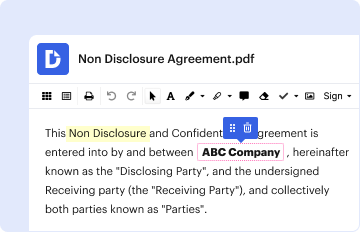
Type text, add images, blackout confidential details, add comments, highlights and more.
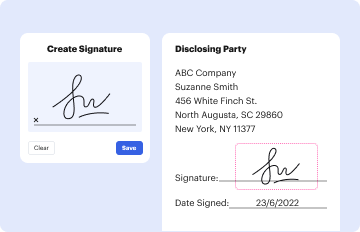
02. Sign it in a few clicks
Draw your signature, type it, upload its image, or use your mobile device as a signature pad.
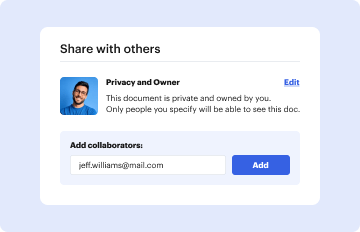
03. Share your form with others
Send it via email, link, or fax. You can also download it, export it or print it out.
How to use or fill out the Kente Project
Ease of Setup
DocHub User Ratings on G2
Ease of Use
DocHub User Ratings on G2
Click ‘Get Form’ to open it in the editor.
Begin by entering your name and class period at the top of the form. This personalizes your project and ensures proper identification.
Read through the background information on Kente cloth to understand its significance. This will help you appreciate the cultural context as you work on your design.
Use the provided coding system to translate your first and last names into ordered pairs. Input these pairs directly into our platform for easy reference.
Plot your ordered pairs on quarter-inch graph paper, connecting them with line segments. Ensure that you reflect and rotate points as instructed, documenting each step clearly.
Color your design using Kente cloth color meanings to express your personality. Make sure to note all ordered pairs used in their respective categories on a separate sheet.
Finally, attach this sheet to your completed project and ensure that your name is included on all work for submission.
Start creating your unique Kente design today using our platform for free!
Kente project in ghanaKente clothKente cloth craft preschoolKente PronunciationKente paper weavingKente cloth information for 3rd grade studentsKente cloth weavingKente pattern
Security and compliance
At DocHub, your data security is our priority. We follow HIPAA, SOC2, GDPR, and other standards, so you can work on your documents with confidence.
Kente cloth is a hand woven cloth designed to reflect the history, ethics, religious beliefs, and many other aspects of Asante culture in Ghana, Africa.Read more
Parsa East And Kanta Basan Coal Mine - Global Energy Monitor
Jun 24, 2025 The 15 million ton-per-annum coal mine is operated by Adani Mining, a subsidiary of privately-held Adani Group. The mine lies on the Hasdeo-Arand coalfield.Read more
Cookie consent notice
This site uses cookies to enhance site navigation and personalize your experience.
By using this site you agree to our use of cookies as described in our Privacy Notice.
You can modify your selections by visiting our Cookie and Advertising Notice.