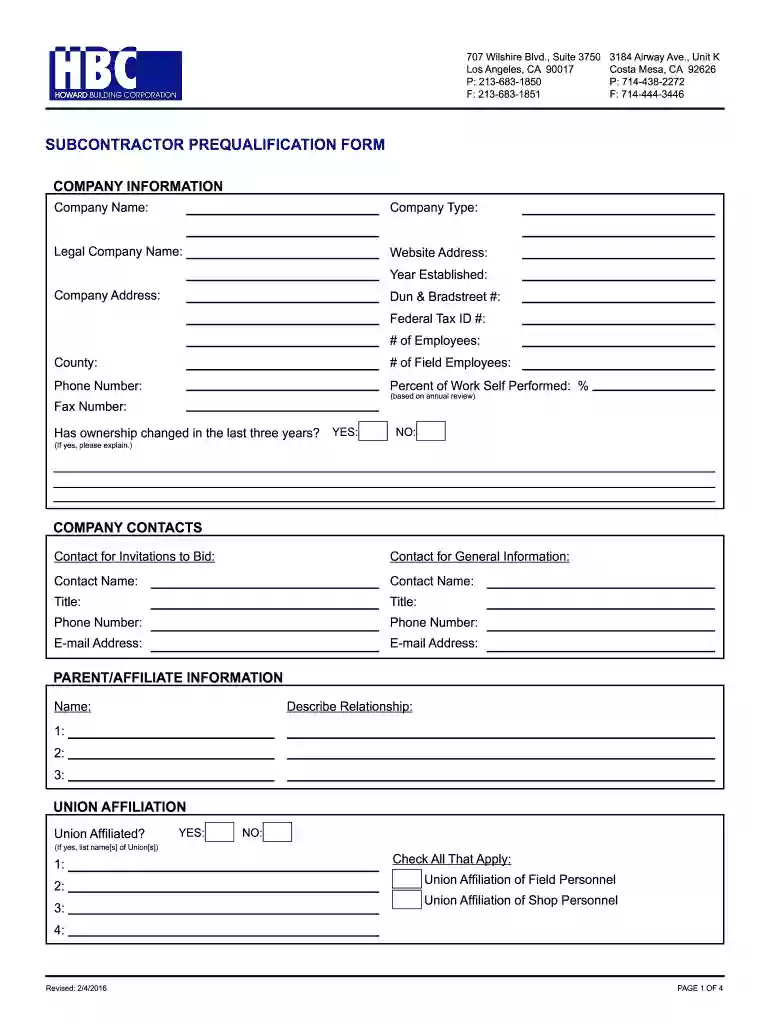
Definition & Meaning of Subcontractor Prequalification Form
The Subcontractor Prequalification Form is a comprehensive document used to assess the capabilities of subcontractors before they are hired for specific projects. This form collects vital information about a subcontractor's business, such as contact details, licensing, financial stability, and safety records. By gathering this information, corporations can evaluate whether a potential subcontractor meets their standards and qualifications for upcoming work.
Essential Information Collected
- Company Details: This includes the subcontractor's legal name, address, type of company (e.g., LLC, corporation), and contact information.
- Licenses and Certifications: Subcontractors must provide copies of relevant licenses, certifications, and registrations required to operate in their respective industries.
- Insurance Coverage: Details regarding liability insurance, workers' compensation, and other insurance policies must be disclosed to ensure adequate protection against potential risks.
Importance of Prequalification
The prequalification process mitigates risks for the primary contractor by ensuring that all subcontractors have appropriate qualifications. This reduces the chances of project delays due to unqualified personnel and ensures adherence to safety guidelines and legal requirements.
Key Elements of a Subcontractor Prequalification Form
A well-structured subcontractor prequalification form contains several key components that provide a clear overview of the subcontractor's credentials and capabilities. These elements ensure a thorough evaluation can take place.
Major Components
- Background Information: Information about the company’s history, ownership, and operational structure.
- Financial Stability: This typically includes at least three years of financial statements or documentation highlighting the subcontractor's ability to sustain operations.
- Safety Records: Documentation of safety practices, accident rates, and OSHA compliance provide insights into the subcontractor's commitment to a safe working environment.
Supporting Documentation
Alongside the filled form, subcontractors often need to submit additional documents such as:
- Tax returns
- Bonds and surety information
- Client references and testimonials
Steps to Complete a Subcontractor Prequalification Form
To ensure the process runs smoothly, subcontractors should follow a systematic approach to filling out the prequalification form. This approach minimizes mistakes and ensures all necessary information is provided.
Step-by-Step Process
- Gather Necessary Information: Collect all required documents and information, including licenses, insurance certificates, and financial records.
- Complete the Form: Fill in the form accurately, ensuring all information is up to date and complete.
- Review and Edit: Check for any errors, omissions, or inconsistencies in the information provided.
- Submit the Form: Send the completed form along with all supporting documentation to the requesting corporation.
- Follow Up: After submission, it can be beneficial to follow up to confirm receipt and address any additional questions from the corporation.
Best Practices
- Ensure accuracy in all entered data to prevent delays in the evaluation process.
- Keep copies of all submitted documents for future reference.
- Stay proactive in communication with the corporation to clarify any uncertainties regarding the submission.
Why Use a Subcontractor Prequalification Form?
Using a subcontractor prequalification form is essential for maintaining quality assurance and project integrity within any contracting business. It establishes a baseline for evaluating potential subcontractors.
Advantages of Prequalification
- Risk Reduction: By ensuring subcontractors meet specified qualifications, corporations can significantly reduce risks related to project execution.
- Enhanced Collaboration: Clear expectations set through prequalification can foster better relationships between contractors and subcontractors, improving teamwork and overall project outcomes.
- Regulatory Compliance: Many industries require compliance with specific regulations, making prequalification critical for legal and safety adherence.
Who Typically Uses This Form?
- General Contractors: Those who hire subcontractors for various trades, services, or specialized tasks.
- Project Owners: Individuals or organizations managing large projects who want assurance of subcontractor credibility and competence.
- Industry Associations: Organizations focused on maintaining standards within specific trades or sectors often require this prequalification process.
Legal Implications of the Subcontractor Prequalification Form
Understanding the legal context surrounding the subcontractor prequalification form is crucial for both parties. Adhering to legal standards protects the interests of both the contractor and subcontractor while ensuring compliance with industry regulations.
Legal Compliance
- OSHA and Safety Regulations: The form often requires compliance documentation with safety standards and practices established by OSHA.
- Insurance and Liability Requirements: Subcontractors must demonstrate adequate insurance coverage as mandated by state or federal law.
Consequences of Non-Compliance
Failure to adhere to the required qualifications or provide accurate information can lead to:
- Denial of bid opportunities
- Potential lawsuits for breaches of contract
- Liability for damages caused by subcontractor actions
Examples of Using a Subcontractor Prequalification Form
Practical applications of the subcontractor prequalification form illustrate its value across a variety of scenarios, enabling effective risk management and streamlined project execution.
Real-World Scenarios
- Commercial Construction Projects: A large construction firm may require subcontractors to submit their prequalification forms to evaluate financial stability and safety practices before hiring them for a multi-million-dollar project.
- Public Sector Contracts: Government contracts typically require stringent prequalification to ensure that all subcontractors hold the necessary certifications and licenses, secure financial standing, and have proven safety records.
By consistently implementing the subcontractor prequalification process, organizations can enhance their operational efficiency, reduce risks, and cultivate reliable partnerships that contribute to the successful completion of their projects.