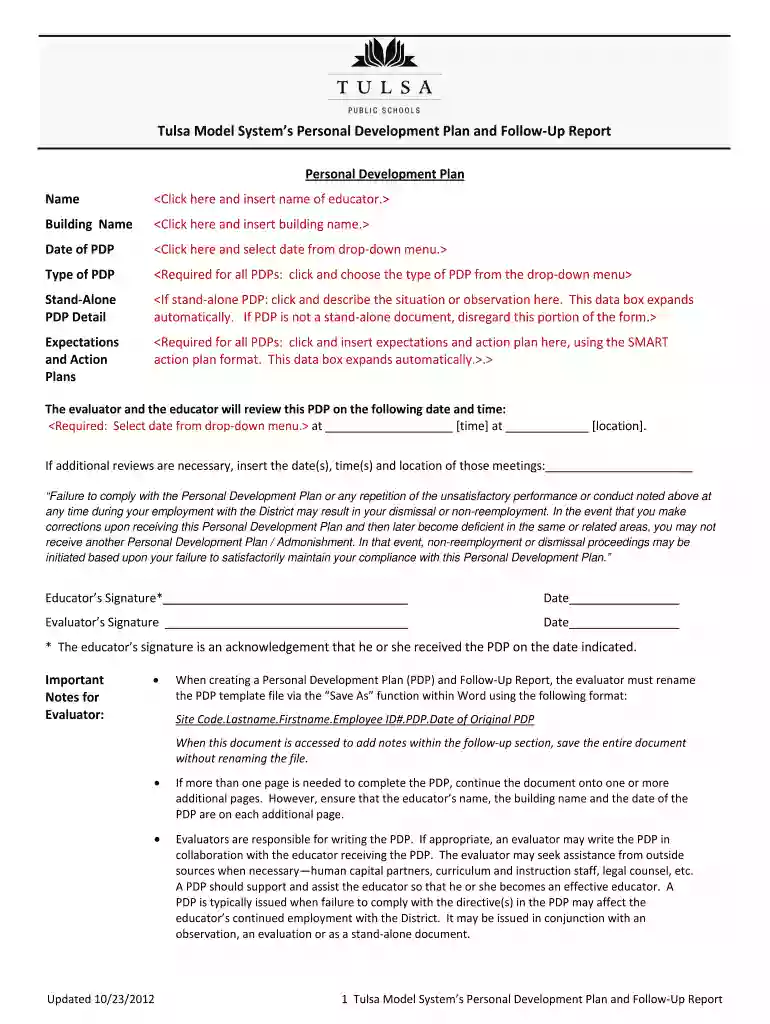
Tulsa Model Systems Personal Development Plan and Follow-Up - tulsaschools 2026

Get Form
oktle pl focus examples Preview on Page 1

Here's how it works

01. Edit your oktle pl focus examples online
Type text, add images, blackout confidential details, add comments, highlights and more.

02. Sign it in a few clicks
Draw your signature, type it, upload its image, or use your mobile device as a signature pad.

03. Share your form with others
Send oktle pl focus examples pdf via email, link, or fax. You can also download it, export it or print it out.

Understanding the Tulsa Model Systems Personal Development Plan

The Tulsa Model Systems Personal Development Plan (PDP) is a structured document aimed at fostering professional growth for educators within the Tulsa School District. This plan outlines an individual’s expectations, action steps, and strategies for improvement. Designed to be comprehensive, the PDP incorporates the SMART criteria—Specific, Measurable, Achievable, Relevant, and Time-bound—ensuring that goals are clear and attainable. Each PDP serves as both a guide for personal growth and a formal mechanism to address performance-related issues.

Key Components of the Personal Development Plan

  • Personal Details: Each plan begins with essential information about the educator, including name, position, and contact details.
  • Expectations: This section delineates the performance standards educators are expected to meet, aligning with district goals and individual competencies.
  • Action Plans: Utilizing the SMART format, action plans specify what needs to be accomplished, how success will be measured, the resources required, and a timeline for completion.
  • Review Schedules: Regular review dates are established to track progress and offer opportunities for feedback and adjustments.

These components work together to create a comprehensive roadmap for professional development, ensuring that educators can focus on specific areas for improvement while receiving support from evaluators and peers.

The Significance of the Follow-Up Report

The Follow-Up Report is integral to the PDP process. It evaluates the progress made by the educator concerning the goals outlined in the Personal Development Plan. This report provides a structured way to assess both strengths and areas needing further development.

  • Assessment of Progress: The Follow-Up Report includes a thorough assessment of whether the goals outlined in the PDP were achieved within the specified timeline.
  • Further Steps: If areas of improvement remain, this section details additional support measures or changes to the action plan necessary to help the educator succeed.
  • Acknowledge Understanding: Both the educator and the evaluator must sign the Follow-Up Report to acknowledge that they have reviewed the outcomes and are in agreement with any next steps.

This requirement underscores the collaborative nature of performance development, fostering a proactive and communicative relationship between educators and their evaluators.

Steps to Complete the Personal Development Plan

Engaging with the Tulsa Model Systems Personal Development Plan involves several critical steps, which ensure that both the educator and the evaluator are aligned throughout the process.

  1. Initial Assessment: Begin with a self-reflection on strengths, weaknesses, and previous feedback.
  2. Goal Setting: Utilize the SMART criteria to define clear and actionable goals based on the initial assessment.
  3. Drafting the PDP: Fill out the PDP template, including personal details and defined expectations.
  4. Review and Feedback: Submit the draft to an evaluator for feedback, ensuring mutual understanding of expectations.
  5. Finalization: Adjust the plan based on the evaluator's feedback and finalize the document, ensuring both parties sign it.

These steps help to create a targeted approach to professional development that is transparent and supportive, facilitating effective communication within the educational framework.

Importance of Compliance with the Tulsa Model Systems Personal Development Plan

The implementation of the Tulsa Model Systems Personal Development Plan is not merely a procedural requirement; it carries significant implications for the professional growth of educators. Adherence to the PDP process helps ensure that:

  • Performance Issues Are Addressed: The plan operates as a formal mechanism for addressing performance-related issues, offering opportunities for corrective action before consequences arise.
  • Professional Accountability: Engaging with the PDP fosters a culture of accountability for educators, ensuring that they actively participate in their growth and development.
  • Resource Allocation: Following the plan provides a structured framework for resource allocation, ensuring educators receive the necessary supports and training.

Compliance with the PDP process enhances the overall quality of education within the district, benefitting both educators and students alike.

Examples of Implementing the Personal Development Plan

Implementing the Tulsa Model Systems Personal Development Plan can take several forms, depending on the individual educator's needs and the feedback from the evaluating body.

  • Example 1: Classroom Management: An educator may identify classroom management as an area needing improvement. The PDP could outline observations, strategies for implementing new techniques, and the necessity for additional training in behavior management.
  • Example 2: Curriculum Development: For educators aiming to enhance curriculum delivery, the PDP may include goals related to lesson planning, incorporating technology, and collaborating with colleagues to create interdisciplinary lessons.
  • Example 3: Professional Engagement: If networking within the educator's field is a focus, goals might involve attending specific educational conferences, engaging with professional organizations, or sharing strategies with peers.

Each example demonstrates the flexibility and adaptability of the PDP to cater to the unique professional growth needs of educators while maintaining alignment with district objectives.

Important Terminology Associated with the PDP Process

Understanding the terminology associated with the Tulsa Model Systems Personal Development Plan is essential for effective communication and implementation.

  • SMART Goals: This framework guides educators in setting clear, measurable objectives that enhance accountability and focus.
  • Evaluator: This refers to the individual responsible for assessing the educator’s progress and providing feedback on the PDP and Follow-Up Report.
  • Collaborative Review: This term signifies the partnership between educators and evaluators during the PDP process, ensuring mutual understanding and support for achieving the outlined goals.
  • Continuous Improvement: This concept highlights the ongoing nature of professional development, emphasizing that growth is a dynamic process requiring adaptation and feedback.

Familiarity with these terms aids educators in navigating the PDP process, fostering a common language for discussing performance and expectations.

See more Tulsa Model Systems Personal Development Plan and Follow-Up - tulsaschools versions

We've got more versions of the Tulsa Model Systems Personal Development Plan and Follow-Up - tulsaschools form. Select the right Tulsa Model Systems Personal Development Plan and Follow-Up - tulsaschools version from the list and start editing it straight away!
Versions Form popularity Fillable & printable
2012 4.8 Satisfied (101 Votes)
be ready to get more

Complete this form in 5 minutes or less

Get form

Got questions?

We have answers to the most popular questions from our customers. If you can't find an answer to your question, please contact us.
Contact us
There are 9 steps to completing a PDP: Assess where you are now. Identify your specific career goals. Gather information. Identify what professional skills you already have and which you need to work on. Choose how you will accomplish your goals. Develop a timeline for accomplishing your specific targets and goals.
There are seven steps to writing a PDP: Set yourself goals. Prioritise those goals. Set yourself deadlines for when you want to achieve them. Recognise threats and opportunities. Develop your skills or increase your knowledge. Use your support network. Measure your progress.
There are six key steps to creating a personal development plan: understanding the employees career goals, doing a skill assessment, establishing SMART goals, creating an action plan, setting a timeline, and tracking progress.
6 steps to create an action plan Step 1: Set a SMART goal. When it comes to setting goals, clarity is the single most important quality. Step 2: Identify tasks. Step 3: Allocate resources. Step 4: Prioritize tasks. Step 5: Set deadlines and milestones. Step 6: Monitor and revise your action plan.
How to create a professional development plan in 6 steps Step 1: Assess yourself. Step 2: Set your goals. Step 3: Develop strategies. Step 4: Gather your resources. Step 5: Create a timeline. Step 6: Track your progress.

Security and compliance

At DocHub, your data security is our priority. We follow HIPAA, SOC2, GDPR, and other standards, so you can work on your documents with confidence.

Learn more
ccpa2
pci-dss
gdpr-compliance
hipaa
soc-compliance
be ready to get more

Complete this form in 5 minutes or less

Get form

People also ask

Goals and Objectives : Clearly define your short-term and long-term goals. Assessment of Skills and Resources : Evaluate your current skills, strengths, and weaknesses. Action Steps : Outline the specific actions you need to take to docHub your objectives. Networking and Support Evaluation and Adjustment
How to Write a Personal Development Plan Set yourself goals. Prioritise those goals. Set yourself deadlines for when you want to achieve them. Recognise threats and opportunities. Develop your skills or increase your knowledge. Use your support network. Measure your progress.

pl focus