
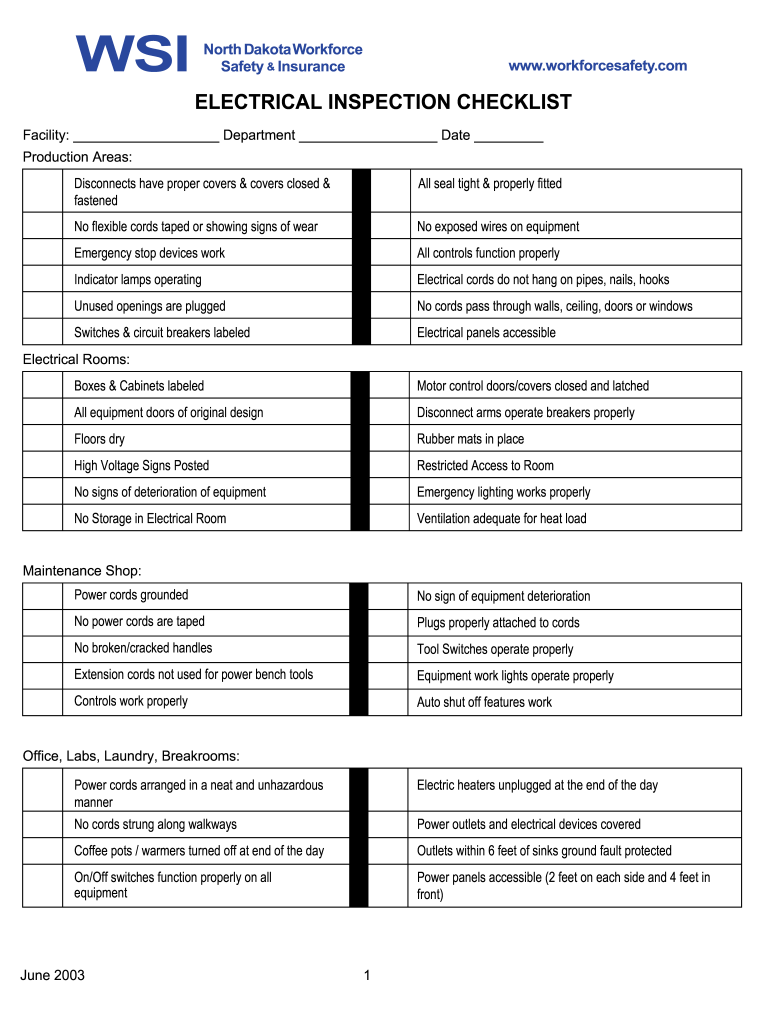







Definition & Meaning
An electrical checklist in Excel format refers to a structured document designed to evaluate the safety and functionality of electrical systems within a facility. This checklist serves as a vital tool for ensuring compliance with safety standards, minimizing hazards related to electrical systems, and facilitating routine inspections.
The Excel format enhances usability by allowing users to easily edit, update, and adapt the checklist according to specific requirements. It typically contains essential items to inspect, such as circuit breakers, wiring, grounding systems, and the operational status of emergency systems. The checklist format ensures that all key areas are covered during an inspection and can be shared easily among team members.
How to Use the Electrical Checklist in Excel Format
Using an electrical checklist in Excel format involves several key steps:
- Download or obtain the checklist from a reliable source. Many organizations provide templates as part of their compliance resources.
- Customize the checklist to suit your specific needs. This may involve adding or modifying sections based on electrical systems present in your facility.
- Prior to an inspection, review the checklist to ensure all relevant components are included. Add fields for notes or comments where necessary.
- During the inspection, systematically check each item on the list. Mark items as complete, needs attention, or not applicable.
- After completing the inspection, save the document. Share it with relevant team members for further action or for record-keeping purposes.
By following these steps, users can effectively utilize the electrical checklist in Excel format to streamline their inspection process.
Who Typically Uses the Electrical Checklist in Excel Format
Various professionals and organizations within the electrical industry use an electrical checklist in Excel format, including:
- Electrical Contractors: To verify that installations comply with safety standards and regulations.
- Facility Managers: For routine inspections of electrical systems and maintenance schedules.
- Safety Officers: To ensure that all safety protocols are followed during electrical work and to identify hazards.
- Construction Teams: To check the integrity and safety of electrical installations in new buildings.
- Inspectors: To assess compliance with local and national electrical codes during inspections.
This diverse range of users highlights the adaptability and importance of the checklist across different sectors of the industry.


Key Elements of the Electrical Checklist in Excel Format
An effective electrical checklist in Excel format typically includes the following key elements:
- Item Description: A clear description of the components or systems to be inspected (e.g., circuit breakers, wiring, or grounding).
- Inspection Criteria: Specific standards or criteria that must be met for each item (e.g., visible damage, functionality checks).
- Condition Status: Fields to mark the condition of each item, such as "Satisfactory," "Needs Repair," or "Not Applicable."
- Comments Section: A space for additional notes or observations relevant to each inspection item, which can be crucial for follow-up actions.
- Date of Inspection: A section to document when the inspection was completed, ensuring a proper record of compliance and maintenance activities.
Incorporating these elements into the checklist enhances clarity and thoroughness during inspections.
Examples of Using the Electrical Checklist in Excel Format
Utilizing an electrical checklist in Excel format can take various forms based on the specific needs of a facility. Here are some real-world scenarios:
- Routine Inspections: A facility manager might use the checklist bi-annually to ensure that all electrical equipment, including panels and outlets, meets safety standards.
- Pre-Compliance Reviews: Before an official inspection, a contractor can conduct a self-assessment using the checklist to identify and remedy any deficiencies.
- Incident Investigation: In the case of an electrical failure or accident, the checklist can help trace potential problem areas by detailing inspection history and findings.
- Training Documentation: New employees can use the checklist as part of their onboarding process to familiarize themselves with essential safety practices and inspection protocols.
These examples illustrate the versatility of the electrical checklist in Excel format across various operational contexts.




